Overview
The global aviation industry is seeing huge pressure from supply chain disruptions, largely due to its heavy dependence on a limited number of aircraft component suppliers in global trade. As air travel demand recovers and fleet development grows, airlines and Maintenance, Repair, and Overhaul (MRO) providers are struggling to secure important parts on time due to supply chain risk. The difficulty of aviation manufacturing, strict regulatory requirements, and the special trade of aircraft components mean that it’s important for suppliers to dominate the market. This concentration risk makes the complete supply chain highly sensitive to disruptions, whether caused by geopolitical tensions or raw material restrictions.
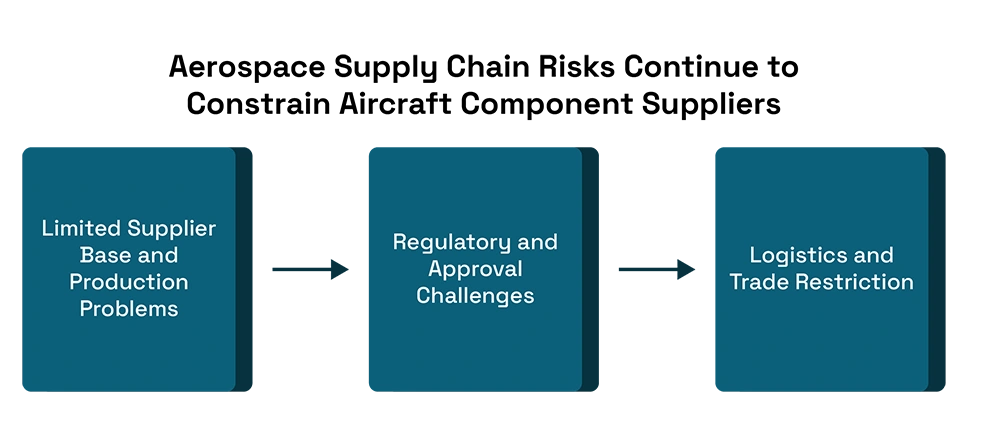
Aerospace Supply Chain Risks Continue to Constrain Aircraft Component Suppliers
Limited Supplier Base and Production Problems
Aircraft components such as engines, avionics, and aircraft parts are produced by a small number of certified manufacturers of aviation parts. This limited supplier base creates problems, especially when production capacity is strained in the supply chain. Any supply from a single supplier can complete the aviation supply chain, delaying aircraft shipments and maintenance schedules.
Regulatory and Approval Challenges
The aviation industry works under stronger safety and agreement standards. Each component must meet strict certification requirements, which limit the ability to quickly onboard new suppliers. Customs processes such as customs clearance, correct HS code categorizations, and approval to the HTS Harmonized Tariff Schedule further add stages of difficulty in global trade.
Logistics and Trade Restriction
Global shipment issues continue to affect aviation parts supply chains. Shipments delays with port overcrowding and growing fees are affecting on-time logistics. Also, dependance on Incoterms such as DAP and DAPs can change responsibilities and risks between buyer and seller partnerships. Effective logistics planning and supply chain optimization are becoming necessary to reduce these risks.
How The Aftermarket Is Seeing Aviation Supply Chain Issues for Aircraft Suppliers
Increased Demand for Spare Parts
The aviation aftermarket is getting huge pressure due to increased aircraft usage. Airlines are keeping older aircraft in service longer, which grows demand for spare parts. Also, the limited availability of components is causing delays in maintenance and repairs of aircraft parts.
Inventory and Order Management Challenges
Many aviation companies are affecting with inefficient inventory and order management systems. Without real-time tracking of stock levels and supplier shipping times, organizations face difficulties in planning and buying the spare parts. This frequently results in either excess inventory or critical shortages of aircraft parts in the supply chain.
Role of Exporter and Importer of Record Services
To guide difficult global trade requirements, organizations mostly depend on exporter of record and importer of record services. These services confirm agreement with global regulations, manage documentation, and simplify customs clearance processes. Aircraft parts shipment service providers get questions such as whether a freight forwarder service can be an exporter of record service or whether a customs broker can handle both import and export documentation, which are becoming more relevant as organizations look for combined solutions.
How Can Digital Supply Chains Help Manage Aerospace Supply Chain Risk?
Increased Tracking and Clarity in logistics
Digital supply chains provide real-time tracking of shipments, inventory, and supplier performance with Supply Chain Risk. This visibility helps organizations identify possible issues early and take complete issues to avoid delays.
Advanced Trade Approval Solutions
The adoption of the best trade compliance software for import export rules allows organizations to automate categorizations, documentation, and regulatory checks. This reduces the risk of errors and confirms smoother cross-border shipments.
Predictive Analytics and Demand Evaluation
Digital tools powered by data analytics can predict demand patterns and identify possible device supply shortages. This allows aviation organizations to plan procurement plans more effectively and reduce dependency on limited suppliers.
Improved Collaboration Across Customers
Digital sources simplify communication between suppliers, logistics providers, and customers in the supply chain. This collaborative approach increases productivity and helps in managing difficult global supply chains more effectively in global trade.

Conclusion
The aviation industry’s dependance on a limited number of global aircraft component suppliers presents huge risks, specifically in growing demand and ongoing disruptions. From production problems and regulatory challenges to logistics constraints and aftermarket pressures, the risks are growing. Also, the adoption of digital supply chain solutions provides a promising path forward in the supply chain. As the industry continues to develop, reducing dependency on a supplier base and developing technological innovation will be important to confirming long-term stability and growth of the aviation supply chain.
DID YOU KNOW?
The global aircraft fairing market was valued at US$ 1.41 billion in 2020 and is expected to reach US$ 2.60 billion by 2028, growing from US$ 1.46 billion in 2021 at a Compound Annual Growth Rate (CAGR) of 8.59% over the forecast period.
FAQs:
1. Why is the aviation supply chain facing disruptions?
The aviation supply chain is disrupted due to dependence on a limited number of certified aircraft component suppliers, global logistics delays, regulatory requirements, and increasing demand for air travel and spare parts.
2. What are the biggest challenges in aircraft component supply?
Key challenges include limited supplier availability, strict certification processes, customs clearance complexities, HS code classification issues, and delays in international freight services.
3. How do supply chain issues impact airlines and MRO providers?
Supply chain disruptions lead to delays in aircraft maintenance, grounded fleets, increased operational costs, and extended turnaround times for repairs and spare parts replacement.
4. How can digital supply chains reduce aviation risks?
Digital supply chains improve real-time tracking, automate trade compliance, enhance inventory management, and use predictive analytics to reduce dependency on limited suppliers and prevent shortages.
5. What role do exporter and importer of record services play in aviation logistics?
Exporter and importer of record services ensure regulatory compliance, manage documentation, and streamline customs clearance, helping aviation companies handle complex global trade requirements efficiently.