Overview
The global aviation industry depends massively on the smooth shipments of aircraft components across borders. From engines and avionics to landing gear and cabin systems, the availability of certified parts shows whether fleets remain working or grounded in the supply chain. In today’s interconnected ecosystem, cross-border trade plays an important role in confirming that airlines, maintenance equipment, and manufacturers can access necessary components quickly and effectively through global trade. As demand for air travel fleets expands, the pressure on supply chains has increased because of aircraft part shortages. Delays in procurement, regulatory problems, and logistical issues have shown the importance of effective international freight services and growing trade approval systems. Cross-border trade is no longer just a support work; it is a major necessity that keeps global fleets flying.
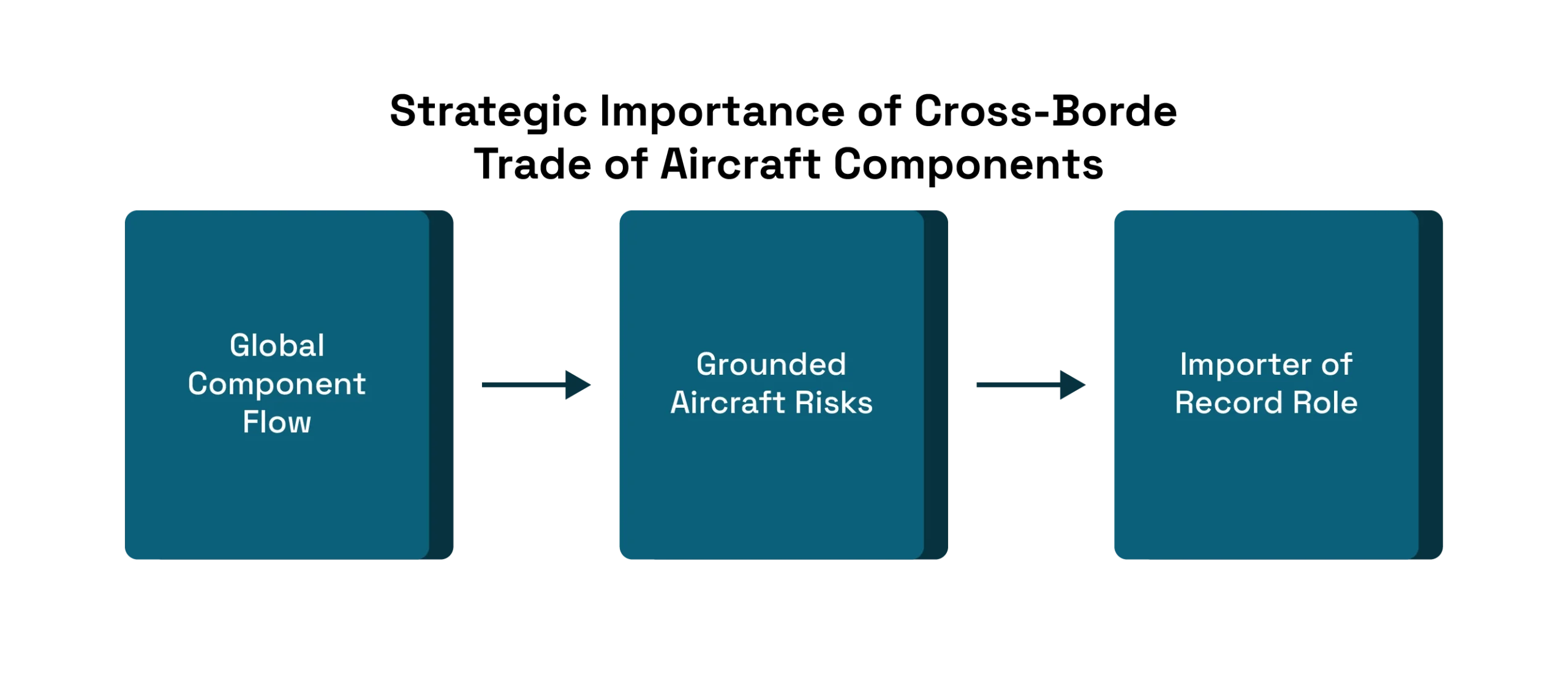
Strategic Importance of Cross-Border Trade of Aircraft Components
Confirming Operational Continuity Of Parts
Aircraft maintenance, repair, and overhaul shipments depend on a slow supply of parts that grows globally. Components are mostly manufactured in a single country and supplied across various regions, making cross-border trade necessary in the aircraft supply chain. Airlines depend on quick shipment times, and any delay in component delivery can result in grounded aircraft and economic losses.
Speed and Efficiency in Logistics
One of the major growth areas is the requirement for speed. Airlines cannot afford long downtimes, so fast delivery supported by a strong logistics chain, inventory, and order management systems is necessary in global trade. Effective customs clearance processes and dependable importer of record service providers confirm that parts are shipped quickly through borders without unnecessary delays.
Cost Optimization and Trade Benefits
By using guidelines such as the generalized system of preferences (GSP), organizations can reduce duties and improve overall supply chain optimization. The use of Incoterms such as DAP and DAPs helps define responsibilities between buyers and sellers, reducing confusion and improving shipment efficiency. Exporters also depend on exporter of record services, and many explore whether a freight forwarder can be an exporter of record to simplify global trade.
The Regulatory System for Cross-Border Trade of Aircraft Components
Agreement and Certification Requirements
The aviation industry is one of the most highly regulated industries in all countries. Every component must meet strict safety and airworthiness standards set by aviation authorities. In supply chain required proper certification and documentation are mandatory at every stage of the supply chain. Categorization of goods with the HS code and the HTS harmonized tariff schedule plays an important role in getting duties, taxes, and regulatory requirements. In the supply chain, the correct categorization of goods confirms smooth customs clearance and stops costly penalties or shipment delays. Organizations are frequently looking for the best trade compliance software for import export rules to automate processes and reduce risks. These tools help manage documentation, track regulatory updates, and confirm approval to global standards.
Role of Customs Brokers
Customs brokers are necessary in managing difficult regulatory requirements. Many businesses depend on them for end-to-end documentation support. A common consideration is whether a customs broker can handle both import and export documentation, and experienced brokers frequently provide complete solutions across the trade reproduction.

Key Components in the Global Aircraft Components with Current Challenges
Types of Aircraft Components
Aircraft devices range from high-value engines and avionics systems to smaller but equally critical parts such as sensors, fasteners, and hydraulic systems. The industry is currently seeing supply chain disruptions, reduced production capacity, and geopolitical tensions, growing to shortages of necessary parts. Delays in international freight services and increasing difficulty in logistics chains further increase these problems.
Agreement and Traceability Issues
Maintaining tracking and approval is another major issue. Components shipping across multiple countries, confirming proper documentation and certification at every stage, is necessary in the supply chain. To see these challenges, organizations are accepting advanced inventory and order management systems, digital tracking technologies, and stronger partnerships with logistics providers. Supply chain optimization plans are improving visibility, reducing delays, and increasing overall dependence on global trade.
Conclusion
Cross-border trade of aircraft components is the support of the global aviation industry. It confirms that airlines can maintain working efficiency and reduce downtime. Organizations that worked in simplified processes, advanced technologies, and strong agreement systems will be better positioned for the future of the aircraft supply chain. As global fleets expand and aviation demand grows, the importance of smooth cross-border trade will only increase for aerospace shipments.
DID YOU KNOW?
The company’s inventory includes 90 million parts, available under more than one million unique part numbers.
FAQs:
1. Why is cross-border trade important for aircraft components?
Cross-border trade ensures the timely availability of critical aircraft parts such as engines and avionics. It helps airlines avoid delays, reduce downtime, and maintain operational efficiency in global aviation.
2. What are the main challenges in aircraft component supply chains?
Major challenges include regulatory compliance, certification requirements, customs clearance delays, logistics disruptions, and global part shortages due to geopolitical tensions.
3. How do Incoterms like DAP help in aircraft parts trade?
Incoterms such as DAP (Delivered at Place) clearly define responsibilities between buyers and sellers, reducing confusion, improving delivery efficiency, and streamlining international shipments.
4. What role do customs brokers play in aviation logistics?
Customs brokers handle documentation, ensure compliance with import-export regulations, and facilitate smooth customs clearance, helping avoid shipment delays and penalties.
5. How can companies optimize aircraft component supply chains?
Businesses can optimize supply chains by using trade compliance software, improving inventory and order management, adopting digital tracking, and leveraging efficient logistics and freight services.