
Overview
The global aviation industry is seeing a huge challenge in 2026 as a shortage of aircraft spare parts continues to stop supply chains globally. Aircraft maintenance providers and manufacturers are having difficulty keeping up with growing demand while managing minimum storage and production delays in logistics. As global aircraft rebounds, pressure on maintenance, repair, and overhaul operations has increased in global shipments. This shortage is not only affecting operational efficiency but also forcing organizations to rethink trade approval and cross-border shipment of critical components.
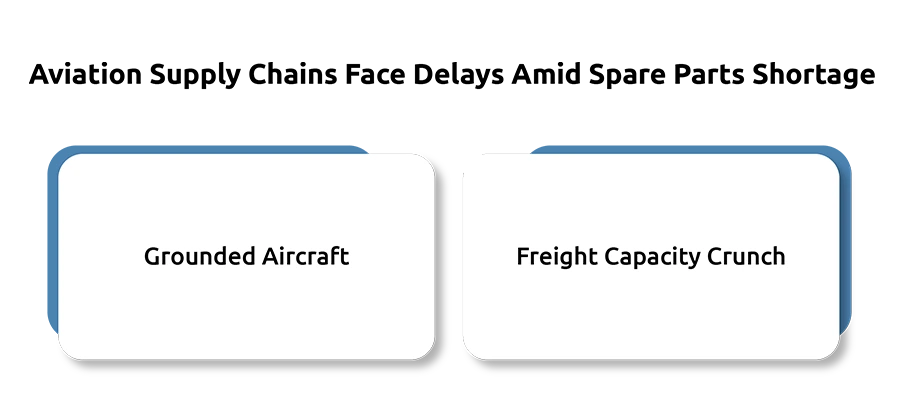
Aviation Supply Chains Face Delays Amid Spare Parts Shortage
One of the most sudden impacts of the spare parts shortage is the delay across aviation supply chains. Airlines are experiencing growing shipment times due to the unavailability of necessary components such as engines, avionics systems, and system parts. This has resulted in grounded aircraft and reduced fleet availability.
In global trade, processes such as Customs clearance, proper categorization using the HS code and the HTS harmonized tariff Schedule for products, and approval to Incoterms play a vital role in the shipments of aircraft parts. Also, choosing delivery terms such as DAP (Delivered at Place) or managing various DAP agreements across suppliers can make delivery timelines difficult if not handled completely in global trade.
Businesses now rely more on international shipping and logistics companies, but there are still problems. limited space and delays in global shipping are making supply chains slower. Many companies use exporter of record and importer of record service but still shipments can be delayed because rules and complicated paperwork takes time.
Aerospace Supply Chain Disruptions Continue to Global Shortage
The aircraft supply chain continues to face supply issues, further contributing to the global shortage of spare parts. A major challenge depends on the difficulty of international trade terms. Organizations must guide systems such as the Generalized System of Preferences (GSP) while confirming correct documentation and tariff categorizations. The role of intermediaries has also become more necessary in global trade. Suppliers frequently ask questions like can a freight forwarder be an exporter of record or can a customs broker handle both import and export documentation, which are mostly relevant as organizations look to simplify operations. While these service providers can support documentation and regulatory agreement, dependence on third parties can introduce extra coordination challenges if not managed effectively. Moreover, the lack of effective Inventory and order management systems has made it difficult for organizations to track spare parts availability in real time globally for the supply chain. This has led to overstocking in some regions and shortages in others, further supplying the spare Parts Disrupts. To show these issues, organizations are exploring the best trade compliance software for import export rules to automate processes, reduce errors, and improve the efficiency of aircraft part supply.
Global Shortage to Build Long-Term Resilience in Aerospace Supply Chain
Despite ongoing challenges, the global shortage of aircraft spare parts is leading the aviation industry toward creating long-term dependence on the supply chain. Organizations are mainly focusing on Supply chain optimization plans to improve efficiency and reduce dependency on limited suppliers. One of the major approaches is changing sourcing strategies and improving supplier chains across different regions. This reduces risks related to geopolitical problems and localized production issues. Also, investing in digital tools for predictive maintenance and demand evaluation allows organizations to anticipate shortages and act proactively. Also, increasing approval capabilities through better use of exporter of record services, importer of record services, and automated approval tools confirms smoother cross-border trade. By improving supply chain trade routes, improving documentation accuracy, and accepting effective shipping methods under Incoterms, organizations can reduce risks and improve delivery timelines.

Conclusion
The global shortage of aircraft spare parts in 2026 has revealed issues in aviation supply chains. From delays in Customs clearance of aviation Supply Chains to inefficiencies in Inventory and order management, the challenges are growing, and difficulties in the shortage of Aircraft Spare Parts. Also, these issues present an opportunity for change. By adopting Supply chain optimization, using the best trade compliance software for import export rules, and improving partnerships across the ecosystem, the aviation industry can build a more flexible and effective supply chain. Addressing both working and regulatory challenges will be major to confirming long-term stability and growth in the global aviation industry.
DID YOU KNOW?
According to the International Air Transport Association (IATA), airlines are estimated to incur over $11 billion in unexpected costs in 2025 due to ongoing disruptions in the supply chain.
FAQs:
1. Why is there a shortage of aircraft spare parts in 2026?
The shortage is mainly due to increased post-pandemic air travel demand, limited manufacturing capacity, supply chain disruptions, and delays in global logistics and regulatory approvals.
2. How does the aircraft spare parts shortage affect airlines?
It leads to grounded aircraft, fewer available planes, maintenance delays, and higher operating costs, which can also impact flight schedules.
3. What role do customs clearance and HS codes play in aircraft parts shipping?
Customs clearance and accurate classification using HS codes and HTS (Harmonized Tariff Schedule) ensure smooth cross-border movement of aircraft parts and help avoid shipment delays.
4. Can a freight forwarder act as an exporter of record?
Yes, in some cases a freight forwarder can act as an exporter of record, but it depends on regulatory requirements and the agreement between parties involved in international trade.
5. How can aviation companies overcome spare parts shortages?
They can improve supply chain planning, diversify suppliers, maintain better inventory control, and use technologies like predictive maintenance to reduce risks.