Overview
Geopolitical risk has become one of the most critical challenges to global aviation. Aircraft leasing, working mainly by economic costs and fleet efficiency, is now heavily changed by political tensions, sanctions, trade disruptions, and changing regulatory environments. Leasing companies, airlines, and economists increasingly recognize that aircraft are not just a device but also a geopolitical tension. In recent years, conflicts, export restrictions, and economic operational separation have shown how quickly leasing agreements can be stopped. Aircraft, payment stops, and administrative issues have forced the search for agreement systems.
How Does the Geopolitical Landscape Change Aircraft Leasing?
Geopolitical instability directly affects airlines’ ability to meet lease problems. Sanctions or regulatory restrictions can stop payments, restrict aircraft trades, or even block access to maintenance and insurance services. Lessors now conduct deeper country-risk management before placing aircraft in some markets. Contracts increasingly include problems getting asset recovery rights, official flexibility, and insurance safeguards.
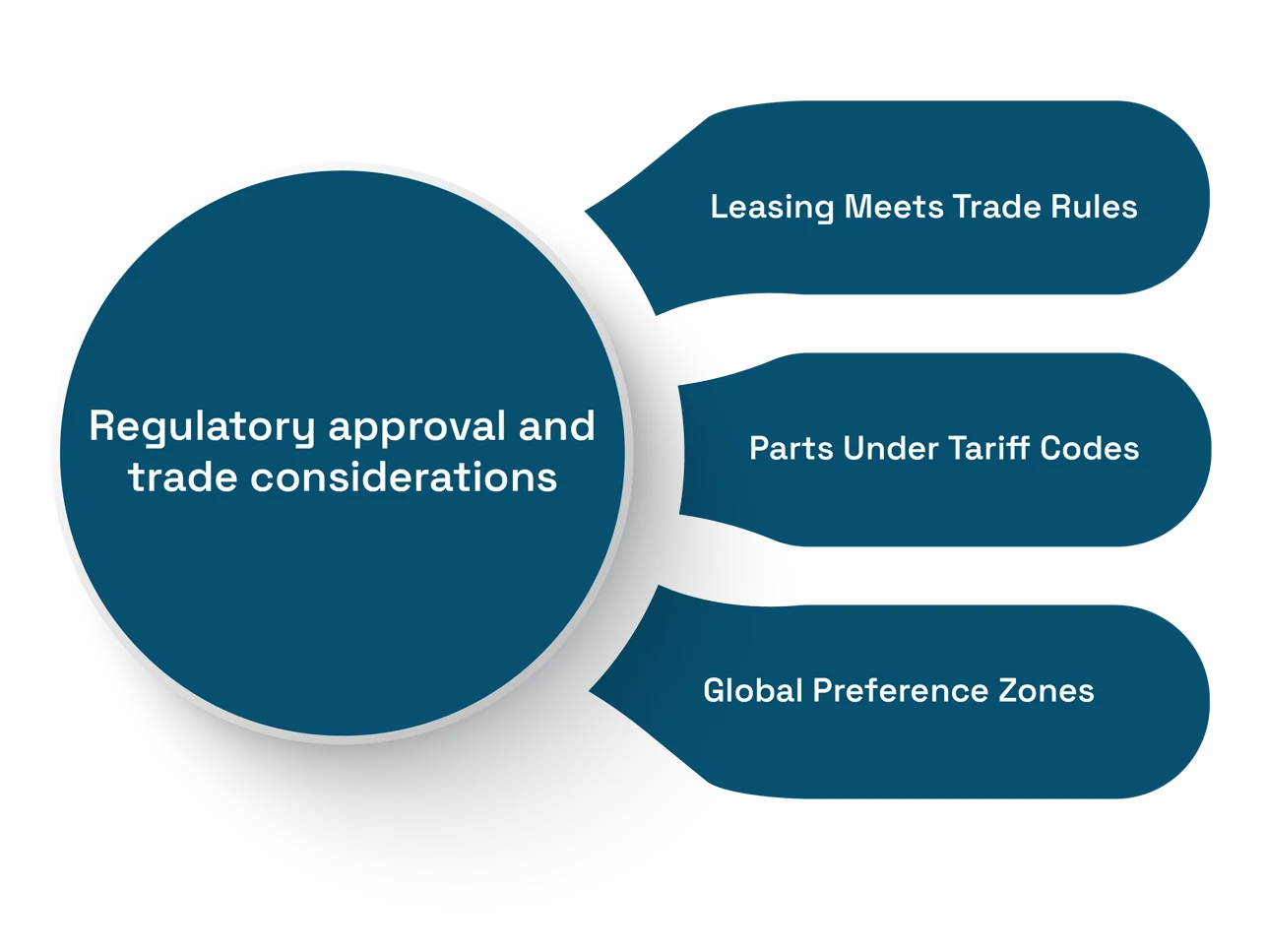
Regulatory approval and trade considerations
Aircraft leasing works with international trade regulations, mainly when aircraft or parts are shipped across borders. Approval systems are now responsible for tariff categorizations, export documentation, and regulatory problems. For example, discussions around systems like the generalized system of preferences (GSP), HS code classifications, and harmonized tariff schedule requirements may arise when aircraft components or engines are shipped globally. Also, Incoterms and customs clearance responsibilities may change how spare parts are delivered under lease maintenance agreements. While leasing is mainly economical, working support frequently involves international freight services and importer of record service arrangements when parts must be shipped urgently.
Insurance, repossession, and administration challenges
Recent geopolitical problems show how difficult repossession can be when political barriers grow. Leasing companies now prioritize neutral legal officials and stronger execution systems. Also, questions related to exporter of record services or whether a freight forwarder can be an exporter of record occasionally surface when moving aircraft components during repossession or maintenance. These operational complexities support why contracts must clearly assign responsibilities among airlines and service providers.
What are the three types of aircraft leasing contracts?
Operating lease
Operating leases remain the most common structure in commercial aviation. Under this model, the lessor retains ownership while the airline uses the aircraft for a fixed period, typically shorter than the aircraft’s economic life. Airlines prefer operating leases because they support asset-light flying plans and fleet flexibility. Geopolitical risk has led to stronger return conditions, increased maintenance tracking, and clearer asset location reporting requirements.
Finance lease
A finance lease works more like a long-term trade. The airline supports greater responsibility for maintenance and operational risk, frequently with an option to acquire ownership at the end of the lease term. In geopolitically sensitive regions, lessors carefully evaluate legal execution capabilities before entering finance lease agreements, as recovering assets may be more difficult in the supply chain.
Wet lease
Wet leases, such as aircraft, maintenance, and insurance provided by the lessor. These arrangements are frequently used during capacity shortages or regulatory changes. Because wet leases involve cross-border operations, they require strict regulatory approvals and work with approval systems, including inventory and order management processes for spare parts and working supplies.
What are the future trends in the aircraft leasing industry?
Digital Approval and Tracking
Advanced data tools are helping lessors monitor aircraft utilization, maintenance status, and approval problems in real time. Discussions around the best trade compliance software for import export rules are increasingly relevant as leasing operations work with global regulatory requirements. Digitalization supports faster decision-making when geopolitical risks are growing in global trade.
Contractual flexibility and Dependance
Future agreements are expected to include dynamic payment structures, political risk, and predefined recovery pathways. Clear allocation of responsibilities, including customs broker roles or whether a customs broker can handle both import and export documentation, helps stop operational confusion during disruptions.

Conclusion
Geopolitical risk is no longer a secondary issue in aircraft leasing; it is a central factor changing how contracts are improved in the trade. Political tension, regulatory difficulty, and global trade dynamics are pushing lessors and airlines toward more resilient and approval agreements. As aviation continues to develop, leasing agreements will mostly balance economic efficiency with legal protection and working usage. Organizations that combine geopolitical awareness into leasing plans will be better situated to manage problems while having stability in an increasingly unstable global aviation environment.
DID YOU KNOW?
AirCap Holdings N.V. today announced that it has entered into a lease agreement with FlySafe for three new Boeing 737 MAX 8 aircraft, scheduled for delivery in the first quarter of 2028, and two Boeing 737-800NG aircraft, expected to be delivered in the third quarter of 2026.
FAQs:
1. How do geopolitical risks affect aircraft leasing agreements?
Geopolitical risks can disrupt payments, restrict aircraft transfers, and create regulatory barriers, forcing lessors to include stronger legal protections and recovery clauses in contracts.
2. What are the main types of aircraft leasing contracts?
The three primary types are operating leases, finance leases, and wet leases, each offering different levels of ownership responsibility and operational control.
3. Why is repossession difficult during geopolitical conflicts?
Political restrictions, sanctions, and local legal systems can delay or block asset recovery, making repossession complex for leasing companies.
4. How do trade regulations impact aircraft leasing operations?
Aircraft parts and maintenance logistics often involve international shipping, requiring compliance with export rules, customs procedures, and regulatory approvals.
5. What future trends are shaping the aircraft leasing industry?
Key trends include digital tracking systems, stronger risk-management clauses, flexible payment structures, and increased focus on trade compliance and geopolitical risk assessment.