
Global supply chains are under a lot of stress. Governments everywhere are raising tariffs imposing trade rules and controlling what can be exported. They are also making policies that favor sourcing. These protectionist steps are changing how countries trade with each other. They make it more costly for businesses to import and export goods across borders. Companies that buy products from over the world are dealing with higher costs. As tensions and inflation continue to impact markets companies need to adapt their supply chains.Companies sourcing products globally are searching for ways to adjust to these changes.
The impact of these supply chain disruptions is being felt strongly across industries such as automotive, aviation, medical equipment, and IT infrastructure. Shortage of Semiconductors more transportation costs and delays at customs are causing production to take longer. This is also making factories in regions more important. Businesses need to make their international trade compliance processes stronger at the time. This is so they can avoid problems with shipments and risks from regulations. Companies are working on making their logistics planning better. They are also trying to find sources for the things they need and using advanced strategies to manage their supply chains.
How Protectionist Policies Are Reshaping Global Trade
Global trade is changing a lot. It is moving away from being around the world to being more about working with countries that are close by. This is happening because governments are making new rules to protect their countries. They are doing things like adding costs to materials that come from other countries limiting how much of something can be brought in and stopping certain things from being exported and saying that manufacturing products have to be made in their own country. This rise in economic nationalism has accelerated trends like reshoring and nearshoring, particularly across the automotive, IT, aviation, and medical sectors.
However these policy changes are also causing problems for international trade. They are leading to costs for finding suppliers, unstable suppliers, delays in production and more complicated customs procedures. Businesses that trade across borders now have to deal with changes in HS code classifications. They also have to follow HTS regulations changing Incoterms rules and stricter customs procedures.
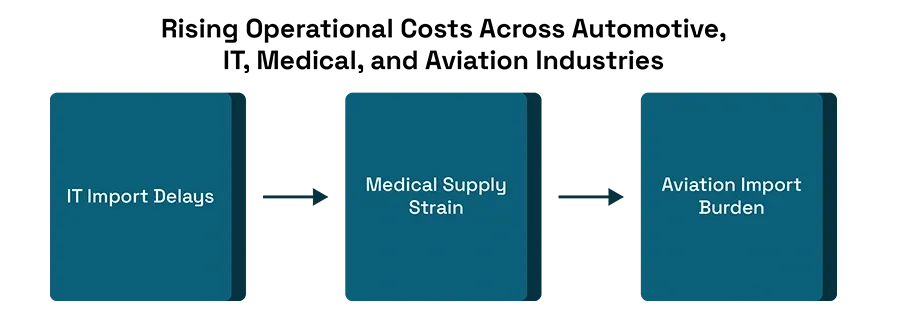
Rising Operational Costs Across Automotive, IT, Medical, and Aviation Industries
Protectionist policies and problems with trade are making it really expensive for companies to do business. This is happening in important industries. Because of this businesses have to think of ways to importing and deliver their products. In the automotive industry there is a problem with getting semiconductors. The prices of parts for vehicles are also going up. This is causing a lot of trouble for automotive industry and their production schedules. On top of that it is hard for them to get what they need from regions, which is putting even more pressure. The IT and data center industry is also experiencing delays in servers, networking equipment, and advanced chips due to import restrictions and higher duties on electronic goods. Medical equipment suppliers are having a time right now. They are waiting for healthcare imports that are taking long to arrive. They also have to pay money to make sure they are following all the rules. The aviation industry is facing problems. They do not have aircraft components. It is also costing them money to import around. There is a lot of paperwork that they have to deal with when they are working with other countries.
To deal with these disruptions companies are spending more on making their supply chains better. They are also focusing on clearing customs and getting reliable international shipping services. This helps them keep working without any issues. Businesses that trade globally are using a service that acts as the importer of record and another that acts as the exporter of record services to navigate changing regulations, reduce compliance risks, and ensure smoother international movement of high-value goods across automotive, IT, medical, and aviation supply chains.
The Hidden Operational Costs Behind Trade Protectionism
Beyond tariffs and import restrictions, businesses are facing several hidden operational costs that significantly impact global supply chains. Companies that do business with countries are spending a lot of money on inventory. This is because it takes a time to get things from one place to another. Companies are trying to work with suppliers so they do not have to rely on just one. This is an idea but it costs a lot of money to find new suppliers and get them started in many different areas. At the time it is expensive to make warehouses bigger insurance is costing more and customs is taking a long time to process things. All these things are making it hard for companies to make a profit.
Managing country sourcing is really tough these days. It needs people to work together better like the suppliers, the people who move the freight and the teams that make sure everything is legal. To get things done quickly companies are putting money into a things. They are getting systems to manage their inventory and orders. They are also getting tools that help them see what is going on with trade. They are using technology that helps them make decisions faster which makes their operations more flexible. Multi-country sourcing is a part of this so they need to get it right. Businesses are looking for the trade compliance software to follow import and export rules. This is to reduce mistakes in paperwork and risks of breaking regulations. Many businesses are also wondering if a customs broker can handle paperwork for both imports and exports. They want to make cross-border operations simpler and get their goods cleared by Customs faster. They are searching for ways to make import and export documentation easier.

Conclusion
Protectionist policies are changing trade a lot. They are doing this by raising tariffs making import rules stricter and putting up barriers in markets. Companies that handle sourcing, manufacturing and distribution are feeling the pinch. Their costs are going up because of these measures. These businesses are seeing their expenses rise due, to policies. They are having to deal with tariffs and tighter import regulations. This is affecting how they operate globally. The cost of transportation is going up. Industries, like automotive and aviation and medical equipment and IT infrastructure are having a time staying efficient when the trade environment is getting more complicated.
When it comes to import export businesses they need to be ready for anything. Import export businesses can not just stick to the ways of doing things. They can not just get things from one place or one country. Now import export businesses are doing things like making plans for getting things from one place to another. They are also getting better at keeping track of what they have in stock. Import export businesses are making it easier to get things across borders by following all the rules. This helps import export businesses to keep running when things get tough. Import export businesses are doing all these things to make sure they can still do business with countries without any problems.
DID YOU KNOW
“the impact on global trade is estimated to be more pronounced, with an annual decline of 2.1 percent or more than US$606 billion relative to the baseline if these barriers stay in place for three years”
FAQs
1. Do tariffs protect domestic jobs?
Trade protections help some businesses in our country for a while. They keep countries from selling things here. This also hurts other businesses. When we have to pay more for things we need to make things it is bad for those businesses.
2. What is the difference between nearshoring and friendshoring?
Nearshoring: Moving production closer to the home country to reduce transit times.
Friendshoring: Restricting sourcing to nations with shared economic and political values to avoid political risks.
3. How do trade barriers cause inflation?
Barriers restrict access to cheap foreign goods. Domestic companies must buy pricier local alternatives or pay import taxes. These higher manufacturing costs are passed to consumers as higher retail prices.
4. Why does protectionism lead to supply chain delays?
New regulations increase administrative friction. Customs inspections become stricter, paperwork multiplies, and cargo sits at ports longer. These bottlenecks disrupt predictable production schedules.
5. Can small businesses survive rising protectionism?
Small businesses struggle the most because they lack the capital to relocate factories or absorb tax increases. To survive, they must renegotiate vendor terms, raise prices, or pivot to strictly local suppliers.