Introduction
In 2026, companies will have to deal with new tariffs, changing trade policies, and more strict customs laws, which will cause global trade to change rapidly. To improve supply chain security and support local companies, many countries are increasing import taxes and changing trade regulations. In order to review cargo and verify customs documents, customs officials are also using more digital technology. These developments require companies involved in international trade to carefully plan their shipments, maintain proper records, and follow to import and trade compliance regulations. Businesses can avoid delays at customs, unexpected costs, and delays in their international supply chain by being properly prepared.
Understanding Today’s Global Tariff Landscape
Legally apply tariffs, or taxes, on goods that are imported from other countries. These import taxes can have an impact on both customers & sellers by increasing the price of goods entering the country. Because they affect how companies import, sell, and transport goods across borders, tariffs are an important part of international trade. Different countries introduce tariffs for different purposes. They may want to help local industry, secure local businesses from global competition, improve tax revenue, or react to changes in international trade. By introducing new tariff rates, changing import regulations, & improving customs processes, some countries have also change their trade policies in recent years. These trends have a direct impact on global trade. New trade rules may force businesses to change their supply chains & shipping processes, and tariffs can increase the cost of imports. If same rules are followed in other countries, exporters may face difficulties. Businesses must stay up to date & plan carefully as trade rules continue to change in order to reduce risks & keep their supply chains running smoothly.
How Trade Policy Shifts Are Changing Global Supply Chains
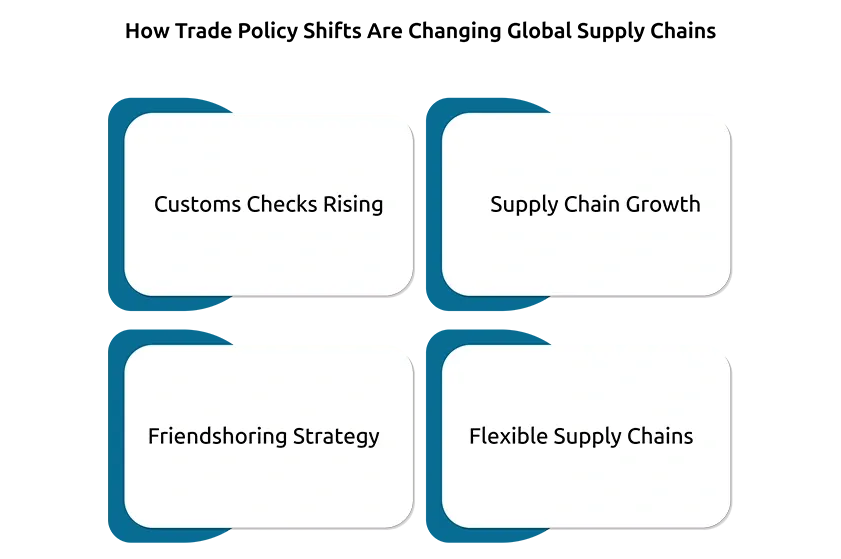
Recent trade law changes are affecting how businesses handle their global supply chains. Many countries have set up new import controls, changed customs rules, and increased checks of imported goods. Because of these changes, companies must review their shipment procedures and makes sure that all import standards are followed before goods are shipped. Businesses have a benefit from new local trade deals, which can reduce tariffs and improve trade between member countries. At the same time, many businesses are focusing on handling their supply chains by importing goods from multiple countries rather than depending only on a single supplier. This method, also known as supply chain growth, helps to reduce the risk of delays and extra costs. Another growing trend is nearshoring, in which companies move production closer to their main markets, and friendshoring, in which they source goods from countries with strong trading networks. These methods plan to increase supply chain safety and reduce risks caused by changed trade rules. As a result, businesses are changing their supplier methods to create a more flexible and dependable global supply chain.
Why Compliance Has Become More Important Than Ever
As global trade becomes increasingly controlled, trade compliance becomes even more important. Many countries have implemented stronger customs rules to improve security, avoid risks, & make sure that imported goods follow legal standards. Businesses that do not follow to these rules may risk customs delays, charges, or extra costs. The use of correct HS Codes to verify products is an important part of import compliance. Customs officials can calculate tariffs & handle shipments efficiently if they have the correct classification. Businesses must also submit correct countries of location details, which may impact tariffs, trade deals, and import rules. Many customs officials are already using digital tools to speed up the review of shipments and verify customs documents. As a result, companies must make careful reports and full paperwork with every shipment. Maintaining proper records of billings, shipping documents, and customs files helps companies in following compliance standards and improves customs checks. Businesses can avoid risks and keep their imports running smoothly by using these methods.
Managing Tariff Risks Through Better Trade Planning
Good planning can help companies reduce risks and control import costs. Buying from multiple suppliers rather than just one is part of a strong tariff management strategy. This improves supply chain control and allows companies to more easily deal with changes in trade rules.
Before exporting goods, companies must find efficient shipping methods, prepare documents before time, and support to import compliance standards. Using the proper tariff classification and HS codes helps you avoid duty mistakes and customs delays. Regular customs checks & cost plans also help companies in staying compliant, handling costs, and keeping a smooth supply chain.

Conclusion
Tariffs, changing trade rules, and strict customs rules create major problems for global trade companies. These changes can increase import rates, cause customs delays, & improve global shipping. Businesses can reduce these risks by following to trade compliance rules, handling proper customs documents, & carefully planning imports. Working with an expert Importer of Record (IOR) partner also supports businesses in following import standards, handling customs processes properly, & keeping global shipments running smoothly.
Did you know
Global goods trade is estimated to have reached approximately US$13.7 trillion in the first half of 2026, up 12.5 % from the same period in 2025.
FAQ
Can using different suppliers lower supply chain risks?
Working with providers in different locations allows companies to reduce delays & create a more reliable supply chain.
Do digital customs systems improve shipment processing?
When the details provided is correct and complete, digital customs systems improve the review process and help with customs clearance.
Is trade compliance important for international shipments?
Following trade compliance rules can help companies avoid customs delays, charges, and issues.
Does an Importer of Record (IOR) support global trade?
An Importer of Record (IOR) handles import responsibilities & helps businesses follow local customs requirements.
Can changing sourcing strategies improve supply chain stability?
Choosing suppliers from different regions helps businesses reduce risks and maintain a steady supply of goods.