Understanding Nearshoring and Offshoring in Modern Global Trade
Global supply chains have had a lot of problems in the few years. These problems include things like countries not getting and ships being late. They also include costs to move things and new rules for trading. Because of this companies are looking at how they get the things they need. They also want to make sure they are not taking many risks. For companies that import and export things like computer equipment and medical devices it’s very important to choose the right way to get these things. The way they get these things can affect how well they can move them around and keep track of them.
When we talk about sourcing strategies two things come to mind: nearshoring and offshoring. Nearshoring is when companies move their manufacturing or sourcing operations to countries that’re close by. This means they can get their products to market faster. It is easier to keep an eye on things. On the hand offshoring is when companies move their production to countries that are really far away. They often do this because they can save money on labor and other costs. Nearshoring and offshoring are both useful. It is really important for companies that do business around the world to know what nearshoring and offshoring are all, about.
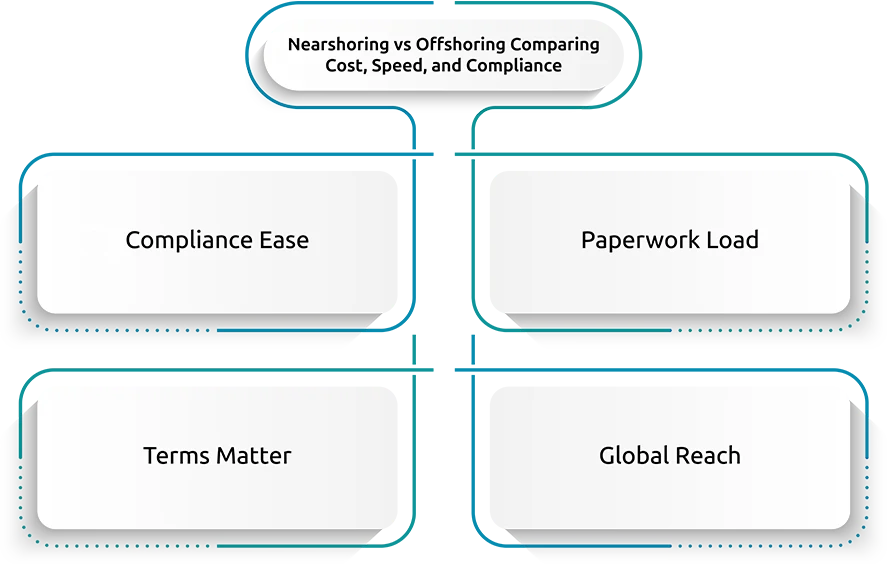
Nearshoring vs Offshoring: Comparing Cost, Speed, and Compliance
When you are trying to decide between nearshoring and offshoring you have to think about more than how much it costs to make things. Offshoring is often cheaper when it comes to labor and production which’s great for companies that really need to save money. Trade compliance is something that companies need to think about when they’re making decisions about where to get their products. If a company gets its products from a place that’s close by it might be easier to deal with customs and get the products into the country. Companies have to make sure they are doing everything with the customs forms and rules like the HS code and the Harmonized Tariff Schedule. They also have to think about the terms of the sale like DAP and other shipping terms so they know how much everything will really cost when it gets to their door. When companies are getting products from over the world they have to think about who will handle all the paperwork, for importing and exporting.
Enhancing Supply Chain Optimization Through Strategic Risk Management
Whether a business chooses nearshoring or offshoring, effective supply chain optimization depends on its ability to manage risks while maintaining operational efficiency. Building supply chain resilience helps companies respond quickly to disruptions such as geopolitical tensions, transportation delays, and changing trade regulations. Strong inventory and order management practices ensure that critical products remain available without creating excess stock and unnecessary costs. At the time, good freight planning helps companies choose the cheapest ways to transport goods and get products delivered on time. Having multiple suppliers also makes the supply chain stronger by not relying on one place or vendor for supplies. This way if something unexpected happens it won’t have an impact.
The Importance of Importer of Record and Exporter of Record Services in Global Trade
When companies grow and start working with suppliers from countries they have to make sure they are following all the rules. Importer of Record Service and exporter of record services are very helpful to companies because they take care of all the paperwork for customs and make sure everything is done correctly. They also handle things like duties and taxes. They make sure products have the right certifications.
Companies can make things easier for themselves by working with people who are experienced in Import and Export. These experts help companies get through Customs quickly make sure they are using the codes for their products and follow all the rules for international trade. They can also help with terms like Delivered At Place. By using these services companies can reduce the risks of something going wrong with their trade. They can also make their logistics operations run smoothly make their supply chain better and get their products to customers all around the world without any problems.
Conclusion
When you are trying to decide between nearshoring and offshoring it is not about saving money. This is a decision that affects how well your supply chain works how you manage your inventory and orders how quickly you can get things through customs and how well your business can handle problems. Nearshoring has some things about it. For example you get your things faster you can see what is going on better. There is less chance of something going wrong with shipping. On the hand offshoring can still save you a lot of money and give you access to special manufacturing skills that you might not have otherwise. If you are importing things for the IT, aviation, medical or automotive industries you have to think about things like how much it costs to ship things what rules you have to follow for trade what HS code to use and what you have to do for the HTS Harmonized Tariff Schedule.
DID YOU KNOW
“A changing relationship between the US and China, and recent green movements to reduce carbon emissions have caused many to re-think their sourcing and supply chain arrangements ”
FAQs
What is the main difference between nearshoring and offshoring?
Nearshoring is when you get products or services from a country that’s close, by. Offshoring is when you move your operations to a country that’s far away usually to save money on making things or paying workers.
How does nearshoring improve supply chain performance?
Nearshoring is a way to make the supply chain work better. It can make the time it takes to move things around shorter. This means that the cost of moving things from one place to another will be lower.
What role does an Importer of Record Service play in global sourcing?
An Importer of Record Service is very important. It helps with making sure that everything is done correctly when importing things. This service takes care of all the paperwork that has to do with customs.
How do customs clearance requirements differ between nearshoring and offshoring?
Customs clearance for offshoring is a lot more complicated. It takes longer to ship things. There are more rules to follow. On the other hand, nearshoring can make trade a lot easier depending on the rules in that region.
Can a customs broker handle both import and export documentation?
A lot of customs brokers can help with the paperwork, for both imports and exports. They can help businesses make sure they are following all the rules like classifying things and filling out customs forms.