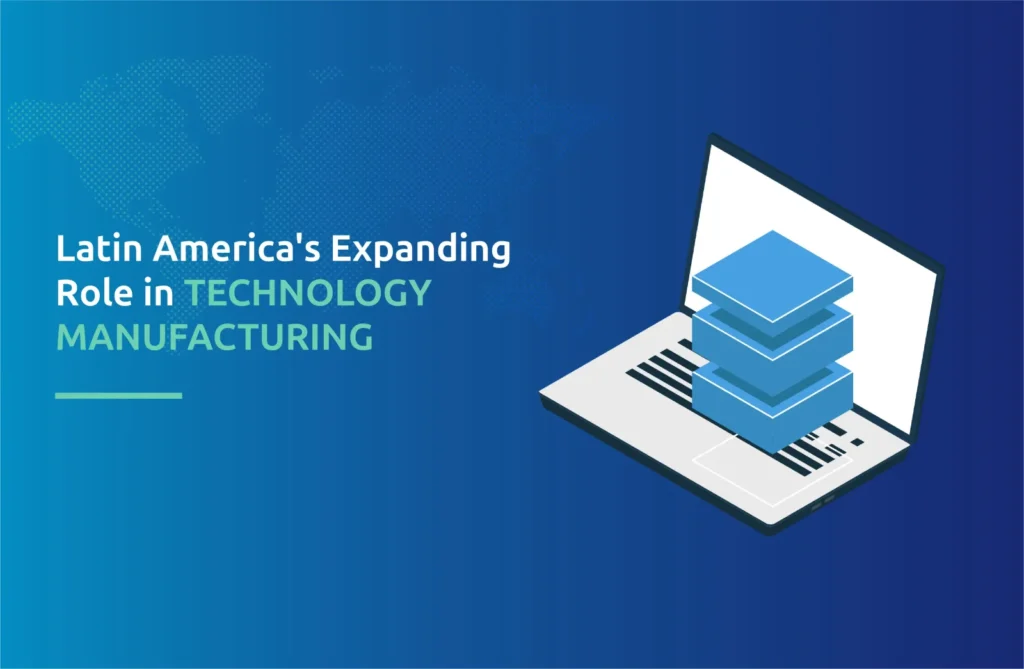
Latin America is becoming a more important part of the international technology manufacturing industry. Countries in the region were mainly known for producing raw materials, basic manufactured products. That picture is changing. Investment in electronics, automotive technology, telecommunications, medical equipment, and other high-value industries is increasing across the region.
Some factors are driving this change. Organization are looking for ways to make their supply chains more flexible, minimize dependence on distant management hubs, & move production closer to major main consumer markets. Latin America is well positioned for this change because of its location, growing industrial base, skilled workforce, & trade relationships with the United States & other major markets.
Why Technology Companies Are Looking at Latin America
One of the biggest reasons for the region’s growing role is supply chain expansion. International manufacturers have learned that depending too mainly on one country or region can create serious risks. Busy port issue, trade restrictions, transportation delays, high labor costs, & geopolitical tensions can quickly affect production.
Latin America offers companies another handling option. Instead of depending mainly on factories in Asia, businesses can place some production or assembly operations closer to their customers.
Mexico Remains a Major Manufacturing Hub
Mexico is at the center of Latin America’s technology manufacturing growth. The country has developed a strong industrial ecosystem supported by suppliers, logistics companies, skilled workers, industrial parks, and established export infrastructure.
Electronics manufacturing is mainly important. Companies operating in Mexico produce & assemble products such as computers, telecommunications equipment, consumer electronics, automotive electronics, & industrial technology.
The country’s managing strength is also closely connected to the automotive industry. Updated vehicles contain large amounts of electronic equipment, including sensors, control systems, batteries, displays, & communication technologies. As vehicles become more connected & electric, demand for updated components is increasing.
Brazil Is Building a Larger Technology Base
Brazil is another important player. As the largest economy in Latin America, Brazil has a large local market & a strong industrial sector.
The country has management capabilities across electronics, telecommunications, industrial equipment, automotive products, & medical technology. Its large consumer market also creates demand for technology products mainly produced domestically.
Brazil’s technology management sector faces challenges, including taxes, regulatory complexity, infrastructure limitations, & the cost of importing components. However, the country’s size & industrial capabilities continue to make it an important location for investment.

Nearshoring Is Changing Supply Chain Strategies
The growth of technology manufacturing in Latin America is closely connected to the broader nearshoring trend.
Companies are no longer looking only at the cost of manufacturing. They are considering the complete supply chain. A factory that is slightly more costly to operate may still make financial sense if it minimizes transportation time & inventory needs.
For technology companies, this can be mainly important. Products such as servers, networking equipment, electronic components, medical devices, & industrial systems may need careful management & predictable delivery schedules.

Technology Infrastructure Is Also Growing
Management growth depends on more than factories. Technology companies need reliable networks to operate updated production facilities.
Robotics, automation, artificial intelligence, industrial software, sensors, and linked equipment are being used more and more in factories. These systems require dependable data connectivity, telecommunications networks, electricity, and expert assistance.
Latin American countries are investing in industrial parks, logistics infrastructure, telecommunications networks, & energy systems to support economic growth. However, network quality differs mainly between countries & regions.
The Role of Skilled Workers
A developing technology manufacturing industry also needs skilled workers.
Engineers, technicians, software experts, quality control specialists, logistics specialists, and maintenance teams are all necessary in modern industries. A greater pool of personnel capable of supporting modern manufacturing has been created by the expansion of technical education and engineering programs in Latin American nations.
Workforce development will become increasingly important as factories introduce more automation. Workers will need to understand not only traditional manufacturing processes but also robotics, data systems, electronics, & digital production tools.
Companies entering the region may also need to invest in training to ensure that local teams can handle specialized equipment & production processes.
Challenges Manufacturers Still Face
Latin America’s manufacturing opportunity does not come without problems.
Countries can have very different regulations. Before transporting equipment or components across borders, it is necessary to review customs procedures, import restrictions, taxes, product standards, and certification rules.
Network is another consideration. Some areas have excellent roads, ports, airports, & telecommunications networks, while others may face congestion or limited capacity.
Supply chain planning is also important because many technology products still depend on factors manufactured outside the region. A company may assemble a product mainly while importing semiconductors, displays, batteries, circuit boards, or specialized components from Asia, North America, or Europe.
What This Means for Global Technology Companies
Latin America’s developing manufacturing role does not necessarily mean that production will move completely away from Asia. Instead, companies are increasingly managing more changing manufacturing networks.
A business might continue manufacturing core components in Asia while establishing final assembly, testing, configuration, or distribution operations in Latin America.
This creates a more flexible supply chain. If demand changes in one market, production can be adjusted across different facilities.
For technology companies, this approach can also support faster delivery, regional customization, and better inventory management.
Conclusion
Latin America’s role in technology manufacturing is likely to continue developing as companies rethink their global supply chains.
Mexico is ready mainly because of its proximity to the United States & established manufacturing base. Brazil offers a large domestic market & broad industrial capabilities. Other countries in the region may also attract investment as manufacturers search for additional locations.
For international technology companies, Latin America is becoming more than a regional sales market. It is main part of the manufacturing & supply chain strategy. Companies that evaluate the region carefully & understand its regulatory, logistics, & infrastructure need can use Latin America to build supply chains that are closer to customers, more diversified, & better prepared for future issue.
Did you know ?
Hitachi Energy reaffirms commitment to Latin America through an additional $150 million USD investment to expand power transformer manufacturing capacity
FAQ
Why is Latin America becoming important for technology manufacturing?
Latin America is attracting technology manufacturers because of its location, skilled workforce, growing industrial infrastructure, and access to major markets. Companies are also using the region to reduce dependence on a single manufacturing location.
Which Latin American countries are important for technology manufacturing?
Mexico is a major technology manufacturing hub, especially for electronics, automotive technology, and telecommunications equipment. Brazil also has strong industrial and technology capabilities. Other countries may attract investment as companies look for additional manufacturing locations.
How is nearshoring affecting technology manufacturing in Latin America?
Nearshoring allows companies to move manufacturing or assembly closer to their main customers. For businesses serving North America, Latin America can provide shorter shipping routes, faster delivery, and easier access to regional markets.
What challenges do technology manufacturers face in Latin America?
Manufacturers may need to manage different customs procedures, taxes, product regulations, infrastructure conditions, and certification requirements. Many technology products also depend on components imported from other regions.
Will Latin America replace Asia as a technology manufacturing hub?
Not necessarily. Latin America is more likely to complement existing Asian manufacturing operations. Companies may keep component production in Asia while using Latin American facilities for assembly, testing, configuration, or regional distribution.