Introduction
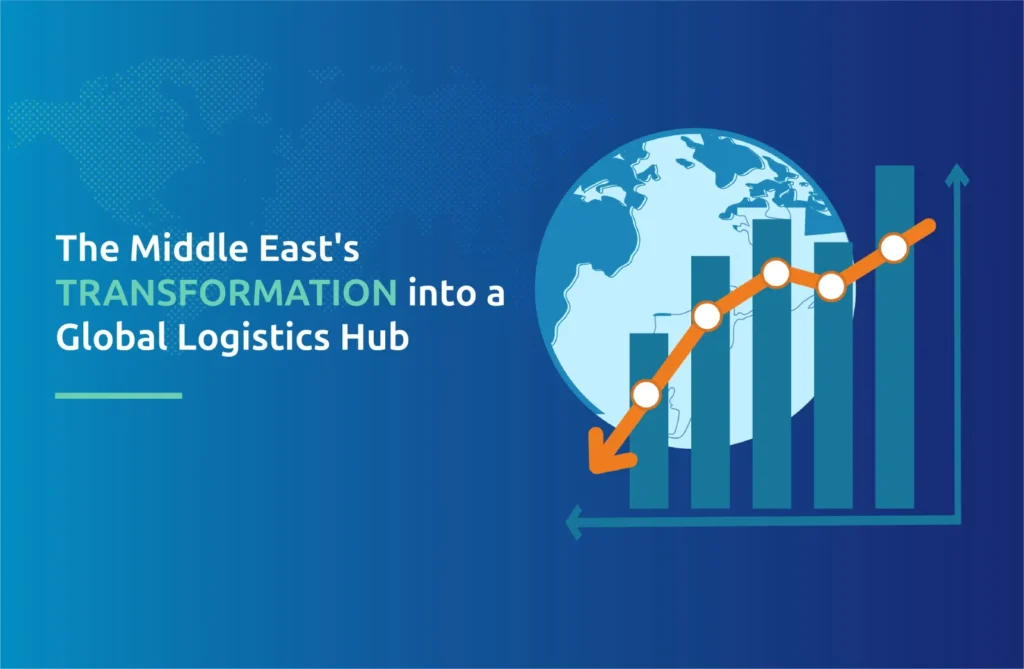
The Middle East is moving beyond its traditional role as a resource-rich region or developing into a major center for global trade, delivery, production, & logistics. Its position between Asia, Europe, and Africa gives businesses access to several valuable trade routes. Countries such as the United Arab Emirates or Saudi Arabia are investing heavily in ports, airports, highways, rail networks, free zones, logistics parks, & digital customs systems. These developments are changing how global shipments move across the region & creating new prospects for companies that need faster access to Middle Eastern or nearby markets.
Saudi Arabia has set logistics development as a central part of Vision 2030. Its National Shipping & Logistics Plan is designed to use the Kingdom’s location between three regions & improve the network between ports, airports, roads, railways, or logistics zones. Saudi Arabia’s 2025 Vision 2030 report highlights the development of 59 logistics hubs, with gains in digital services, ports, airports, & multimodal connectivity.
Why the Middle East Is Becoming a Logistics Powerhouse
Geography is one of the region’s strongest advantages. The Middle East sits close to major maritime corridors linking Asian manufacturing centers with European or African markets. The Gulf also offers direct access to large consumer markets & industrial economies across the Arabian Peninsula. This location allows logistics operators to build regional distribution models around major ports & airports rather than depending on distant European or Asian gateways. As businesses expand sourcing and create regional operations, demand for tactically located warehousing & shipping systems continues to increase.
The region’s logistics growth is also supported by large-scale system investment. Saudi Arabia is developing port capacity, logistics zones, road connections, rail projects, or digital customs network, while the UAE continues to integrate ports, airports, roads, customs, & other shipping approvals.
Ports, Airports or Multimodal Connectivity
The Middle East is enhancing multimodal connectivity by linking seaports, airports, roads, or rail networks. Seaports manage containers, industrial cargo, vehicles, or project shipments, while airports support electronics, medical device & other sensitive goods. Road and rail connections extend cargo movement from major gateways to industrial zones or regional markets. This linked network gives businesses greater flexibility to select the right shipping mode based on cargo type, urgency, or destination.
Free Zones & Regional Distribution
Free zones are another essential part of the Middle East’s logistics development. They offer system for warehousing, distribution, trading, & re-export activities while connecting businesses to built shipping networks. Dubai has developed a specifically strong free-zone ecosystem around trade or logistics, helping companies establish regional stock & distribution operations without placing every activity directly inside the domestic market.
For global businesses, the value of these zones extends beyond storage. A regional supply center can combine products arriving from different suppliers before they are sent to customers across several countries. However, companies must still assess the customs status, ownership structure, product rules, import requirements, or tax treatment applicable to each movement. A free-zone location does not automatically remove the need for country-specific import compliance.

Digital Customs and Trade Facilitation
Digital customs systems are improving logistics across the Middle East through electronic documentation and digital declarations.
Automated processing or data sharing can reduce manual work and improve cargo visibility. Accurate HS codes, product details, valuation, origin details, or licenses remain important. Proper documentation helps companies avoid customs delays & clearance issues. This is specifically important for technology, telecom, medical device, or automotive shipments.
What This Means for Global Businesses
The Middle East’s enhanced logistics network creates options for businesses entering new markets or improving existing regional operations. Companies can set up gateways to support supply across the Gulf Cooperation Council & surrounding markets while integrating sea, air, road, and warehousing solutions. However, shipping efficiency must be matched with proper import planning. Customs declarations, importer eligibility, product approvals, taxation, documentation, & local representation can determine whether a shipment moves smoothly after arrival.
This is where Importer of Record (IOR) services can become relevant for companies without an established importing entity in a destination market. An IOR structure can help coordinate the responsibilities associated with customs entry and import compliance, subject to local legal requirements. For technology, medical, telecom, automotive, and industrial shipments, early assessment of product-specific rules can also help prevent cargo from reaching a gateway before the required approvals are confirmed.

Conclusion
The Middle East’s shifting into a global logistics hub is being driven by geography, network, digitalization, trade policies, or regional supply demand. The UAE and Saudi Arabia are developing interconnected ecosystems that combine ports, airports, roads, railways, logistics zones, free zones, or digital customs processes. As global businesses expand their regional presence, successful logistics planning will require more than selecting a freight route. Companies will need to align shipping, customs, taxation, product compliance, importer duties, stock planning , & fallback planning to build reliable cross-border supply chains.
Did You Know?
Saudi Arabia handled 8.3 million containers in 2025, including 2.2 million transshipment containers, while its logistics centers linked to re-export increased to 24 from just 2 in 2019.
Frequently Asked Questions?
Why is the Middle East turning into a global logistics hub?
The Middle East is becoming a global logistics hub because of its planning position between Asia, Europe, & Africa, combined with major investments in ports, airports, roads, railways, logistics zones, free zones, & digital customs systems. The UAE or Saudi Arabia are top this change across large-scale network & trade strategies.
Which Middle Eastern countries are key logistics hubs?
The United Arab Emirates & Saudi Arabia are among the region’s most leading logistics hubs. Dubai or Abu Dhabi offer board sea-air-land network or re-export process, while Saudi Arabia is enhancing its ports, logistics zones, airports, highways, or rail network under its Global shipping & Logistics planning.
How do Middle East logistics hubs support international businesses?
They offer access to major shipping routes, global airports, regional warehouses, free zones, road networks, & distribution centers. Businesses can use these facilities to combine stock, move goods between markets, establish regional distribution operations, & respond more quickly to customer demand.
Why are IOR services important for Middle East shipments?
IOR services can be useful when a global company does not have an eligible importing entity in the destination country. Relying on import regulations, the IOR can support customs entry, import documentation, or related compliance responsibilities while the shipment moves through the appropriate logistics channel.
How are Middle East logistics hubs enhancing supply chain durability?
Companies can use multiple ports, airports, shipping modes, warehouses, or regional delivery points to minimize trust on one route. This becomes specifically valuable when geopolitical events, port delays, security incidents, or changes in maritime routing affect established shipping routes.