
Overview
India is rapidly growing as a global hub for electronics manufacturing, controlled by strong government support, growing global demand, and changing supply chains. As organizations change beyond traditional production destinations, India is situating itself as a dependable and expandable change for electronics manufacturing. The country’s focus on improving systems, policy guidelines, and trade simplification has mostly improved its role in global exports. India’s initiatives are growing with huge production and device manufacturing. India looks to reduce import dependency while developing export competitiveness globally. The combination of modern logistics, simplified customs clearance, and effective inventory and order management systems is further allowing businesses to grow operations effectively in India.
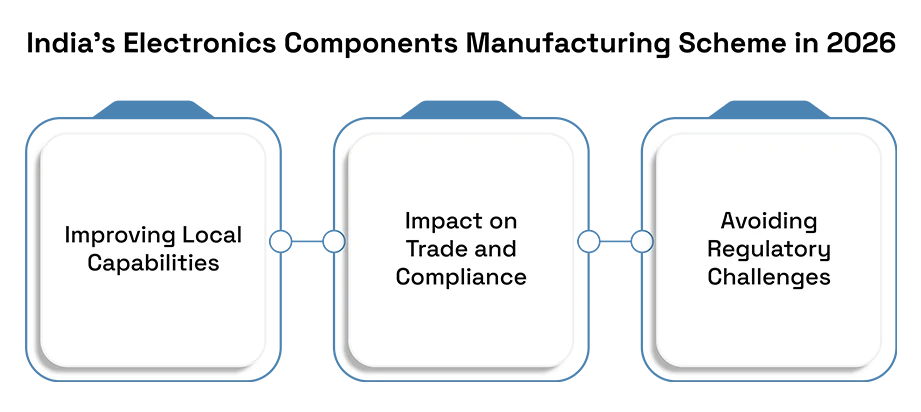
India’s Electronics Components Manufacturing Scheme in 2026
Improving Local Capabilities
In 2026, India introduced an increased Electronics Components Manufacturing Scheme to improve local production of critical components such as semiconductors, PCBs, and display units of electronics. This initiative complements earlier production-linked incentive (PLI) programs by focusing on the good stage of the value chain. The scheme provides economic incentives, tax benefits, and infrastructure support to both local and global manufacturers. By increasing local sourcing, India is reducing dependence on imports and creating a more flexible supply chain of Electronics Components.
Impact on Trade and Compliance
The scheme also simplifies regulatory systems, making it easier for businesses to guide HS code categorizations and the HTS harmonized tariff schedule of Electronics devices. This confirms smoother customs clearance and reduces delays in global shipments. Also, businesses are mainly accepting the best trade compliance software for import export rules to maintain accuracy and clarity in operations.
Increasing India’s Electronics Manufacturing and Export Landscape
Export and Market Growth
India’s electronics exports have seen strong growth, specifically in smartphones, consumer electronics, and IT hardware. The country is using its cost benefits to compete with other manufacturing hubs. Exporters are advantages from improved international freight services and an improved logistics chain, allowing a faster delivery schedule and reduced costs. The role of exporter of record services and importer of record service providers has also become necessary in confirming agreement with global trade regulations.
Role of Supply Chain Optimization
Supply chain optimization is playing a major role in increasing export in electronics devices. Organizations are working with digital tools and automation to improve tracking and efficiency across the supply chain. From warehouse management to last-mile delivery, combined systems are helping organizations to manage inventory and order management more effectively in India. This not only reduces working costs but also improves customer satisfaction in global trades.
Developing Trade Practices
With the growing difficulty of global trade, businesses are mainly exploring questions like whether a freight forwarder can be an exporter of record and whether a customs broker can handle both import and export documentation. These developing roles show the requirement for flexible and combined service providers in the electronics export ecosystem.
India Expands Initiatives for Future Growth of Electronics Manufacturing
Policy Support and Investments
The Indian government continues to provide new policies for attracting foreign direct investment (FDI) and improving local production of electronics. These required infrastructure development, simplified approval processes, and incentives for research and development in Electronics production in India. Electronics Trade agreements, such as the Generalized System of Preferences, are also helping Indian exporters to get entry into global trade.
Innovation and Technology Usage in Electronics Manufacturing
India is focusing on changes by quickly accepting new production technologies such as automation, AI, and IoT in production processes. This change is allowing organizations to improve the quality of devices, reduce costs, and meet global trade guidelines. The acceptance of standardized trade terms such as DAP and DAPs is also simplifying easy global shipments by clearly defining responsibilities between buyers and sellers.
Building a Global Supply Chain Hub
India’s major location and improving logistics system make it a perfect hub for global supply chains. Investments in ports, highways, and digital sources are increasing connectivity and reducing logistics times. As global organizations look to varied supply chains, India is becoming a preferred destination for electronics manufacturing and exports.

Conclusion
India’s growth in electronics manufacturing is a huge step toward becoming a global export powerhouse. With strong policy support, improved infrastructure, and a focus on supply chain efficiency, the country is added to capitalize on global opportunities. By improving domestic capabilities, advanced technologies, and increasing trade simplification of electronics, India is not only developing its export competitiveness but also creating a sustainable and flexible manufacturing ecosystem for the future of India’s electronics manufacturing.
DID YOU KNOW?
Electronics manufacturing witnessed a growth from ₹1.9 lakh crore in 2014–15 to ₹11.3 lakh crore in 2024–25, a nearly sixfold increase.
FAQs:
1. Why is India becoming a hub for electronics manufacturing?
India is becoming a hub due to strong government initiatives, cost advantages, growing domestic demand, and global companies diversifying supply chains beyond traditional markets.
2. What is the Electronics Components Manufacturing Scheme in India?
It is a government initiative launched to boost local production of key components like semiconductors, PCBs, and display units by offering incentives, tax benefits, and infrastructure support.
3. How is India improving electronics exports?
India is improving exports through better logistics, simplified customs clearance, strong policy support, and the adoption of advanced supply chain technologies.
4. What role does supply chain optimization play in electronics manufacturing?
Supply chain optimization improves efficiency, reduces costs, enhances inventory management, and ensures faster delivery of electronics products in global markets.
5. What is the future of electronics manufacturing in India?
The future is highly promising, with increasing investments, adoption of AI and automation, and strong government support, positioning India as a global manufacturing leader.