What Is Digital Freight Forwarding and How It Works
Digital freight forwarding means using technology to manage the shipping & logistics process online rather than depending on manual paperwork, emails, & phone calls. Businesses can manage everything through digital platforms. These platforms make booking, paperwork, & tracking easily which helps international freight forwarding to become faster & more efficient.
Simply, digital freight forwarding brings shippers, carriers, and customs authorities all in one system. This helps to manage important tasks like customs clearance, paperwork using HS code and HTS Harmonized Tariff Schedule, also following some trade rules like Incoterms, with DAP and DAPs. These methods help to minimize delays and improve accuracy in international freight services and cross-border shipping services.
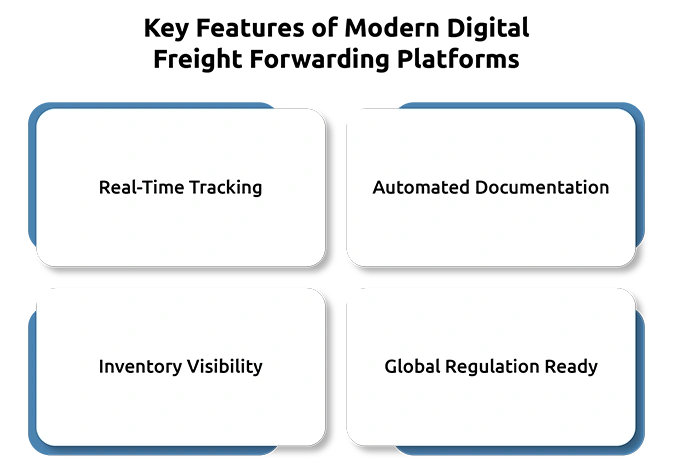
Key Features of Modern Digital Freight Forwarding Platforms
Modern digital freight forwarding platforms come with many features that make the shipping process easy. One of the most important features is real-time tracking, in that businesses are allowed to follow their shipments at every stage, which gives them better visibility & helps to avoid unexpected delays.
One more key feature is automated documentation. Tasks like invoice creation, customs paperwork, and compliance checks are handled digitally, which helps to reduce errors. These platforms also support inventory and order management, making it easier to track goods from the warehouse to final delivery.
Many platforms also connect with the best trade compliance software for import export rules, making sure shipments follow international regulations. This is especially helpful for industries like IT, aviation, medical, and automotive manufacturing supply chains, where following rules is very important.
Benefits of Digital Freight Forwarding in Global Shipping
Digital freight forwarding gives many benefits for businesses that are involved in global trade. One of the biggest advantages is speed. Automated systems minimize manual work, which helps to process & deliver fastly.
Cost savings are another major benefit. By minimizing paperwork and improving performance, businesses can lower operating costs. Digital platforms also improve communication between all parties, which makes global freight forwarding efficient & more reliable.
Additionally, these platforms support better customs compliance services. They help businesses to handle duties, taxes, & trade agreements like the generalized system of preferences (GSP), which making sure that shipments meet all legal requirements. This reduces the risk of fines and unnecessary delays.
How Digital Platforms Improve Import-Export and Supply Chain Efficiency
Digital freight forwarding platforms play an important role in improving overall logistics and supply chain optimization. They bring transparency and control to difficult shipping processes, which is important for international logistics services.
For example, businesses can easily manage Importer of Record services and Exporter of Record services through these platforms. This makes sure that all legal responsibilities are managed properly. And also ensure that all paperwork is correct and compliant, reducing delays at borders.
For industries like aviation, healthcare, IT, and automotive, where on-time delivery is important, digital tools help to manage smooth service & reduce disruptions.
The Future of Shipping: Trends in Digital Freight Forwarding
The future of shipping is becoming more digital & data-driven. Technologies like AI and automation are helping to make logistics faster & smarter. Digital freight forwarding platforms will keep enhancing & give businesses better insights and predictive analytics.
Blockchain is also starting to be used to make shipping more transparent and safe. It helps to lower fraud & develops trust in international shipping.
As global trade grows, businesses will need quicker and more reliable systems. Digital freight forwarding platforms will play an important role by improving performance, reducing costs, & making customs clearance smoother.
Conclusion
Digital freight forwarding platforms are transforming the way shipping and logistics work. They simplify difficult processes, improve visibility, & support better compliance in global trade. For businesses in IT, aviation, medical, and automotive sectors, adopting digital services is now important to stay competitive.
Did You Know?
Around 70% of global freight forwarders are adopting digital solutions to improve efficiency and reduce paperwork in logistics operations.
FAQs
What is a digital freight forwarding platform?
A digital freight forwarding platform is an online system that helps businesses manage shipping, documentation, and tracking in one place, making logistics faster and more efficient.
How does digital freight forwarding improve shipping?
It improves shipping by automating processes like booking, documentation, and customs clearance, while also providing real-time tracking and better visibility.
Can a freight forwarder act as an exporter of record?
In some cases, a freight forwarder can act as an exporter of record, but it depends on legal responsibilities and country-specific regulations.
How do digital platforms help with customs clearance?
They simplify customs clearance by automating documentation, ensuring correct HS code classification, and supporting compliance with trade regulations and Incoterms.
What is the future of digital freight forwarding?
The future includes AI, automation, and blockchain, which will make global shipping faster, more transparent, and more efficient.