Introduction
Logistics is not just about moving goods. Now it is about speed, accuracy, & control. Businesses must deliver faster than ever. Customers also want updates at every step. As supply chains increase across countries, things get more difficult. To cover this, companies are using smart tools & automated systems. These help them work faster, minimize mistakes, & stay updated.
They also help businesses plan better & minimize delays in daily operations. Work becomes easier, even when managing large shipments across different locations. Companies can easily track goods from start to end, which enhances control & visibility. This leads to better service & keeps customers satisfied.
The Role of AI in Logistics
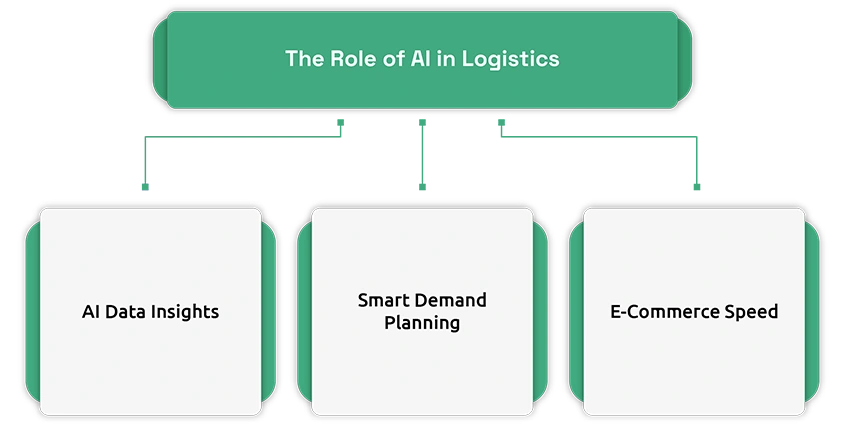
Logistics makes a lot of data every day. This added orders, shipments, & delivery times. Instead of checking everything by hand, companies now use smart systems to study this data. These systems help businesses make faster & better decisions.
One main benefit is better planning. Companies can understand what customers will need in advance. This helps them avoid too much stock or too little stock. It also saves money & improves service.
Automation in Warehouses
Warehouse work used to take a lot of time. Most tasks were done by people.
Now, machines manage many of these tasks. This includes picking, packing, sorting, & tracking goods.
This makes the process faster & more accurate. Fewer mistakes happen. Orders are completed quickly.
This is very useful for online businesses that need fast delivery.
Smarter Transportation
Transportation is a key part of logistics. The right route can save time.
Today, tools help companies choose the best routes. They look at traffic, weather, and road conditions.
This leads to faster deliveries and lower costs.
New ideas like self-driving vehicles and drones are also being tested. These may change delivery systems in the future.
Handling Risks
Supply chains can face problems at any time. These can be due to weather, demand changes, or global issues. Smart systems help companies prepare for such problems. They study past data and find possible risks.
This helps businesses act early. They can change routes or adjust stock if needed. This keeps operations running smoothly.
The Future of AI-Driven Logistics: Innovation, Efficiency, and Smart Supply Chains
The future of international logistics will be developed by fast advancements in AI & automation, helping businesses operate faster, smarter, & more easily. As supply chains become more difficult & global trade continues to grow, companies will depend mainly on intelligent technologies to improve decision-making, minimize risks, & improve overall performance. From predictive analytics to fully automated delivery systems, AI will play a main role in making more & resilient logistics networks.
Trends Driving the Future of AI-Powered Logistics
- Autonomous Transportation
Self-driving trucks, ships, & delivery vehicles are expected to minimize human intervention, lower labor costs, & improve delivery speed. These technologies will also help minimize errors & increase safety in transportation. - Smart Warehousing
Warehouses will become more advanced with the use of robotics, IoT sensors, & AI-driven systems. Automated picking, packing, & inventory management will minimize problems & increase operational efficiency.

Challenges of Adopting New Technology in Logistics
Using new technology in logistics is helpful, but it also causes some problems. One main problem is the cost, as setting up new systems & machines can be costly, especially for small businesses. Companies also need trained people to manage these systems, & training staff takes time. Another concern is data safety, since a large amount of important information is stored & needs to be protected. Businesses already use older systems, so connecting new technology with them can be difficult and slow. There is also a risk of depending too much on technology, because if systems stop working, operations can be affected.
Conclusion
International logistics is developing. Businesses need to be faster, smarter, & more easier than before. AI & automation are helping make this possible. They enhance speed, minimize mistakes, & give better control over the whole supply chain. From warehouses to delivery, every step becomes easier to cover. Companies that use these technologies can save time, cut costs, & cover problems more easily.
Did you know?
Artificial intelligence is transforming supply chains from static planning systems into adaptive networks that can perceive disruptions, reason across complex logistics environments, and respond in real time.
FAQ
-
What does AI do in global logistics?
AI helps businesses study data, plan shipments, and make faster decisions. It improves accuracy and helps avoid delays.
-
How does automation help in warehouses?
Automation uses machines to handle tasks like packing, sorting, and tracking goods. This makes work faster and reduces mistakes.
-
Can AI improve delivery time?
Yes, AI helps choose better routes by checking traffic and weather. This helps deliver goods faster and on time.
-
How do businesses track shipments today?
Companies use tracking systems that show real-time updates. This helps them know the exact location of goods during transit.
-
Are AI and automation expensive to use?
They can cost more at the start, but they help save money over time by improving efficiency and reducing errors.