Insight
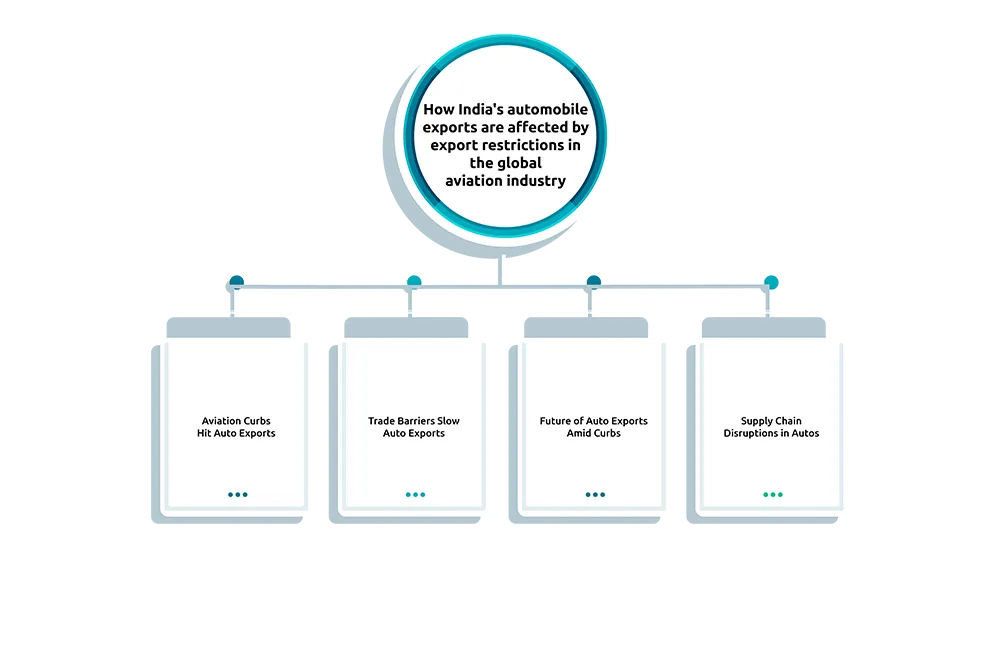
India’s automotive manufacturing operations stand among the biggest in global markets. The domestic market expansion and global market penetration drove India’s export rate of automobiles to increase year after year. The world aviation industry imposes unexpected barriers that create difficulties for India’s automobile export performance. Although seemingly separate, these two industrial sectors connect through important interdependent relationships. The following content examines how aviation industry restrictions affect Indian automobile exports and their implications for future sector developments.
The Interlink Between Global Aviation and Automobile Exports
When viewing the scene visually, one can see that there seems to be no clear association between automobiles and aviation. Dual sectors connect through infrastructure networks that facilitate worldwide trade operations. Air shipments of high-value automotive components and accessories depend heavily on cargo transportation for rapid delivery services. Any interruptions within global aviation have a detrimental impact on supply chain performance, which affects automobile export operations. Air transportation is the most preferred option for delivering premium automobiles in market segments across Europe, the USA, and other international markets with developed economies. Different factors involving economic conditions, political situations, or environmental movements can potentially impact the routing accessibility of aviation transport and airport operations and air freight capabilities. The delivery of vehicles, the decrease in exports, and rising transportation expenses have become significant issues for Indian automobile producers because of the present situation.

Key Hubs for India’s Automobile Exports
India has risen as an important participant in the global automotive export market. This movement of vehicles is chiefly made possible through points currently critical towards the movement & delivery of vehicles, such as major hubs like Chennai, Mumbai, & Kolkata. These tactical areas are well interconnected with strong railway, road and aero-roads, thus making it easier to convey vehicles to world markets. However, the constant aviation restrictions have been exerting significant pressure on these hubs, causing supply chain disruptions & delays in automobile shipments.
Chennai, a home to the large production of automobiles such as Hyundai & Ford, is important for the exports to Africa, Europe, and the Middle East. The aviation limits already present discourage prompt movement by the air cargo consignment of automobiles, which results in delays in deliveries and possible damage caused to the financial development of the sector. With such conditions persisting, the global aviation India network will have bigger difficulties. The auto export flow from India will be affected, impacting the international position of India’s automotive market.
Impact of Global Aviation Restrictions on India’s Exports
The effects of export restrictions in the aviation industry on automobile exports can be observed in several ways:
- The refusal to allow air freight forces companies to choose slower, higher-cost options, such as sea and road transport. Manufacturers transfer the extra shipping expenses through their supply chain to customers who purchase in goal export destinations.
- Export restrictions result in delivery delays because they create complex supply chain problems. Time delays from export restrictions create problems for India’s image as a trading nation and damage business partnerships because clients expect fast delivery timetables.
- JIT manufacturers who produce automobiles through just-in-time style management suffer from delayed production and inventory schedules. The combination of export delays results in events that make systems malfunction, which stops operations and adds financial burdens to Indian manufacturing organizations.
- The Indian automotive sector has successfully expanded its market reach to developing countries as it pursues global business opportunities. The delay of supply chains caused by aviation limitations poses market share risks to India as other nations with reliable logistics networks take advantage of this situation.
Solutions and Strategies for Overcoming Restrictions
The restriction-based aviation measures that impact Indian automobile exports present tough challenges that may be softened through strategic solutions.
- Enhanced port infrastructure development in Chennai and Mumbai and modernization will reduce transportation problems caused by aviation restrictions. Sea transportation remains a trusted method many automobile producers use because it moves consistently, although slightly slower than other modes.
- Digital applications with enhanced analytical capabilities enable organizations to plan better routes and forecast operational problems while building effective backup systems. Such measures would decrease dependence on physical transportation while improving export management flow.
- Air transport will maintain flexibility and operational resilience through strengthened relations between India and international airlines during times of crisis. Improved business continuity happens through such measures as minimizing export delays and operational disruptions so export flows remain smooth.
- India should pursue better trade agreements with regional partnerships and other countries to secure beneficial export conditions. Implementing these agreements lowers the negative effects that logistical disturbances would typically have on operations.
Conclusion
Every sector within global supply chains connects to multiple others, so business disruptions in one field generate impacts across different sectors. Strategic planning serves to minimize the effects of aviation industry restrictions on automobile exports in the global market. For India to maintain its position as a worldwide automobile exporter, there must be enhanced logistics networks and technological advancement coupled with multiple trade routes. One Union Solutions must maintain constant adaptability because the global market continues evolving.
By leveraging advanced logistics solutions and digital tracking, businesses can reduce delays. Alternative transport routes help maintain timely exports despite restrictions. Collaboration with customs experts and freight partners ensures smoother cross-border operations. Overall, these strategies strengthen India’s position in the global automobile market.
Did You Know,
The percentage of automobile exports from India for FY 2021-2022 reached 5.6%, while the total dollar amount reached $12.5 billion, as recorded by the Indian Ministry of Commerce & Industry.
FAQs
- Which aviation regulations in India affect automobile exports?
Ans: Aviation restrictions increase transportation costs and delivery delays, disrupting the just-in-time production systems used by car manufacturers. - Which Indian port handles the most automobile exports?
Ans: Chennai Port is a major hub, exporting over 20% of India’s automobiles. - How are India’s automobile exports expected to grow by 2026?
Ans: The India Brand Equity Foundation (IBEF) predicts that automobile exports from India will reach $25 billion by 2026. - Can sea freight fully replace air cargo for automobile exports?
Ans: Sea freight is a viable alternative, but it is slower than air cargo, which may lead to delays and affect customer satisfaction. - How does digitalization help overcome export barriers?
Ans: Digital solutions improve operational efficiency, reduce dependence on specific shipping routes, and help predict and mitigate supply chain disruptions.