Insight
Aviation represents an extremely dynamic industry sector because it has worldwide supply chain networks extending among multiple countries. Aviation-related goods move through a precise and thorough logistics system because these movements need detailed planning and adherence to regulations and strict protocols. The principal aviation supply chain difficulty involves maintaining unimpeded product transport and international regulatory compliance.
This blog analysis will explain how Importer of Record and Exporter of Record services establish compliance and operational efficiency in aviation supply chains to manage border movements through risk reduction.
What Are IOR and EOR Services in Aviation?
The Importer of Record and the Exporter of Record stand as essential entities that handle legal and regulatory compliance requirements for imported and exported items. The roles of the importer of record and exporter of record ensure proper documentation is maintained while paying all relevant taxes and duties and importing goods in compliance with customs regulations. These aviation management services work to maintain smooth customs clearance for every aviation-related part and piece of equipment.
Importer of Record (IOR)
The IOR is responsible for ensuring that goods meet the destination country’s import regulations. They handle customs documentation, compliance with local regulations, payment of tariffs, and managing any risks associated with non-compliance.
Exporter of Record (EOR)
The EOR ensures that goods leaving a country comply with export regulations. This includes managing the export declaration, ensuring proper classification, and making sure that the products are legally cleared for export.
The EOR also takes responsibility for obtaining required export licenses and permits when needed. They ensure compliance with trade controls, sanctions, and destination-country regulations. By managing documentation accurately, the EOR helps prevent shipment delays, penalties, or rejected exports. This allows businesses to export goods smoothly while reducing legal and compliance risks.

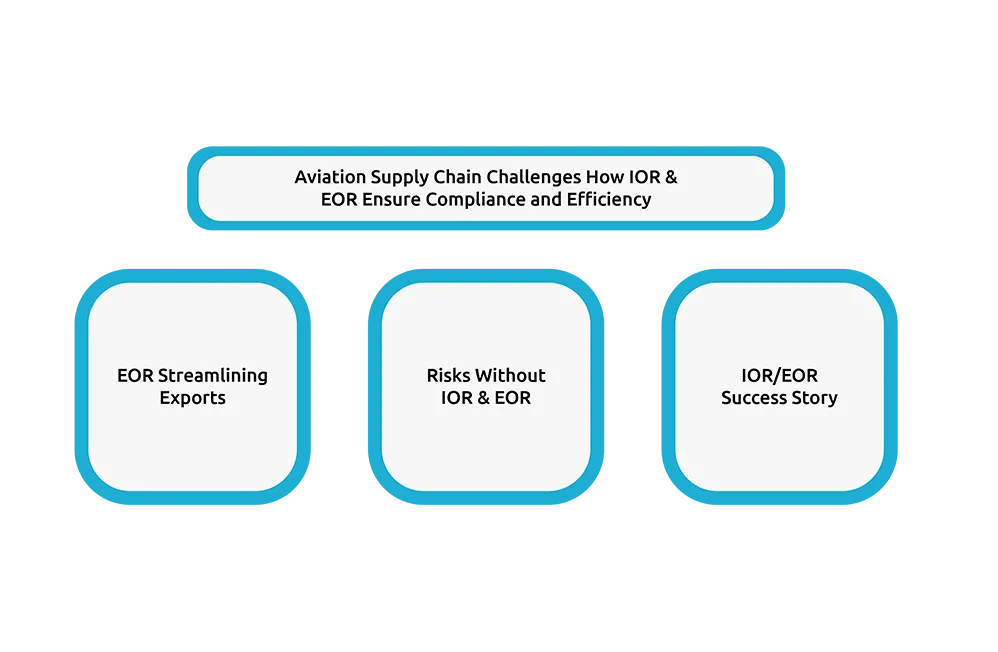
Aviation Supply Chain Challenges
Complex Regulatory Requirements
The sector follows tough inspection protocols that govern aviation components and equipment. Every country establishes rules related to aviation product imports and exports that showcase notable variations between their requirements. Failure to adhere to these regulations represents an absolute commitment because non-compliance results in severe penalties, delayed shipments, and potential business closure.
In today’s fast-paced global aviation industry, aviation supply chain management must overcome multiple challenges, including regulatory hurdles, documentation accuracy, and international logistics coordination. One of the most persistent aviation supply chain challenges is navigating the intricate web of import/export laws while maintaining uninterrupted parts flow. With increasing pressure on safety, speed, and cost-efficiency, ensuring aerospace customs compliance is critical. This is where One Union Solutions steps in—our IOR and EOR services are tailored to meet these unique demands, streamlining operations while safeguarding against penalties, shipment delays, and compliance breaches.
Customs Delays and Documentation Errors
Customs operations for aviation parts need extensive documentation, including certification of origin, compliance certificates, & invoices. Customs authorities delay shipments when proper documentation is incomplete or not filed properly, thus creating operational disruptions. Customs delays for products due to improper documentation have a significant risk of occurring, which means accuracy and timely submission are essential factors.
Global Trade Tariffs
Government-imposed customs payments and taxes differ substantially between international regions and national territories. Additional tariffs applied during international imports affect aviation products by significantly increasing costs. Due to evolving trade agreements and political developments, the variability of trade tariffs makes it difficult for companies to predict costs and manage their budgets.
Security and Safety Standards
All aviation goods must fulfil strict safety requirements before being approved. Parts and equipment must fulfil airworthiness standards confirmed by compliance with international and local safety regulations. Equipment not complying with safety standards might trigger various aviation-related penalties, such as aircraft delays and potential forced grounding. The efficient management of supply chain practices related to air travel and aviation parts becomes essential to avoid expensive complications since air travel continues to grow.
How IOR & EOR Services Address These Challenges
IOR and EOR services address critical pain points in the aviation supply chain by ensuring compliance, reducing delays, and optimizing costs. As a result, the IOR ensures that aviation products meet local customs requirements (e.g. FAA or EU certifications). At the same time, the EOR makes certain that all export regulations are satisfied, allowing for unimpeded movement of goods across borders. This saves you time and prevents a potential loss from the wrong shipment or not abiding by customs regulations.
IOR services also optimize tariff payments, reducing unnecessary duties, while EOR services keep businesses updated on changing trade agreements. Additionally, both services ensure compliance with safety standards, including airworthiness and packaging regulations, protecting both operations and customer safety.
The Benefits of Using IOR & EOR Services in Aviation
IOR and EOR services play a crucial role in the efficacy of the aviation sector. In effect, the provision of outsourcing grants aviation businesses a 24/7 reliable partner that manages regulatory compliance and documentation, freeing them up to concentrate on core activities, including aircraft manufacture and service. This increases efficiency , lowers operational overhead, and reduces delivery times.
In addition, IOR and EOR services reduce the risk of non-compliance with the ever-evolving global trade regulations, which could put the business under the threat of fines, delays, and damage to reputation. Efficient import and export procedures also improve customer experience because airlines and maintenance organizations get the necessary parts and equipment in time to fulfill safety and compliance requirements. Moreover, the potential reduction in customs delays, tariff miscalculations, and non-compliance penalties translates into substantial savings, which can be channeled back into scaling operations or enhancing other segments in the business.
Key Hubs for Aviation Supply Chains
Some countries are major hubs of the aviation supply chain, importing/exporting parts and equipment. These hubs include:
United States: The United States is one of the world’s largest aerospace manufacturing countries, which means this has remained a central aviation import and export hub for the past three decades.
United Kingdom: Due to its logistics infrastructure, the UK remains a key actor in the aviation supply chain, including for aircraft maintenance parts.
Germany: With a strong manufacturing industry, Germany is a significant player in the European aviation supply chain.
Singapore: As a major aviation hub for the Asia-Pacific region, Singapore is also a key market in aviation trade.
Conclusion
Navigating the complex nature of aviation supply chains requires detailed planning and an in-depth knowledge of international regulations. By teaming with experienced IOR/EOR service providers, we at One Union Solutions ensure smooth customs clearance, minimize tariffs, and maintain regulatory compliance across borders & this collaboration results in more efficient supply chains with fewer delays and greater reliability of goods flow.
Aviation businesses looking to simplify their import/export operations will find that working with One Union Solutions makes all the difference in achieving efficient and successful operations.
Did You Know
In the U.S., the Federal Aviation Administration oversees the import & export of aviation goods while assuring compliance with safety standards and regulations.
FAQs
What is the role of IOR and EOR services in the aviation industry?
IOR and EOR services handle legal compliance, documentation, and regulatory requirements to ensure aviation goods are imported and exported smoothly.
How do IOR and EOR services help reduce customs delays?
They prepare and submit accurate documents in advance, helping shipments clear customs faster without unnecessary hold-ups.
How can tariffs be optimized when importing aviation parts?
IOR services correctly classify aviation components, which helps avoid overpaying duties and keeps import costs under control.
What regulations apply to aviation equipment imports?
Aviation imports must meet customs rules, safety certifications, and aviation authority approvals, such as FAA or EU standards.
How is aviation equipment safety ensured during import?
IOR services verify that all equipment meets required safety and compliance standards before customs clearance and delivery.