How Technology Companies Expand Internationally Without Local Entities

How Technology Companies Expand Internationally Without Local Entities

Table of Contents

Introduction

Many technology companies are growing into new markets in order to reach more customers and offer IT & telecom equipment around the world. As global demand for technical goods increases, businesses need an easy & quick method to enter new markets. However, opening a local entity in a different country can take a long time. It also requires business registration, legal documents, tax setting, & other permits. These processes can slow down international growth & increase costs. Importer of Record (IOR) & Exporter of Record (EOR) services are commonly used by businesses to support global expansion. These services help businesses to legally import & export technology equipment without having a local entity. It is also important to follow up global business rules. Each country has its own set of customs & trade regulations. Following these rules helps to reduce shipment delays, extra costs, & compliance issues, allowing for a faster & smoother entry into global markets.

Why Technology Companies Expand Beyond Their Origin Country

Technology businesses expand into other countries because it supports them grow faster & follow more business possibilities. Rather than selling only in a single market, they can provide their products & services to customers across other regions. Expanding into the global technology industry allows businesses to improve sales & reach more customers. It also helps businesses reduce the risk of depend on a single market. If demand slows in one country, it can still grow in others. Global growth provides technology businesses with a competitive advantage. They can launch products in new markets, work with foreign partners, & provide more support for global projects. This helps to improve their brand & opens up new business possibilities. Cross-border expansion helps companies that ship servers, networking devices, telecom equipment, & data center hardware to look for larger projects all over the world. Businesses with proper import & export compliance may supply goods to customers more effectively & expand with confidence.

What Does Expanding Without a Local Entity Mean?

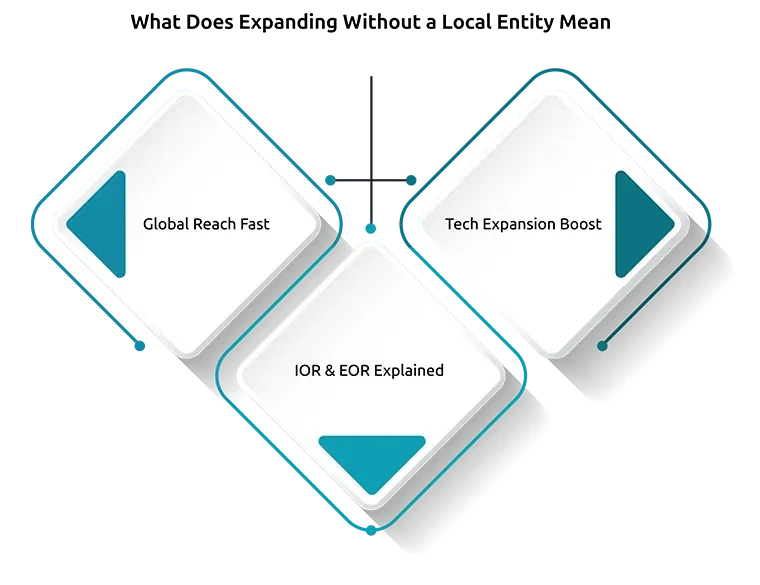
Expanding without a local entity allows a company to run a business in another country without building a presence or start a new company. This increases global expansion and reduces the time required to enter a new market. Businesses can manage imports, exports, and customs responsibilities without the need to establish a foreign company by using Importer of Record (IOR) and Exporter of Record (EOR) services. This allows technology businesses to lawfully export goods while following to local trade regulations. Companies also avoid the long process of foreign business registration, involving company setup, local tax registration, and other administrative tasks. This saves time and allows companies to start operations faster. Companies can continue lawful business activities and support cross-border trade by following to local customs and trade processes without building a local entity. This strategy makes global expansion easier, faster, and more efficient.
What Does Expanding Without a Local Entity Mean?

Why Compliance Is the Foundation of Successful Global Expansion

Compliance is important for global expansion. Customs compliance, tax, data privacy, product certification, & import & export rules change by country. Following these rules helps you avoid delays, fines, & extra costs. Technology businesses that follow global trade compliance requirements can ship products smoothly, secure their businesses, & confidently grow into new markets.

Why IOR and EOR Services Are Important for Global Technology Shipments

When technology companies ship servers, networking equipment, storage systems, & data center hardware to foreign nations, they must follow to both import & export regulations. Missing documents or incorrect data might result in shipment delays, extra costs, & customs difficulties. An Importer of Record (IOR) helps the import of IT equipment by managing customs requirements, import documents, duties, & customs clearance. This ensures that the equipment enters the destination country legally and arrives at the customer’s location on time. An Exporter of Record (EOR) handles the shipment’s export side. It is in charge of export compliance, documentation, required export approvals, & shipping records before the goods leave the origin country. This enables businesses to follow international trade standards & avoid export-related issues. Technology businesses can use IOR and EOR services to transfer equipment more smoothly across borders, reduce shipping delays, and securely support international shipping and technology exports.
Introduction
Many technology companies are growing into new markets in order to reach more customers and offer IT & telecom equipment around the world. As global demand for technical goods increases, businesses need an easy & quick method to enter new markets. However, opening a local entity in a different country can take a long time. It also requires business registration, legal documents, tax setting, & other permits. These processes can slow down international growth & increase costs. Importer of Record (IOR) & Exporter of Record (EOR) services are commonly used by businesses to support global expansion. These services help businesses to legally import & export technology equipment without having a local entity. It is also important to follow up global business rules. Each country has its own set of customs & trade regulations. Following these rules helps to reduce shipment delays, extra costs, & compliance issues, allowing for a faster & smoother entry into global markets.
Why Technology Companies Expand Beyond Their Origin Country
Technology businesses expand into other countries because it supports them grow faster & follow more business possibilities. Rather than selling only in a single market, they can provide their products & services to customers across other regions. Expanding into the global technology industry allows businesses to improve sales & reach more customers. It also helps businesses reduce the risk of depend on a single market. If demand slows in one country, it can still grow in others. Global growth provides technology businesses with a competitive advantage. They can launch products in new markets, work with foreign partners, & provide more support for global projects. This helps to improve their brand & opens up new business possibilities. Cross-border expansion helps companies that ship servers, networking devices, telecom equipment, & data center hardware to look for larger projects all over the world. Businesses with proper import & export compliance may supply goods to customers more effectively & expand with confidence.

What Does Expanding Without a Local Entity Mean?
Expanding without a local entity allows a company to run a business in another country without building a presence or start a new company. This increases global expansion and reduces the time required to enter a new market. Businesses can manage imports, exports, and customs responsibilities without the need to establish a foreign company by using Importer of Record (IOR) and Exporter of Record (EOR) services. This allows technology businesses to lawfully export goods while following to local trade regulations. Companies also avoid the long process of foreign business registration, involving company setup, local tax registration, and other administrative tasks. This saves time and allows companies to start operations faster. Companies can continue lawful business activities and support cross-border trade by following to local customs and trade processes without building a local entity. This strategy makes global expansion easier, faster, and more efficient.
Why Compliance Is the Foundation of Successful Global Expansion
Compliance is important for global expansion. Customs compliance, tax, data privacy, product certification, & import & export rules change by country. Following these rules helps you avoid delays, fines, & extra costs. Technology businesses that follow global trade compliance requirements can ship products smoothly, secure their businesses, & confidently grow into new markets.
Why IOR and EOR Services Are Important for Global Technology Shipments
When technology companies ship servers, networking equipment, storage systems, & data center hardware to foreign nations, they must follow to both import & export regulations. Missing documents or incorrect data might result in shipment delays, extra costs, & customs difficulties. An Importer of Record (IOR) helps the import of IT equipment by managing customs requirements, import documents, duties, & customs clearance. This ensures that the equipment enters the destination country legally and arrives at the customer's location on time. An Exporter of Record (EOR) handles the shipment's export side. It is in charge of export compliance, documentation, required export approvals, & shipping records before the goods leave the origin country. This enables businesses to follow international trade standards & avoid export-related issues. Technology businesses can use IOR and EOR services to transfer equipment more smoothly across borders, reduce shipping delays, and securely support international shipping and technology exports.

Benefits and Risks of Expanding Without a Local Entity
Expanding without a local company can allow technology companies to access new markets more swiftly. It reduces the time & costs required for business development, making global market entry easier. Companies can also launch goods faster, help foreign projects, & focus on business growth rather than repetitive administrative duties. At the same time, companies has to follow with the laws of each country in which they trade. They must comply with international tax, customs, & trade restrictions. Ignoring these standards might result in shipment delays, fines, & other global compliance problems. When working internationally, technology companies must also protect their company information & technology. Following work compliance, customs regulations, & local laws helps keep operations legal and avoids difficulties. Businesses can expand globally with better confidence and efficiency if they plan properly and receive compliance support.
Conclusion
Expanding into new countries does not always require building a local business. Importer of Record (IOR) & Exporter of Record (EOR) services help technology companies handle international shipments, follow customs compliance requirements, & support global expansion. Choosing the proper compliance solution allows companies to reduce delays, follow to local trade rules, & confidently enter global markets.
Did you know
Following a 5.3% rise in 2025, the volume of global services trade is projected to grow by 4.8% in 2026 and by 5.1% in 2027, according to the baseline forecast. 
FAQ
Can technology companies expand without opening a local entity?
Yes. Companies can use IOR & EOR services to support global trade without setting up a local entity.
How do IOR and EOR services support global expansion?
They help companies follow import & export rules, complete the required documents, & ship products across borders smoothly.
Why are IOR and EOR services important for technology companies?
They help companies ship technology equipment across borders while following local import & export rules.
Which technology equipment is commonly shipped internationally?
Companies often ship servers, networking equipment, storage systems, telecom equipment, & data center hardware.
How can businesses achieve faster global market entry?
By using IOR services & EOR services, businesses can follow compliance requirements & grow into new markets more efficiently.
Benefits and Risks of Expanding Without a Local Entity

Expanding without a local company can allow technology companies to access new markets more swiftly. It reduces the time & costs required for business development, making global market entry easier. Companies can also launch goods faster, help foreign projects, & focus on business growth rather than repetitive administrative duties. At the same time, companies has to follow with the laws of each country in which they trade. They must comply with international tax, customs, & trade restrictions. Ignoring these standards might result in shipment delays, fines, & other global compliance problems. When working internationally, technology companies must also protect their company information & technology. Following work compliance, customs regulations, & local laws helps keep operations legal and avoids difficulties. Businesses can expand globally with better confidence and efficiency if they plan properly and receive compliance support.

Conclusion

Expanding into new countries does not always require building a local business. Importer of Record (IOR) & Exporter of Record (EOR) services help technology companies handle international shipments, follow customs compliance requirements, & support global expansion. Choosing the proper compliance solution allows companies to reduce delays, follow to local trade rules, & confidently enter global markets.

Did you know

Following a 5.3% rise in 2025, the volume of global services trade is projected to grow by 4.8% in 2026 and by 5.1% in 2027, according to the baseline forecast.

FAQ

Can technology companies expand without opening a local entity?

Yes. Companies can use IOR & EOR services to support global trade without setting up a local entity.

How do IOR and EOR services support global expansion?

They help companies follow import & export rules, complete the required documents, & ship products across borders smoothly.

Why are IOR and EOR services important for technology companies?

They help companies ship technology equipment across borders while following local import & export rules.

Which technology equipment is commonly shipped internationally?

Companies often ship servers, networking equipment, storage systems, telecom equipment, & data center hardware.

How can businesses achieve faster global market entry?

By using IOR services & EOR services, businesses can follow compliance requirements & grow into new markets more efficiently.
Share this Article

Facebook
X
WhatsApp
LinkedIn
Email
Telegram
Print

Know Your Import and Export Costs in 47 Seconds.
Ship With Confidence.

1000+ companies now know their exact duty, VAT, and IOR costs before they ship, not when customs holds their cargo hostage. Join them.

Related Articles

Introduction As businesses expand their digital operations globally, the global cloud system has become important for improving performance, scalability, & business continuity. However, deploying an IT infrastructure across multiple countries…

As cloud services continuously growing in the whole world, businesses are building new data centers & developing their IT infrastructure across many countries. To keep these systems connected, they mainly…

Insight Cloud providers operate a large-scale global system that depends on smooth hardware deployment across multiple countries. This includes the movement of servers, storage systems, networking devices, & data center…

Get a Quote