Introduction
The shipment of IT hardware across borders has become mainly difficult due to growing global trade, regulatory scrutiny, and the high value of technology equipment. Delivery from servers and networking devices to GPUs and data center infrastructure, managing goods in shipping requires a systematic risk management approach. Effective arrangement around customs clearance, import duties and tariffs, and cargo safety is necessary to reduce delays, losses, and approval risks. Learn how businesses can improve cross-border shipping while safely managing valuable IT devices all around logistics.
What are the key risk management strategies for handling IT hardware in cross-border shipments?
Managing IT hardware in transit requires strong risk management strategies to protect high-value and sensitive equipment during international shipping. Businesses must use secure packaging, shock-resistant materials, and climate-controlled transport to prevent physical damage. Proper documentation and compliance with regulations—guided by frameworks from organizations like the World Customs Organization—help avoid customs delays and penalties.
Step-by-Step Guide to Using Cross-Border Shipping Improvement
Assess Shipment Requirements and Risks
Every IT hardware shipment has a unique aspect, such as sensitivity, value, and regulatory guidelines. A proper supply chain risk assessment helps to know risks related to damage, safety, regulatory non-compliance, or transit delays. This step is vital before using international freight services or finalizing shipment routes.
Choose the correct Shipping and Compliance Structure
Selecting the right Importer of Record Service confirms that imported IT equipment follows destination-country regulations. This simplifies customs clearance and reduces the risk of penalties. Businesses that mostly manage import documentation and responsibilities with an expert for smooth freight logistics management, and some disruptions.
Implement Visibility and Control Mechanisms
Real-time cargo tracking solutions provide clarity across borders, allowing organizations to track shipment location, condition, and on-time arrival. Visibility not only reduces uncertainty but also allows faster response to possible issues during international freight forwarding.
Understanding Cross-Border Shipping Optimization: Definition and Importance
Cross-border shipping improvement shows the major work of processes that improve the efficiency, cost-effectiveness, and dependability of global shipments. For IT hardware, this optimization is necessary because delays or mishandling can directly impact business continuity.
Optimized shipping supports better supply chain optimization by reducing shipping time, reducing inventory barriers, and lowering working costs. It also works in freight logistics management with agreement requirements, confirming import duties and tariffs are correctly calculated and paid without causing shipment delay.
Risk management in cross-border shipping, organizations strengthen overall supply chain management warehousing decisions, mainly when working with urgent or valuable IT devices.
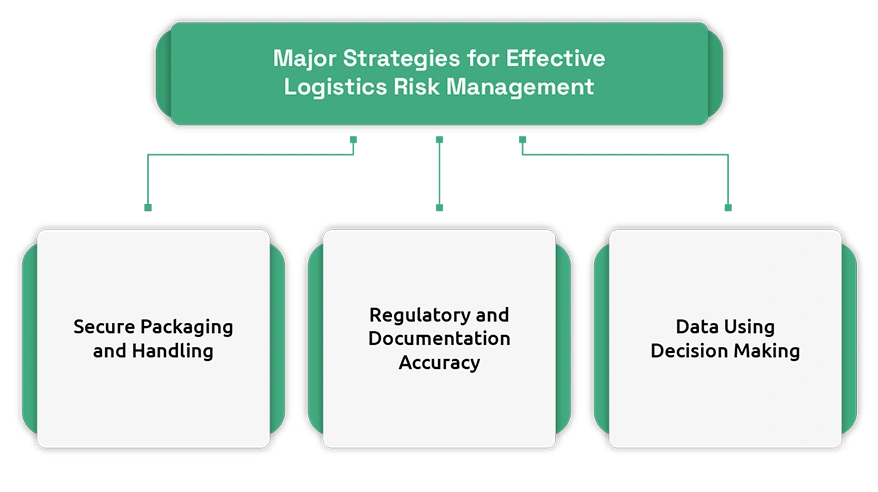
Major Strategies for Effective Logistics Risk Management
Secure Packaging and Handling
IT hardware is highly resistant to physical damage. Using special packaging and handling guidelines reduces the risk of issues, moisture exposure, and electrostatic discharge. This is a foundational element of logistics risk management, specifically for long-distance international freight services.
Regulatory and Documentation Accuracy
Issues in documentation are a major cause of shipment delays. Confirming accuracy in invoices, declarations, and approval records supports easy customs clearance and reduces the chance of extra inspections or fees.
Partner with Experienced Service Providers
Reliable international freight forwarding partners and IOR service providers bring regulatory expertise and operational efficiency. Their experience helps businesses guide difficult trade environments while maintaining control over freight logistics management.
Data Using Decision Making
Advanced cargo tracking solutions and analytics provide actionable insights into transit performance. These comprehensions allow organizations to identify issues, assess risks, and improve supply chain risk assessment methods over time.
Future Trends in Managing Goods in Transit
The advances in managing products in shipment are increasingly digital and data-related. Automation, predictive analytics, and AI-using tracking systems are transforming how organizations track shipments across borders. Increased visibility through smart cargo tracking solutions will further reduce risk and improve response times.
Also, organizations are using more combined supply chain optimization plans that connect international freight services with warehousing services, agreements, and last-mile delivery. As global trade regulations continue to develop, demand for special IOR services and strong importer of record service methods will grow, mainly for IT and technology-driven industries.
Conclusion
Managing IT hardware in shipment requires more than just moving goods from one country to another. It demands a complete risk management strategy that combines approval, visibility, and operational efficiency. By focusing on cross-border shipping optimization, using expert international freight forwarding partners, and using data-driven cargo tracking solutions, businesses can reduce risks and confirm dependable delivery. As global trade difficulties increase, organizations that invest in strong freight logistics management and supply chain risk assessment will be better situated to protect high-value IT devices and unwanted work.
DID YOU KNOW?
According to the American Trucking Association, cargo theft results in an average loss of over $200,000 per incident. Annually, this costs the U.S. economy $35 billion. Strategic theft is more common than petty theft or simple pilferage, and it has increased by 1,500% from the first quarter of 2024 to the first quarter of 2025.
FAQs:
Why is risk management important for cross-border IT hardware shipments?
IT hardware is high-value and sensitive to damage, delays, and regulatory errors. Risk management helps reduce losses, avoid customs issues, and ensure timely delivery during international freight movement.
What role does an Importer of Record (IOR) play in IT hardware shipping?
An Importer of Record service ensures compliance with local import regulations, manages documentation, and handles import duties and tariffs, simplifying customs clearance for cross-border shipments.
How do cargo tracking solutions improve shipment reliability?
Cargo tracking solutions provide real-time visibility into shipment location and condition, enabling faster issue resolution and better control over international freight forwarding processes.
What are the common risks involved in shipping IT hardware internationally?
Common risks include physical damage, regulatory non-compliance, incorrect documentation, customs delays, and lack of shipment visibility across borders.
How can businesses optimize cross-border shipping for IT equipment?
Businesses can optimize shipping by conducting supply chain risk assessments, working with experienced logistics partners, ensuring documentation accuracy, and using data-driven freight logistics management tools.