Overview
Many importers suppose that once goods pass customs clearance, the process is complete. Also, customs officials hold the legal right to look into shipments even after they have been delivered after clearance. A post-clearance audit, customs officers can check cleared shipments, documentation, and verify that declarations were accurate during clearance. These audits play a vital role in safeguarding officials’ revenue, confirming trade agreements, and providing clarity in global trade.
In today’s interconnected trade, where international freight services, Importer of Record service providers, and global freight forwarding companies near me manage difficult shipments, post-audits confirm that errors, misclassifications, or undervaluations do not go unnoticed.
The Role of Post-Clearance Audits (PCA)
Understanding Post-Clearance Audits
A post-clearance audit is an official review conducted after cargo has already been released. Instead of delaying shipments at the border, customs departments audit trade invoices, valuation methods, and declared HS code or HTS Harmonized Tariff Schedule classifications later.
This approach supports smoother border flows while preserving enforcement authority. It also aligns with modern trade methods, where speed, premium delivery service, and effective inventory and order management are necessary for business work.
How PCA Fits Into Modern Trade Systems
Businesses depending on international shipping terms such as DAP under Incoterms, and using third parties for exporter of record services or importer of record approval, customs must confirm that responsibility is clearly defined and correctly executed, even after delivery.

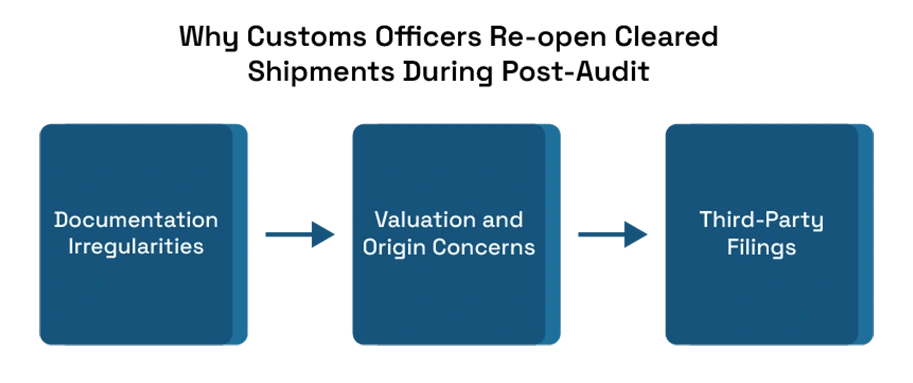
Why Customs Officers Re-open Cleared Shipments During Post-Audit
Compliance and Revenue Protection
Customs officers may re-open cleared shipments when post-audit uncovers misdeclared value, incorrect tariff categorizations, or misuse of trade benefits such as the Generalized System of Preferences (GSP). Even a small inconsistency can hugely affect duties and taxes.
Risk-Based Triggers
Documentation Irregularities
Missing licenses, inconsistent invoices, or errors in declared HS code details frequently trigger a deeper review.
Valuation and Origin Concerns
If customs suspects under-invoicing, incorrect country of origin claims, or misuse of duty programs, officers may reassess shipments already delivered at the location.
Third-Party Filings
When filings are managed by Importer of Record service providers or freight partners, customs may audit both the importer and their service network, including freight forwarding companies near me, to confirm responsibilities.
Key Details of the Post-Audit Process
How the Process Typically Works
Customs authorities usually inform the importer of an upcoming audit. Businesses may be required to submit agreements, shipping documents, product specifications, payment records, and compliance process documentation. Officers may doings on-site inspections and audits.
Scope of Review
Transaction History
Auditors frequently review multiple past shipments, not just one shipment. This can include transactions managed through international freight services and third-party customs brokers.
Commercial and Logistics Records
They examine sales terms, DAP delivery structures, declared Incoterms, freight invoices, and warehousing movements to confirm accuracy.
Internal Controls
Customs may also evaluate how companies manage supply chain optimization, compliance training, and inventory and order management systems. If inconsistencies are confirmed, customs can issue revaluations, penalties, or demand back-duties, even though the goods were already delivered.
What Are the Benefits of Post-Clearance Audit in the Customs Department?
For Customs Authorities
Post-clearance audits allow customs to focus assets where the risk is huge on holding every shipment at the border. This improves trade simplification, reduces blocking, and increases long-term approval oversight.
For Businesses and Trade Ecosystems
Faster Border Release
Since checks occur after clearance, legitimate shipments move faster, supporting premium delivery service commitments.
Improved Compliance Culture
Regular audits help companies to strengthen documentation methods, choose a dependable exporter of record services, and work closely with complete international freight services providers.
Strategic Supply Chain Improvements
Insights from post-audits frequently help organizations refine supply chain optimization, reduce categorization errors, and improve internal controls across their logistics chain.
Conclusion
The ability of customs officers to re-open cleared shipments during a post-audit underscores a critical truth of global trade: clearance is not the end of approval responsibility. Post-clearance audits protect revenue, uphold trade laws, and create an easy system that supports both execution and simplification. For importers, this means correct declarations, correct HS code usage, clear valuation, and dependable partnerships with freight forwarding companies near or Importer of Record service providers are necessary. Strong documentation, aligned international shipping terms, confirm that if a post-audit occurs, businesses can respond confidently, minimize risk, and maintain uninterrupted global operations.
DID YOU KNOW?
This audit covered the period from December 2024 to March 2025, during which post-approval information for 1,335 imported vehicles was examined in Pakistan.
FAQs:
1. What is a post-clearance audit in customs?
A post-clearance audit is a review conducted by customs authorities after goods have been released, focusing on records, declarations, valuation, and compliance with trade regulations.
2. Can customs legally reopen shipments after clearance?
Yes. Customs officers have the legal authority to reassess shipments after clearance if inconsistencies, undervaluation, or documentation issues are discovered during a post-audit.
3. Why do customs officers re-open cleared shipments?
Shipments may be reopened due to incorrect HS code classification, misdeclared value, origin disputes, missing licenses, or misuse of duty benefits.
4. What documents are reviewed during a post-clearance audit?
Customs may review invoices, contracts, shipping documents, payment records, valuation methods, product specifications, and internal compliance procedures.
5. How can importers prepare for a post-clearance audit?
Importers should maintain accurate records, ensure correct declarations, follow proper international shipping terms, and work with a reliable importer/exporter of record and freight service providers.