When transporting goods globally, many businesses assume that a commercial invoice, packing list, & HS code are enough to clear customs. In reality, customs officials sometimes request technical drawings of your product. These help verify the product’s classification, compliance, value, or origin. Understanding why these requests occur and how to prepare can prevent delays, fines, & shipment management issues.
What Are Technical Drawings?
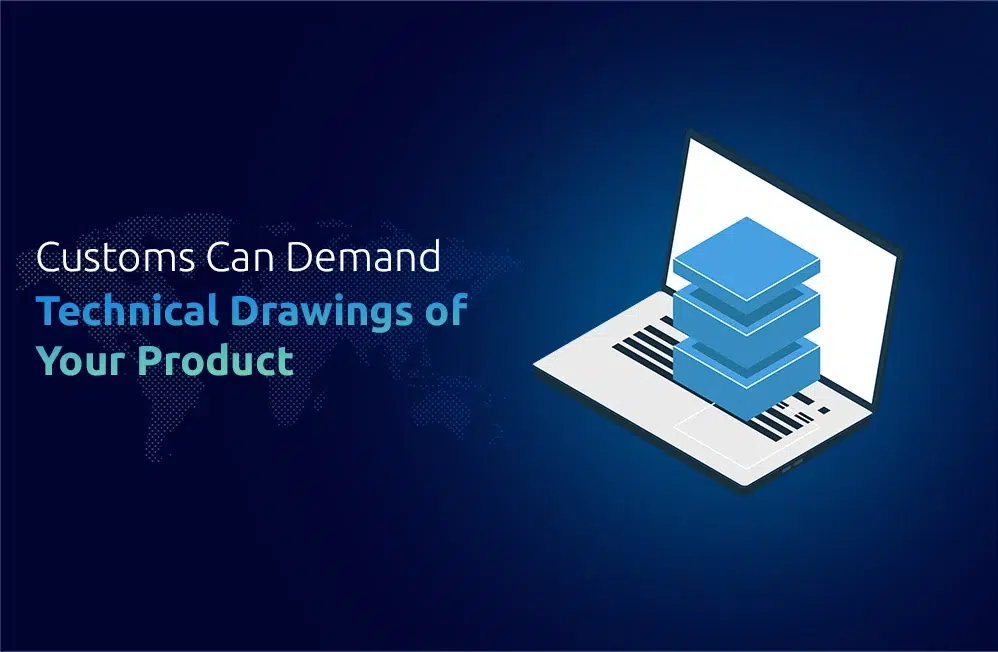
Technical drawings are documents that show a product’s design, size, materials, & parts. They can add engineering diagrams, CAD files, exploded views, or blueprints. Customs uses these drawings to see exactly what a product is and how it works. This helps them assign the correct HS code, duties, & regulatory requirements.
Not every shipment needs technical drawings. They are usually required for high-value, specialized, or regulated products.

Why Customs Requests Technical Drawings
Customs may request technical drawings for these reasons. First, for HS code verification, because they use the Harmonized System (HS) to classify goods. If a product description is general, like “electronic part,” drawings help confirm the correct classification. Second, for regulatory compliance, products such as medical devices, aviation parts, & electronics must meet safety & environmental standards. Drawings allow customs to check that the product complies. Third, for customs valuation, if the declared value seems too low, drawings help verify that the value matches the product’s difficulty & manufacturing process. Finally, for the country of origin, drawings show where & how the product was made, helping customs apply the correct tariffs, free trade agreements, or import protection rules.
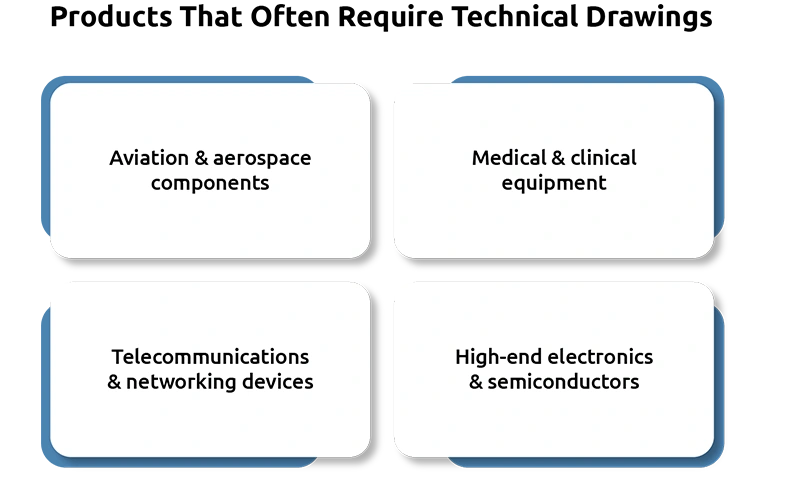
Products That Often Require Technical Drawings
Some industries face these requests more often:
- Aviation & aerospace components
- Medical & clinical equipment
- Telecommunications & networking devices
- Industrial machinery & automation systems
- High-end electronics & semiconductors
- Defense or dual-use products
Even small mistakes can lead to higher duties, fines, or shipment delays, so correct documentation is required.
Risks of Not Providing Technical Drawings
If customs asks for drawings & you cannot provide them, shipments may be delayed, held, or seized. Authorities may assign a default classification, often leading to higher duties. Repeated failures can trigger audits or penalties. For urgent items, like aviation spares or medical equipment, delays can be costly & break operations.
How Importers Can Prepare
The easiest way to avoid customs problems is to plan. Keep technical drawings for all critical products. Make sure invoices, packing lists, and customs paperwork match the drawings exactly. Work with a trusted Importer of Record (IOR) who can ensure products are properly classified, documented, and compliant before shipping.
Role of IOR and Compliance Experts
An IOR acts as the legal party responsible for imports. They make sure technical drawings meet customs requirements. Compliance experts can also help interpret how product features affect HS codes, duties, and regulations, especially in regions with strict rules like the EU, UK, US, or the Middle East.
Digital Customs and Transparency
Many customs authorities now use digital systems and automated checks. These systems flag inconsistencies and may request additional documents, including drawings. Having accurate, ready-to-submit technical drawings ensures faster and smoother customs clearance.
Conclusion
Technical drawings are not challenges; they are tools to ensure correct classification, valuation, & compliance. For businesses managing specialized or regulated products, these requests are becoming common. By keeping detailed technical documentation, managing it with shipping documents, & working with experienced IOR & logistics partners, importers can prevent delays, minimize risks, & keep their supply chain running easily. In today’s international trade environment, preparation & transparency are not just compliance steps—they are main advantages. Companies that follow these practices enjoy faster clearance, predictable costs, & uninterrupted operations.
Did you know?
Customs officials use the Harmonized System (HS) to classify traded products, and they may ask for detailed product information, such as technical drawings, to verify that the correct HS code has been applied and that the product meets regulatory requirements. This standardized system is used by more than 200 countries worldwide to ensure accurate classification and smooth customs procedures.
FAQ
1. Why does customs ask for technical drawings?
Customs may request technical drawings to verify a product’s classification, value, compliance, and origin. These drawings help ensure the product meets safety and regulatory standards and is assigned the correct HS code.
2. What exactly are technical drawings?
Technical drawings are detailed documents showing a product’s design, size, parts, and materials. They can include blueprints, CAD files, exploded diagrams, or engineering schematics. Customs uses them to understand how a product works.
3. Which products usually require technical drawings?
Products that are high-value, specialized, or regulated often need drawings. Common examples include aviation parts, medical devices, industrial machinery, electronics, and defense equipment.
4. What happens if I don’t provide technical drawings?
If customs asks for drawings and you can’t provide them, shipments may be delayed, held, or seized. Authorities might assign a default classification, leading to higher duties and taxes. Repeated failures can also trigger audits or fines.
5. How can importers prepare for this requirement?
Importers should keep technical drawings ready for all complex products and ensure that invoices, packing lists, and customs documents match the drawings. Working with a trusted Importer of Record (IOR) helps ensure products are properly classified, documented, and compliant, avoiding delays and penalties.