Overview
Global trade today is changed not only by market demand but also by constantly changing regulations. While many organizations focus on visible compliance steps such as documentation and customs clearance, the real risks frequently come from hidden compliance triggers integrated deep within daily operations. These triggers can quietly affect international shipping terms, inventory flows, pricing structures, and even the eligibility for generalized system of preferences (GSP) benefits. Understanding these unseen risks is now necessary for businesses depending on international freight services, freight forwarding companies near me, and difficult global supply chains.
Understanding Regulatory Changes in International Trade
Regulatory changes happen typically in global trade, & companies must keep up to avoid delays and extra costs. Tariffs, customs laws, and import rules can all have an impact on how goods transport between countries. Companies who do not comply with these rules could face shipment delays, charges, & increased duties. Usually, reviewing new trade rules and having correct documents helps in trade compliance. Working with expert suppliers also makes it easier to respond to changing rules, reduce risks, & keep worldwide shipments moving quickly and efficiently across multiple foreign markets.
Understanding Compliance in Global Trade
What compliance really means beyond paperwork
Compliance in global trade goes far beyond filing forms or declaring an HS code at the border, such as how goods are categorized under the HTS harmonized tariff schedule, how agreement uses Incoterms such as DAP, and how responsibilities are cut down between buyer and seller. Even small changes in supplier locations, component sourcing, or product design can silently trigger new regulatory issues. Hidden compliance triggers frequently arise from inconsistent data between systems, outdated tariff databases, or incorrect assumptions about Exporter of Record services and Importer of Record service responsibilities.
The role of systems and partners
Modern logistics ecosystems combine customs brokers, premium delivery service providers, and international shipping sources. If one system updates a product description or country of origin while another does not, the approval risk multiplies. This is where supply chain optimization must include agreement visibility, not just quick and cost efficiency.
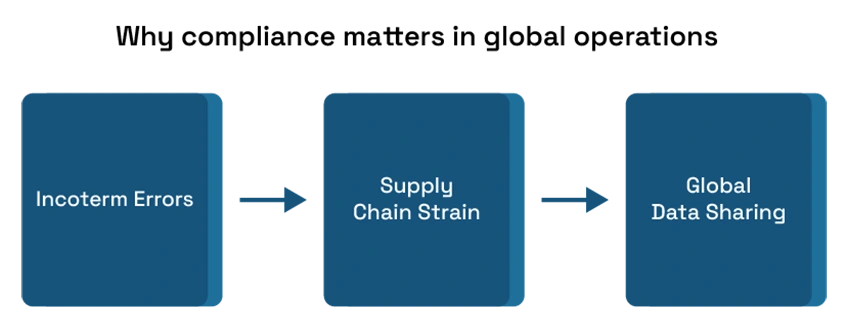
Why compliance matters in global operations
The financial and operational impact
Hidden compliance failures rarely appear as immediate fines alone. They mainly surface as delayed customs clearance, stopped trade advantage, backdated duty claims, or shipment rejections. Incorrect use of Incoterms, such as unknown with DAP responsibilities across various agreements, can lead to disputes over who is responsible for taxes, insurance, or import documentation.
From an operational perspective, compliance issues disrupt international freight services schedules, cause tension among freight forwarding companies near me, and damage inventory and order management. Over time, this undermines supply chain optimization efforts and inflates landed costs.
Reputation and long-term risk
Regulators increasingly share data across borders. A history of misclassification, undervaluation, or misuse of GSP programs can stop a company’s shipments globally. This affects inspection rates, audit frequency, and even access to a premium delivery service designed for trusted traders.
The Hidden Compliance Burden of Rapid Tariff Policy
How changing regulations create invisible risks
Fast changes in tariff policies and trade agreements have added a new layer of difficulty. Updates to the HTS harmonized tariff schedule or preferential programs can instantly change duty exposure. If product databases, HS code, or broker instructions are not updated in real time, companies unknowingly operate out of compliance.
Hidden triggers also grow when organizations expand into new markets using familiar international shipping terms without reevaluation local regulations. What worked under one tariff regime may violate another, especially when the Importer of Record service obligations differ by country.
Technology-driven blind spots
Automation has improved logistics efficiency, but it has also increased dependency on accurate data. Incorrect master data copy across logistics platforms, customs systems, and financial tools spreads compliance errors at scale. Without regular audits and centralized control, these unknown spots continue unnoticed.
How One Union Solutions helps reduce hidden compliance risks
One Union Solutions addresses hidden compliance triggers by combining regulatory intelligence into operational workflows. Their exporter of record services and importer of record service systems centralize accountability, confirming correct product categorizations, valuation, and documentation across borders.
Through aligned international freight services, customs clearance process, and compliance-led supply chain optimization, businesses gain real-time visibility into tariff changes, Incoterms issues, and destination-specific requirements.
Conclusion
Hidden compliance triggers are now one of the biggest risks in global trade. They arise quietly from system gaps, regulatory changes, and working assumptions, yet their impact can disrupt entire supply chains. By understanding how these triggers form and by working with partners like One Union Solutions that integrate compliance into logistics, documentation, and international shipping terms, businesses can move from reactive problem-solving to proactive trade management in global trade.
DID YOU KNOW?
GPS spoofing and jamming disrupted verification, affecting over 24,000 vessels in the first three quarters. New hotspots emerged from the Red Sea and the Gulf of Aden to Russia’s Pacific coast, severely undermining the reliability of standard tracking systems.
FAQs:
What are hidden compliance triggers in global trade?
Hidden compliance triggers are unseen operational or data-related issues, such as incorrect HS codes, outdated tariff data, or inconsistent system records that silently create regulatory risk in international trade.
Why are hidden compliance risks increasing today?
They are increasing due to rapid tariff policy changes, complex global supply chains, automation, and expanding international operations, where small data errors spread across multiple systems.
How do hidden compliance triggers affect international freight services?
They lead to delayed customs clearance, shipment holds, denied trade benefits, backdated duties, and disruptions across international freight services and delivery schedules.
What role do Exporter of Record and Importer of Record services play in compliance?
Exporter of Record services and Importer of Record service structures define legal responsibility for classification, valuation, and documentation, helping centralize accountability and reduce compliance gaps.
How can businesses reduce hidden compliance risks?
Businesses can reduce risk through centralized compliance systems, real-time regulatory monitoring, regular data audits, and partnerships that integrate compliance into logistics and supply chain optimization.