Introduction – Product Classification Is More Than a Code
A product must have the proper HS code for customs when it crosses a border. Customs uses this code to identify the product and determine proper taxes and charges. It may also have an impact on permits, documents, and other customs duties. An incorrect HS code may result in extra charges, shipment delays, penalties, or other issues with customs compliance. Additionally, this can increase costs and cause issues with international shipping. Businesses now handle more goods, shifting tariff regulations, and more severe customs checks. This makes HS code accuracy more important than before. Good product information can help businesses classify products correctly and make international trade easier.
What Is Product Classification?
Product classification means choosing the correct HS code, commodity code, tariff number or customs code for a product. Customs uses this code to identify the goods and apply the right trade rules. The code can depend on the product’s material, composition, function, design and intended use.
HS Code vs HTS Code
The Harmonized System code is the international system used to classify products. Its first six digits are common across countries, while countries can add more digits for their own rules. The HTS code is the detailed tariff code used in the United States. Other countries also use their own national tariff extensions and country-specific tariff codes. The HS system is updated from time to time, with the next major update taking effect in 2028.
How Wrong Product Classification Affects a Business
An incorrect product classification can affect more than the duty paid on one shipment. Duty overpayment can increase costs, while duty underpayment may lead to back payments and customs penalties if the error is found later. Incorrect codes can also cause shipment delays, customs holds or extra checks at the border. Over time, repeated errors can increase customs audit risk and make it harder to plan the true landed cost of products. This can affect pricing, budgets and supply chain planning. If shipments are stopped or costs change unexpectedly, the wider business may also face supply chain disruption. Regular classification checks can help businesses avoid these problems and keep their customs costs and records more reliable.
What Information Is Needed for Accurate Product Classification?
Accurate product classification starts with clear and complete product data. Customs teams may need the product name, a clear description, material and composition, function, intended use, product specifications, technical details, size and measurements. Product drawings or images can also help explain what the item is and how it works. Country of origin and previous classification records can provide useful background when reviewing a product. Keeping this information in one place as customs data or product master data makes it easier to check and update codes. A well-maintained classification database can also help businesses make more consistent classification decisions.
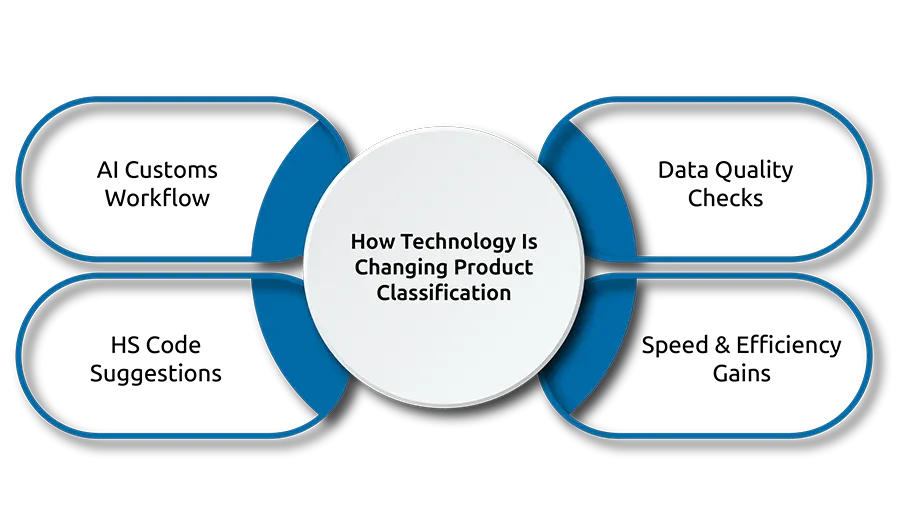
How Technology Is Changing Product Classification
Technology is making product classification faster and easier, especially for companies handling many products. Instead of checking large spreadsheets and searching codes manually, customs automation can organize product data and support quicker classification. AI customs classification tools can read product descriptions, compare product data with similar items, suggest HS codes and perform data quality checks. Machine learning classification can also help improve suggestions as more product information is reviewed. However, AI tariff classification should be used as a support tool, not a full replacement for customs experts. Human review is still important for complex products and final classification decisions. This approach can make automated HS classification, intelligent product classification and other classification technology more useful while keeping expert judgment in the process.
Product Classification and Global Supply Chain Visibility
Accurate product classification helps businesses understand the customs and cost side of each shipment. The right classification can support better landed cost management and duty forecasting, while also helping teams prepare correct customs declarations and plan shipments. It is simpler to verify compliance and understand the costs connected to shipping goods into different markets when trade data is reliable. When a company grows into other countries, where customs laws can differ, this becomes very useful. By connecting classification information with global logistics systems, businesses can improve supply chain visibility and manage their cross-border supply chain with fewer surprises.

Conclusion – Accurate Classification Supports Better Global Trade
Product classification is not just about choosing a tariff code. The right classification helps businesses manage duties, documentation, customs compliance and customs clearance more effectively. Classification errors can be decreased with clear product data, but as product descriptions grow, manual work may become more difficult. Although AI and technology can speed up and improve reliability of classification, human review is still necessary for difficult products. Risks may be reduced, cost planning can be improved, and global trade operations can be facilitated by a transparent and well-managed classification process.
Did You Know
The system is used by more than 200 countries and economies as a basis for their Customs tariffs and for the collection of international trade statistics. Over 98 % of the merchandise in international trade is classified in terms of the HS.
FAQ
Can the same product have different tariff codes in different countries?
Yes. The first six HS digits are generally shared, but countries can add their own digits and tariff rules. This means the final customs code can differ by country.
How often should a company review its product classifications?
There is no single review period for every business. A review is especially useful when a product changes, tariff rules are updated, a new market is entered, or customs questions an existing classification.
What product information helps classify complex equipment?
Details such as the product’s function, technical specifications, material, design, intended use and supporting documents can help determine the appropriate classification.
Why does classification become harder with large product catalogs?
More products mean more descriptions, specifications and codes to review. Manual classification can take more time and may become difficult to manage consistently.
Why is classification important for electronics and technical equipment?
Technical products can have different functions, components and uses that may affect their classification. Detailed technical product information can therefore be important when selecting the correct code.