Insight
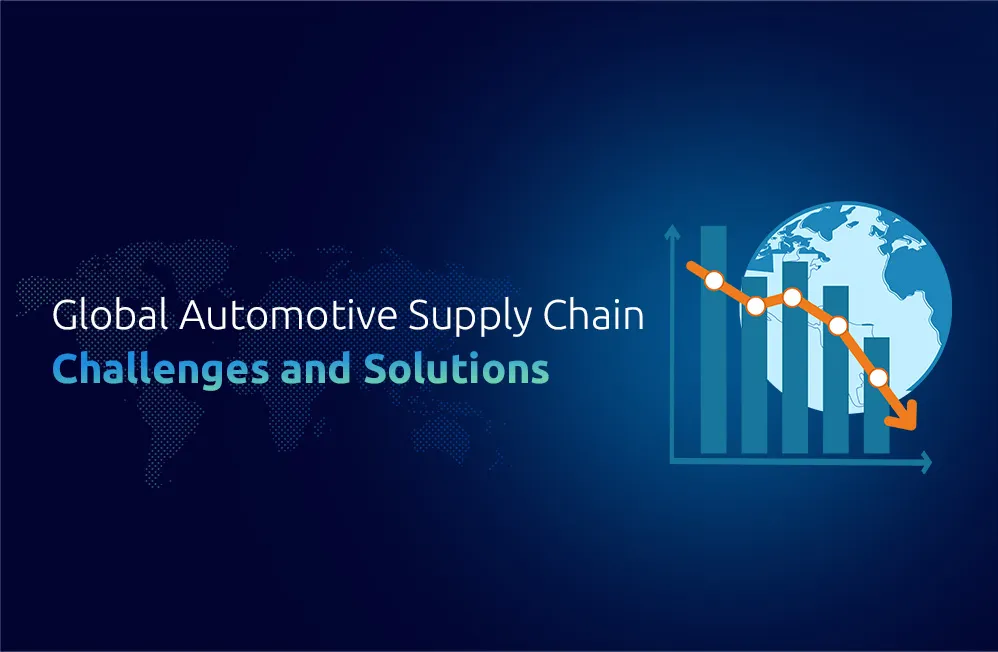
The rising consumer requirements for automobiles and their components create various supply chain issues for the industry. Operations efficiency becomes difficult to maintain because these problems exist for importers and exporters. The blog evaluates how businesses can tackle automotive import-export supply chain difficulties in modern global markets through strategic solutions.
To overcome these challenges, businesses need to adopt smarter supply chain strategies and improve coordination with global partners. Using advanced technologies like real-time tracking and demand forecasting can help reduce delays and improve efficiency. Partnering with reliable logistics providers also ensures smoother import-export operations. By taking a proactive approach, companies can stay competitive and meet growing market demands.
The Global Automotive Supply Chain: Key Challenges

Logistical Bottlenecks:
The automotive manufacturing sector requires the intense application of just in time production because components must reach the assembly line before starting assembly operations. The system allows manufacturers to reduce storage expenses & efficiently operate production. Shipping delays, insufficient truck driver availability, & port bottlenecks create major issues for the delivery system. The delivery delays cause important parts to reach production late, & manufacturing operations must halt, leading to costly production stoppages.
Regulatory Compliance and Trade Barriers:
Automotive sector importers & exporters require expertise to traverse industry regulations, trade barriers, and various tariffs. Each state maintains different regulatory structures, resulting in various difficulty levels when handling import-export operations.
These combined challenges increase uncertainty for global automotive businesses, making it important to adopt structured and technology-driven supply chain strategies.
What are the biggest supply chain challenges in the automotive industry?
In 2026, the automotive sector will face issues such as increasing transport prices, customs delays, job shortages, and changing global trade rules. Some businesses might face difficulties in getting important supplies such as chips, batteries, and electronic parts.
The increasing demand for electric vehicles (EVs) requires a supply of more products and parts. To avoid issues, many businesses use improved planning, shipment tracking, and multiple suppliers to make sure that production and delivery work smoothly.
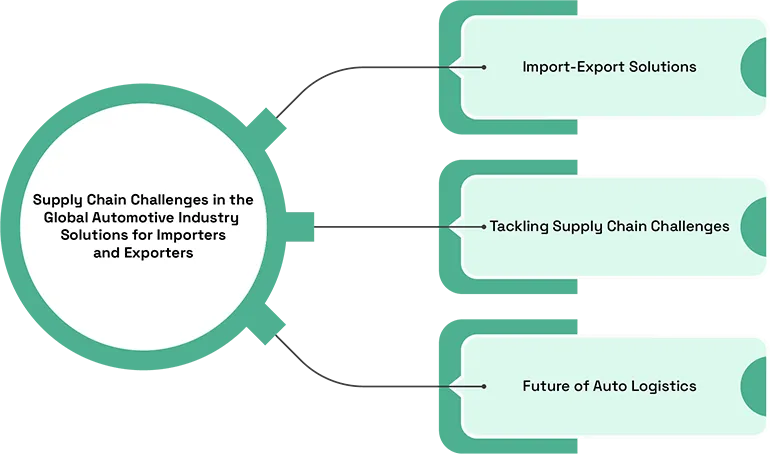
Solutions to Overcome Automotive Supply Chain Challenges
Automotive supply chains present businesses with various challenges they can overcome through specific operational strategies that address these obstacles and increase operational efficiencies. Businesses can optimize operations through technological adoption, strategic partnerships and improved logistical systems.
Enhancing Supply Chain Visibility
Improving supply chain visibility is very important for the global automotive industry, especially for importers and exporters handling international shipments. Using modern tools like supply chain software, AI-based demand forecasting, and real-time tracking helps businesses clearly see their inventory, shipment status, and customs progress.
With features like automatic alerts and data insights, companies can reduce delays, follow trade rules more easily, and manage warehouses better.
Strengthen Associations with Reliable Suppliers:
Suppliers with strong business connections will help their customers avoid raw material shortages and logistical delays. Working in partnership with reliable suppliers allows businesses to get deliveries promptly, which helps prevent inventory depletion and secures improved prices. Such preparedness enables businesses to predict better future market needs, secure backup resources, or boost stock holdings before stable conditions occur.
Optimising Logistics & Warehousing
Efficient logistics and warehousing services are central to maintaining a stable automotive supply chain, especially as global demand continues to rise. Importers and exporters rely on integrated freight forwarding services, customs clearance support, and flexible warehouse solutions to manage in-transit automotive components with precision. Expanded storage capacity, DDP shipping options, and advanced warehouse management systems help businesses reduce lead times while ensuring compliance with HS code and HTS classification requirements. With resilient multimodal transport planning and sustainable trade practices, companies can strengthen their supply chain strategy and improve the reliability of international automotive shipments.
Diversify the Supply Chain:
Diversification is a proven method that helps reduce supply chain risks. A company building its supply chain across multiple regions with multiple suppliers creates an approach that reduces supply chain dependency on one supplier or market. The strategy allows disrupted suppliers to be replaced by alternative suppliers in the network. The strategy is useful for protecting businesses from trade wars and other geopolitical challenges.
Leverage Data & Predictive Analytics:
Combining predictive analytics with data-based decisions improves the management processes of automotive supply chain markets. Businesses utilize data from past sales statistics combined with supply patterns, delivery delays, and supplier outcomes to predict upcoming threats, which allows them to modify their approach. Businesses should use database information to analyze shipping patterns and inventory needs, which lets them address challenges in advance and reduce operational disruptions.
Conclusion
At One Union Solutions, we focus on industries like aviation, automobile, IT, and medical equipment that are facing specific challenges. From logistics to warehousing through compliance, we deliver businesses with the means to simplify the supply chain operations and minimize risk. We provide innovative solutions for inventory management alongside precise tracking tools and reliable shipping options that allow you to enhance your supply chain.
Did You Know,
The World Bank indicates that automotive supply chains will experience year-over-year growth, reaching 4.5% from 2022 to 2026.
FAQs
1. What role does One Union Solutions play in automotive logistics?
One Union Solutions helps businesses manage logistics, customs compliance, warehousing, freight forwarding, and global supply chain operations.
2. What steps should businesses take to make their supply chain more visible?
Businesses that manage supply chain management software can gain real-time monitoring of their product delivery and inventory tracking functions to achieve better supply chain visibility.
3. What essential role does diversification serve for the automotive supply chain?
Diversification enables businesses to spread their supply chain beyond one supplier or region, protecting them from disturbances like trade wars, natural disasters, and supply shortages.
4. What value does predictive analytics deliver to automotive supply chains?
Through predictive analytics, businesses can predict market risks and demand patterns, which lets them boost their inventory control systems and the effectiveness of delivery timing.
5. What types of logistical solutions would let businesses solve their current blockages?
Compatible logistics solutions featuring alternate delivery paths, air transport options, and expanded storage space enable companies to handle delivery delays effectively and maintain on-time delivery schedules.