Introduction
Customs-by-Design refers to keeping trade compliance and customs processes considered while a product continues to be designed, as compared to waiting until it is prepared for shipping. In the past, companies regularly checked import compliance, classification, and paperwork near the time of shipment. This can make problems harder and more expensive to fix. Today, companies are moving toward compliance by design, where product development, sourcing, product data and regulatory requirements are considered together. This is becoming more important as customs authorities also move toward digital, data-driven systems. For example, the EU agreed on a major customs reform in March 2026 that will create a more data-driven customs system, while the WCO released Data Model Version 4.3.0 in June 2026 to support digital data and document exchange. This means companies need to think about product compliance before a product reaches the border. Early requirement checking can help find problems with product details, HS classification, origin, or documents before they cause a corrections, shipment delays, or unexpected costs. The purpose is simple: rather than handling compliance issues after the fact, include compliance into the product process.
What Is Customs-by-Design?
Customs-by-Design means considering customs and compliance requirements while a product is being developed, instead of checking them only before shipping. It makes compliance by design part of the product development process. Companies can check the product’s specifications, components, source country, HS classification, and customs requirements early. This helps create a stronger product compliance strategy and identify regulatory compliance needs before production or sourcing is completed. Additionally, it makes sure that important product data is prepared for customs clearance and trade compliance. Companies can reduce their risk of delays, extra costs, & last-minute changes by identifying problems early.
Why Customs Compliance Is Moving Into Product Development
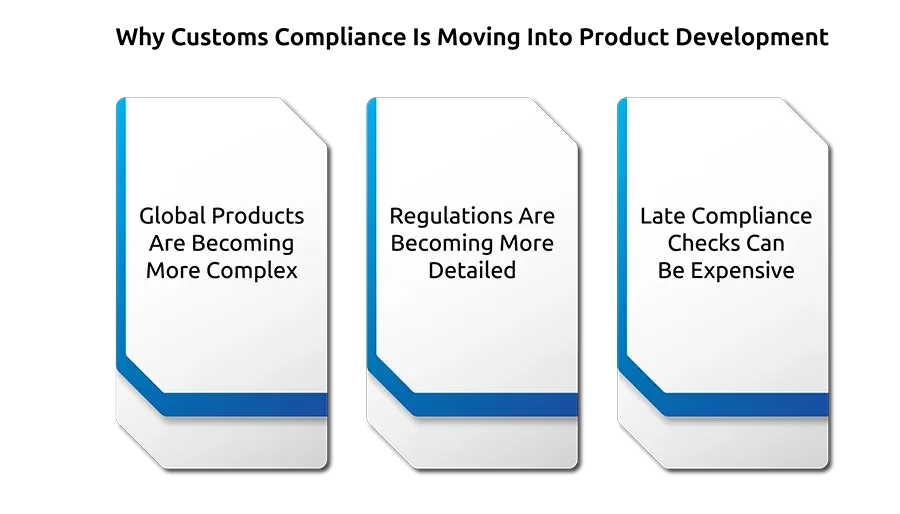
Companies are bringing customs compliance into product development because global supply chains are becoming more complex. Products often use parts from different countries and may be sold in several markets. Each country can have its own import regulations, documentation and regulatory requirements. Checking these rules early can help companies avoid problems later.
Global Products Are Becoming More Complex
A single product may include components made in several countries. Its country of origin, HS classification and customs requirements can therefore need careful review. The same product may also need different documents or approvals in different markets. This makes global trade complexity an important part of product planning.
Regulations Are Becoming More Detailed
Companies now need to consider customs rules along with other product and regulatory requirements. Missing product information or documents can create issues during import. Building supply chain compliance into the development process helps teams identify these requirements earlier.
Late Compliance Checks Can Be Expensive
Finding a compliance issue after a product is finished can lead to extra work, delays or added costs. For example, an incorrect classification may need to be corrected before import. Early checks can help reduce customs risk and make it easier to manage changing international trade regulations.
How Technology Is Making Customs-by-Design Possible
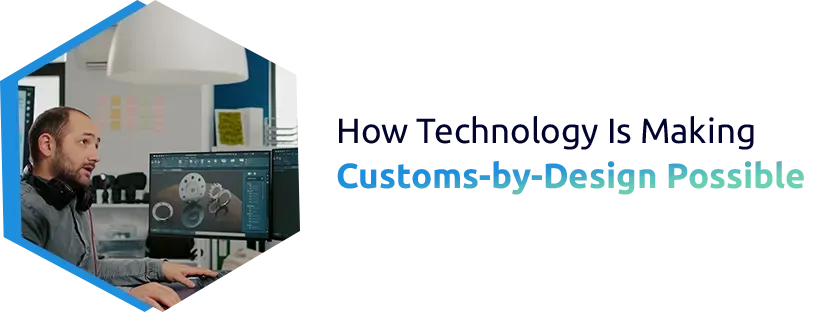
Technology is making it easier to include customs compliance in product development. While automated systems can check customs and legal requirements, AI can review product details and offer possible HS codes. Businesses may also record product details in a single digital document, including origin, classification, and specifications. Systems can send alerts when tariffs or import rules change. Compliance data can also connect with ERP, PLM, procurement and logistics systems. Customs automation, AI in customs compliance, digital compliance, and automated trade compliance are supported by these methods, which help companies to detect problems before a product shipment.
What Happens When Compliance Is Not Considered During Product Development?
Companies may find major problems too quickly if customs compliance is only reviewed during the shipping process. An incorrect HS code can lead to wrong duty calculations or questions from customs. Missing import requirements or incorrect country-of-origin information can also cause documentation problems. These problems may cause delays in imports, unexpected taxes and tariffs, or extra border processes. Before entering a market, a company sometimes wants changes to its product or its documents. Serious product compliance failures can also lead to customs penalties and other regulatory action. Considering these requirements earlier can reduce customs compliance risks and duty and tax risks.
Conclusion – Building Compliance Into the Product
Customs compliance should not start only when a shipment is ready to leave. It should be considered from the product development stage. A Customs-by-Design approach helps companies identify HS classification, origin, documentation and other requirements earlier. Better product data and technology can make these checks easier and more accurate. As global trade becomes more complex, trade compliance will become a more important part of how products are designed, sourced and prepared for different markets.
Did You Know
This transformation is critical as 85% of firms face unprecedented regulatory difficulty, with non-compliance costs now averaging 14.82 million dollars.
FAQ
How can product data help with customs compliance?
Accurate product data can make it easier to check classification, origin, duties and import requirements.
Can the same product have different import requirements?
Yes. Different countries may have different customs, documentation and regulatory requirements for the same product.
Why is country of origin important during product development?
Parts may come from several countries, so origin information may need to be reviewed before the product enters a market.
What is the biggest risk of checking compliance too late?
A company may discover incorrect classification, missing documents or import requirements only when the shipment is ready, causing delays and extra costs.
Can Customs-by-Design reduce product changes later?
Yes. Finding compliance issues early can reduce the need for costly changes after the product has already been developed.