Introduction
Customs clearance is commonly seen as the final step in an global shipment, but customs approvals does not always mean the goods are ready for delivery. After clearance, shipments may still face issues with recipient details, documentation, warehouse processes, taxes, transport management, or product requirements. This final stage is the “last mile” of customs, connecting border clearance with delivery to the intended customer.
For IT equipment, telecom hardware, medical devices, automotive components, and data-center equipment, these issues can cause significant delays. Goods may be customs-cleared but remain at a warehouse, terminal, or freight facility until the remaining operational or regulatory requirements are completed.
Why Customs Release Does Not Always Mean Final Delivery
Customs clearance confirms that the shipment has satisfied the applicable customs requirements for entry or release. It does not necessarily confirm that every condition required for final delivery has been completed. Customs regulators primarily review matters such as the customs declaration, classification, valuation, origin, duties, taxes, or applicable customs controls. Other authorities, logistics provider, warehouses, & delivery partners may have separate requirements.
For example, a shipment may obtained customs release while the importer still needs to offer verification, delivery authorization, tax information, or location-access details. Similarly, a freight offer may be waiting for confirmation from the customer before handling the final delivery appointment. The result is a shipment that has legally moved beyond customs control but has not yet reached its commercial destination.
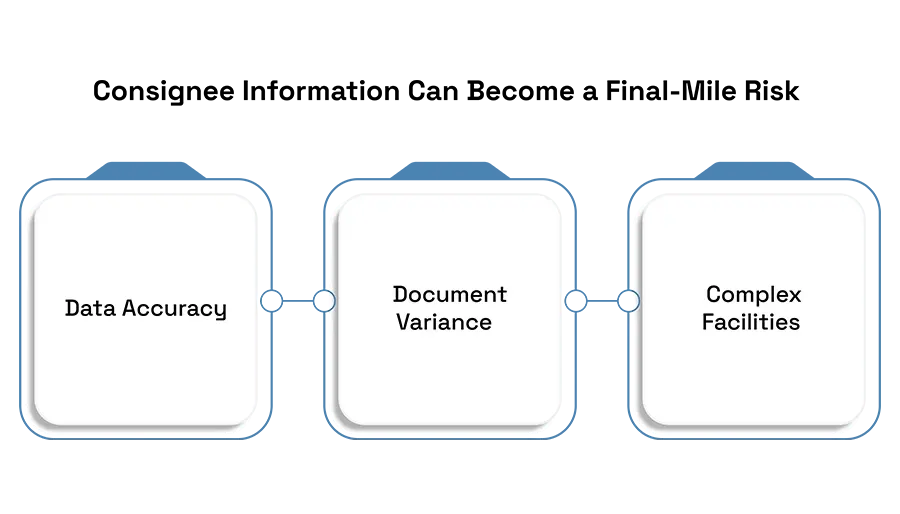
Consignee Information Can Become a Final-Mile Risk
Accurate customer information is important across the import process. A variation between the customs declaration, commercial invoice, shipping document, purchase order, or final delivery information can create working problems after clearance. Even when customs has accepted the declaration, the importer or warehouse may not be able to release the goods to the planned importer without addressing the differences.
This can become more complex when a shipment is schedule for a large business facility, data center, hospital, laboratory, factory, or restricted industrial site. The delivery location may have advance registration, security clearance, appointment scheduling, loading guidelines, or specific receiving documentation. Customs release does not remove these site-level requirements.
Warehousing and Terminal Procedures Can Delay Released Goods
Once goods are approved, they may yet be kept by a port, airport, terminal, freight forwarder, or external warehouse. Storage charges can continue to gather while the shipment waits for collection or onward shipping. Delays may occur because the approval instruction has not arrived the warehouse, documentation has not been matched, or the customer has not completed the required receiving process.
For valuable technology shipments, extra handling controls may also apply. Equipment may need secure storage, serial-number identification, manage access, or special handling before being shipping to its final destination. These procedures are separate from customs clearance but can have a direct effect on delivery timing and cost.
Product Compliance Can Continue Beyond Customs Clearance
Some products are subject to requirements that expand beyond the customs declaration. Regulatory approvals, conformity documentation, licensing, safety requirements, environmental requirements, telecommunications approvals, or controlled-product rules may affect whether the goods can actually be placed into use or supplied to the customer.
This distinction is important for equipment such as telecom devices, medical technology, wireless products, industrial machinery, and specialized electronics. Customs clearance does not automatically mean that a product is approved for every intended use or market activity. A business may therefore receive the shipment while still being unable to deploy or commercially distribute the product until the relevant regulatory requirements are satisfied.

Delivery Coordination Is the Missing Link
The final-mile stage depends heavily on coordination between the importer, customs representative, freight provider, warehouse, consignee, and end user. If these parties operate with different information, the shipment can become delayed even when each individual party has completed its own task.
A structured process should therefore continue after customs release. The release status needs to reach the logistics team, the importer needs correct delivery instructions, the receiving party needs confirmation of the expected arrival, and any site-based requirements should be completed before the vehicle arrives. For complex shipments, this management can be as important as the original customs declaration.
How an Importer of Record Can Support the Final Mile
An Importer of Record service structure can help manage the compliance duties associated with an global shipment, but it does not automatically guarantee final delivery. The IOR role should be clearly separated from the duties of customs representatives, freight offers, warehouses, importers, & end users.
For qualifying business-to-business shipments, a well-defined IOR process can help establish who is responsible for import documentation, customs management, duty and tax handling, recordkeeping, and communication with the relevant parties. The logistics provider and consignee can then manage the physical movement and receipt of the goods according to the agreed shipment structure.
Conclusion
The “last mile” of customs begins when businesses stop assessing customs clearance as the end of the import process. A shipment is only truly successful when it moves from customs clearance across the logistics network & reaches the intended customer without pending tasks or compliance issues. By planning the customs-to-delivery handover early and clearly setting the duties of every party, businesses can reduce unnecessary delays, improve shipment clarity, and create a more rely global delivery process.
Did You Know?
In 2025, global merchandise trade reached approximately US$35 trillion, highlighting the growing importance of efficient customs clearance and post-clearance delivery.
Frequently Asked Questions
Can goods be customs cleared but yet to remain in transit?
Yes. Customs release does not automatically complete warehouse, carrier, tax, regulatory, site-access, or final-delivery requirements. Goods may remain with a terminal, warehouse, freight offering, or other logistics party until the remaining conditions are completed.
Who is responsible for delivery after customs clearance?
Responsibility rely on the shipment structure and applicable Incoterms. The customs agent, importer, freight forwarder, importer, or end user may each have different duties. The IOR role does not automatically include physical transportation or final delivery.
Can incorrect importers information delay a shipment after clearance?
Yes. Differences between customs records, transport documents, invoices, buy orders, or final delivery details can create problems for importer or warehouses even after customs has cleared the shipment.
Does customs clearance mean that a product is approved for use?
No. Customs clearance & product-market approvals are separate matters. Some products may require extra regulatory approvals, licences, compliance proof, or sector-based permissions before they can be used or commercially supplied.
How can businesses reduce post-clearance delivery delays?
Businesses can minimize avoidable delays by confirming importer information, delivery requirements, documentation, tax arrangements, warehouse processes, transport instructions, & site-access requirements before the shipment reaches the final stage. Strong management between customs & logistics teams is important.