Global trade has traditionally depended on physical infrastructure such as ports, airports, roads, warehouses, shipping networks, & customs facilities. However, the movement of goods now increasingly depends on another layer is digital networks.
The way importers, exporters, freight forwarders, carriers, customs authorities, and logistics providers exchange information and manage shipments is being transformed by cloud platforms, electronic customs systems, artificial intelligence (AI), the Internet of Things (IoT), APIs, digital documentation, and real-time tracking.
The change is not simply about replacing paper with digital documents. Digital infrastructure is changing how companies prepare shipments, manage customs requirements, manage cargo, identify risks, & respond to supply chain issues.
Why Digital Infrastructure Is Becoming More Important
International supply chains now involve many countries, suppliers, transportation providers, ports, customs authorities, warehouses, & regulatory needs.
A single global shipment can generate a large amount of information, including commercial invoices, packing lists, HS classifications, certificates, permits, customs declarations, transport documents, & delivery information.
When these processes depend mainly on disconnected systems, businesses may need to enter the same information many times. This can create data errors, communication gaps, documentation problems, & delays.
Digital infrastructure helps connect these processes & allows information to flow more efficiently between different participants.
Digital Customs Is Changing Border Clearance
One of the most important developments in digital trade is the modernization of customs processes.
Electronic Customs Declarations
Many customs authorities are moving from paper-based procedures toward electronic declarations, digital permits, automated processing, & single-window systems. Businesses can submit trade information electronically, while customs authorities can process & analyze larger amounts of information through digital platforms.
This can help minimize repetitive administrative work & enhance the visibility of customs procedures. Digital customs does not remove the need for correct classification, valuation, origin information, documentation, & regulatory compliance.
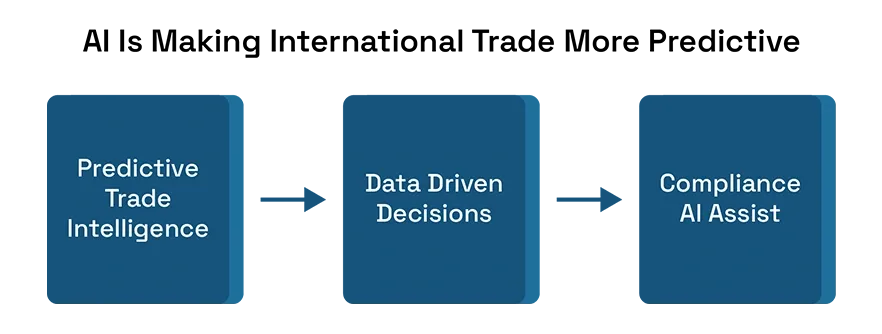
AI Is Making International Trade More Predictive
Artificial intelligence is becoming an important part of updated logistics & trade management.
AI for Supply Chain Risk Management
AI systems can analyze large amounts of information from shipments, transportation networks, historical records, & other sources to identify potential risks.
Instead of reacting after a problem occurs, businesses can use predictive information to prepare for potential disruptions earlier.
AI for Trade Compliance
AI can also support compliance teams by analyzing product information, customs data, & documentation.
It may help identify inconsistencies in product issue, flag unusual shipment patterns, or highlight information that requires additional review.
AI should support human decision-making rather than replace customs & trade compliance professionals, mainly for difficult or high-risk transactions.
IoT Is Connecting Physical Cargo With Digital Systems
The Internet of Things is creating a stronger connection between physical shipments & digital platforms. Depending on the technology, IoT-enabled tracking devices can offer data on the location of goods as well as variables like temperature, humidity, vibration, and management.
For delicate or expensive shipments, this can be very helpful. Businesses may be able to spot anomalous conditions while goods are still in route rather than finding an issue after delivery. This creates greater visibility into the physical condition & movement of cargo.
Digital Documents Are Reducing Paper-Based Processes
Global trade involves important amounts of documentation. Invoices, packing lists, bills of lading, certificates of origin, permits, & customs declarations have mainly been exchanged through paper documents, emails, or manually processed files. Digital trade systems can use structured information that can be exchanged between complete platforms.
This can minimize repetitive data entry & enhance consistency between commercial documents & customs declarations.
A more connected digital document process can also make it easier for companies to locate shipment information and maintain organized records.

APIs Are Connecting Trade and Logistics Systems
Application programming interfaces, commonly known as APIs, are becoming increasingly important in digital logistics.
An importer may use an ERP system, while a freight forwarder uses a transportation platform and a carrier operates its own tracking system. APIs can allow these systems to exchange information. Shipment status information can potentially move from a carrier’s system into a logistics platform without requiring someone to manually update a spreadsheet.
This creates a more connected flow of information across the supply chain.
Digital Infrastructure Is Improving Supply Chain Visibility
Shipments from overseas may go through a number of carriers, ports, warehouses, customs officials, and transport companies.
Businesses can now learn more than simply the location of a cargo thanks to this.
They are better able to see what is going on at various points in the supply chain and react to changes in circumstances.
Digitalization Is Supporting Small and Medium Businesses
Digital infrastructure is not only changing large multinational supply chains. Cloud logistics platforms, online marketplaces, digital payment systems, electronic documentation, and technology-enabled freight services can help smaller companies participate in international trade.
Instead of building every logistics capability internally, businesses can use specialized platforms and service providers. This can reduce some of the administrative and technological barriers associated with entering new international markets.
Conclusion
Digital infrastructure is becoming a critical part of international trade. AI, IoT, cloud platforms, APIs, electronic customs systems, digital documents, and connected logistics platforms are changing how businesses manage international shipments.
The goal is not simply to make trade more digital. The larger opportunity is to make international trade more visible, predictable, connected, and compliant. Businesses that prepare accurate product data, connect their internal systems, strengthen cybersecurity, and adopt digital trade processes will be better positioned as global supply chains continue to evolve.
Did You Know?
The World Trade Organization and World Customs Organization have identified technologies such as artificial intelligence, machine learning, big data, analytics, and the Internet of Things as technologies that can support customs and cross-border trade. WTO–WCO Study Report on Disruptive Technologies
FAQ
1. What is digital infrastructure in international trade?
Digital infrastructure includes technologies such as electronic customs systems, cloud logistics platforms, APIs, AI, IoT, digital documents, and supply chain visibility tools that support international trade processes.
2. How is digital infrastructure changing international trade?
It is helping businesses and governments exchange information faster, automate repetitive processes, improve shipment visibility, manage customs requirements, identify risks, and coordinate supply chain activities.
3. How does AI support international trade?
AI can analyze large volumes of trade and logistics data, identify patterns, support risk assessment, predict potential disruptions, and assist with compliance activities.
4. What role does IoT play in international logistics?
IoT devices can provide real-time information about shipment location and, depending on the device, conditions such as temperature, humidity, vibration, and handling.
5. Can digital infrastructure eliminate customs delays?
Not completely. Digital systems can help identify documentation and data problems earlier, but customs clearance still depends on accurate information, regulatory compliance, applicable procedures, and decisions made by customs authorities.