
Overview
Trade tensions between major economies have grown beyond traditional industries and into healthcare-related sectors. One of the most affected areas is the medical device industry, which depends heavily on cross-border manufacturing, special devices, and global trade partnerships with organizations. When trade wars arise, tariffs, regulatory uncertainty, and changing policies delay in longterm trade relationships, creating wave effects across healthcare systems. Medical devices ranging from diagnostic equipment and surgical tools to monitoring systems depend on a globally distributed production chain. Components may be shipped in one country, manufactured in another, and working devices may be shipped before reaching hospitals. During trade wars, programs such as the Generalized System of Preferences (GSP) may change or be suspended from benefitial program, which directly affects import costs and the supply chain. Businesses must reconsider trade systems, approval requirements, and working planning to have stability in global trade.
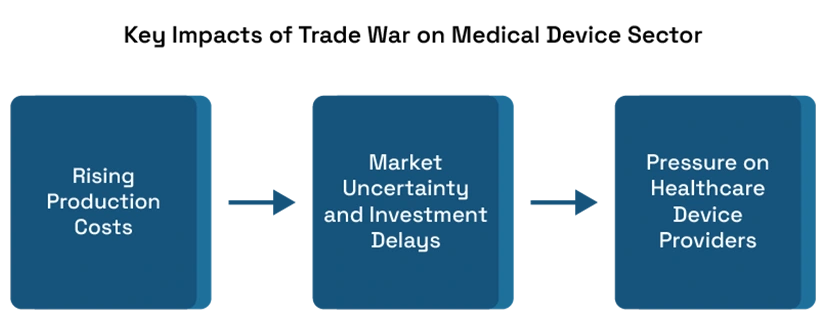
Key Impacts of Trade War on Medical Device Sector
Rising Production Costs
Tariffs imposed during trade wars increase expenses for manufacturers importing device components. Product categorization systems, such as HS code and HTS Harmonized Tariff Schedule, become critical in determining duty rates and approval problems. Incorrect categorization can lead to penalties, delays, or unexpected economic loads.
Market Uncertainty and Investment Delays
Unpredictable trade war spillover creates uncertainty among investors and manufacturers. Organizations mainly depend on clearly defined Incoterms, including DAP and DAPs, to manage responsibility and risk allocation between buyers and sellers in global trades. These agreement details become necessary when trade policies change quickly in the supply chains.
Pressure on Healthcare Device Providers
As costs grow, healthcare providers see supply shortages. Higher import expenses and changing availability of devices can slow the adoption of advanced medical technologies, affecting both hospitals in times of emergency.
Tariffs and Trade Wars: Global Ripple Effects on Medical Device Supply Chain
Fragmented Manufacturing Networks
International trade disagreements grow between organizations to check supply chain systems. Effective logistics planning and access to dependable International freight services become necessary for maintaining slow product shipments across borders. Organizations increasingly depend on special support, such as exporter of record services and importer of record services, to confirm regulatory requirements in unfamiliar markets. Many businesses also question working roles, including whether a freight forwarder can be an exporter of record, mainly when guiding restricted trade environments.
Innovation and Operational Efficiency
Organizations used in Supply chain optimization methods to reduce delays and cost increases. These efforts help simplify supplier work, implement easy procedures, and maintain consistent device availability despite trade disruptions.
The Impact of Disarrangement in Logistics and Trade Policies on the Supply of Medical Devices
Transportation Delays and Border Controls
Trade wars frequently introduce stronger inspections and changing documentation standards, complicating Customs clearance procedures. Delays at ports and border checkpoints can mostly affect time-sensitive medical equipment deliveries in the supply chain.
Inventory and storage management inconsistencies
To reduce uncertainty, organizations increase storage levels and improve Inventory and order management processes. While this reduces short-term risk, it increases working costs and requires careful planning to maintain balanced stock levels to reduce outdated inventory.
Automated regulatory compliance Systems
Many organizations invest in the best trade compliance software for import export rules to automate documentation, track regulatory updates, and reduce human issues during cross-border trades.

Strategies to Reduce Risks and Challenges in the Medical Devices Supply Chain During Trade War
Changing suppliers across various regions reduces dependence on any single trade station. This strategy helps manufacturers maintain continuity even when tariffs or political restrictions affect some countries. Regional production systems allow faster market access and reduce problems from sudden trade policy changes. Localized operations also simplify approval responsibilities. Businesses increasingly depend on experts to manage documentation difficulties, leading to questions such as whether a customs broker can handle both import and export documentation. Using expertise confirms smoother regulatory guidelines and reduces shipment disruptions.
Conclusion
Trade wars have developed into challenges that directly change healthcare delivery globally. The medical device sector, built upon interconnected global production and distribution systems, is specifically vulnerable to tariffs, changing guidelines, and regulatory uncertainty. From changes in the Generalized System of Preferences (GSP) to stronger customs processes and developing trade responsibilities, organizations must continuously use them in global trade. In an increasingly uncertain global trade wars, major planning will remain necessary to confirm uninterrupted entry to critical medical technologies and supporting global healthcare systems.
DID YOU KNOW?
After Washington reduced tariffs on Indian goods from 50% to 18%, Indian exporters in manufacturing and healthcare are likely to gain a price advantage in the US market.
FAQs:
1. How do trade wars affect the medical device industry?
Trade wars increase tariffs, regulatory uncertainty, and customs delays, raising production costs and disrupting global supply chains for medical equipment.
2. What role do HS codes play in medical device imports?
HS codes determine tariff categorizations and duty rates. Incorrect classification can cause shipment delays, penalties, or higher import costs.
3. Can a freight forwarder act as an exporter of record for medical supplies?
In some cases, a freight forwarder can serve as an exporter of record if legally authorized and compliant with export regulations, though responsibilities vary by country.
4. Why is customs clearance challenging during trade wars?
Trade tensions often introduce stricter inspections, updated documentation requirements, and policy changes that slow border processing for shipments.
5. How can companies reduce supply chain risks during trade issues?
Businesses look for various suppliers, use supply chain optimization strategies, invest in trade compliance software, and improve inventory and order management systems.