Overview
Temperature-sensitive healthcare shipments need careful handling during international transport. Medical equipment, diagnostic devices, and other healthcare products may require specific temperature and storage conditions. Customs delays can create extra costs when these shipments are held at a border, port, or airport. Businesses may face storage charges, additional handling, emergency transport costs, or changes to delivery plans.
Good medical equipment logistics, correct documents, accurate HS codes, and proper customs clearance planning can help reduce these problems. For international shipments, clear IOR responsibilities and early customs checks can also help businesses manage the shipment more effectively.
Understanding Hidden Costs of Customs Delays in Healthcare Shipments
Customs delays infrequently appear as multiple indirect costs. Also, they show a chain reaction across the supply chain. When shipments remain during customs clearance, temperature regulation becomes difficult to maintain because it increases the risk of damage or regulatory rejection. Healthcare products frequently require strict categorizations through correct HS code or HTS Harmonized Tariff Schedule identification. Miscategorizations can lead to inspections, penalties, or extended checking. Also, a misunderstanding of Incoterms such as DAP or DAPs can create confusion about responsibility for duties, documentation, or delivery responsibility, ultimately slowing clearance timelines. Companies also face increased warehousing fees, emergency compensation costs, and reputational damage. Delays may cause companies to reroute inventory, impacting inventory and order management systems and creating variation that leads to overstocking or shortages elsewhere. These indirect expenses frequently exceed the direct shipping cost itself in the supply chain.
Keeping Temperature-Sensitive Shipments Safe During International Transport
Temperature-sensitive healthcare shipments need careful handling during international transport. Some medical equipment and diagnostic products may need specific temperature conditions during storage and transit. Businesses should use suitable cold chain logistics, temperature-controlled packaging, and temperature monitoring when required. Clear shipment documents and early customs clearance planning can also help reduce delays at borders.
Proper planning helps protect product quality, reduce the risk of temperature-related damage, and support safe delivery of healthcare equipment.
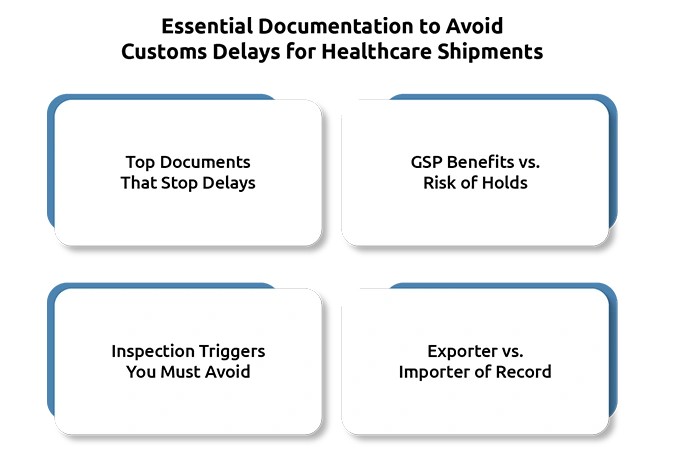
Essential Documentation to Avoid Customs Delays for Healthcare Shipments
Accurate Regulatory Documentation to stop delays
Healthcare shipments require highly detailed documentation to stop delays. Missing temperature certificates, incorrect valuation, or incomplete approval processes frequently lead to inspections. Also, organizations use programs like the Generalized System of Preferences (GSP), which may provide tariff benefits, but improper documentation can instead cause shipment holds.
Organizations increasingly depend on systematic approval planning supported by the best trade compliance software for import export rules, helping teams check documents before goods reach the border during shipments.
Clear Roles and Responsibilities of logistics service
Defining the responsibilities of service providers is critical in global trade. Many organizations depend on exporter of record services or Importer of record Service providers to confirm regulatory responsibility in destination countries. Questions such as can a freight forwarder be an exporter of record or can a customs broker handle both import and export documentation must be clarified early in shipment planning to avoid problems during shipment inspections.
How Automated Tracking Helps Identify and Prevent Costly Delays of Medical Shipments
Real-Time Visibility during Shipments
Automated tracking systems provide real-time shipment tracking, allowing experts to detect delays before they occur at given locations. Combined platforms connect shipment stages with approval systems, allowing organizations to get involved when documentation inconsistencies arise.
Predictive Risk Management
Advanced tracking tools support supply chain optimization by analyzing patterns such as inspection frequency, port congestion, or ongoing documentation errors to avoid hidden costs. Early alerts help logistics teams prepare corrective actions, such as submitting additional documentation before customs authorities request it for customs clearance.
Temperature Tracking Integration
When tracking systems combine location data with temperature sensors, organizations can protect product quality even during unavoidable delays. If exposure risks increase, teams can arrange quick clearance support or temperature-sensitive storage, stopping costly product loss.

The Hidden Cost of Shipment Delays in Healthcare Shipments: What Business Leaders Must Know
Executives frequently evaluate shipping expenses based on freight rates alone, neglecting the effects of working. A delayed medical shipment can stop hospital supply chains, delay treatments, and require urgent replacement shipments at premium costs. Organizations may be required to use different shipping plans, various suppliers, or implement safeguards, increasing long-term working fees. Regulatory uncertainty across markets further complicates decision-making, mainly when healthcare goods must meet varying import requirements. Business leaders must recognize that compliance is not only administrative; it is an economical safeguard. Working with proper documentation processes, automated approval tools, and expert partners reduces risk problems and improves flexibility across global trades.
Conclusion
The hidden costs of customs delays in temperature-sensitive healthcare shipments have gone far beyond delayed delivery. From product degradation and approval penalties to stop inventory planning and reputational risk, the financial and working problems can be huge in supply. Prioritizing correct documentation, clearly defined regulatory roles, and technology-using tracking, healthcare organizations can reduce delays and maintain shipments. In an industry where timing directly affects medical equipment problems, proactive customs management becomes not just a logistical necessity but a major advantage in global trade.
DID YOU KNOW?
According to the Centers for Medicare and Medicaid Services, the United States spends more than $4.9 trillion on healthcare each year. That’s an average of $14,570 per person. By 2026, healthcare spending will increase by 5.7%.
FAQs:
What are the hidden costs of customs delays in healthcare shipments?
Hidden costs include product degradation, regulatory penalties, increased warehousing, emergency replacements, and reputational damage.
How can temperature-sensitive medical shipments be protected from customs delays?
By using real-time tracking, temperature sensors, accurate documentation, and predictive risk management systems.
What role does an Importer of Record service play in avoiding delays?
It confirms regulatory approval, clarifies responsibilities for duties and documentation, and helps speed up customs clearance.
Which documents are necessary to stop customs delays for medical shipments?
Temperature certificates, correct HS codes, valuation documents, import/export approvals, and properly filled Incoterms-based paperwork.
How can automated tracking reduce hidden costs in healthcare logistics?
Automated tracking provides real-time visibility, early alerts for delays, and predictive analytics to prevent inspection or documentation issues.