
Introduction
China has long been the support of global manufacturing and a critical link in international trade. Also, the widening gap between China’s exports and imports is beginning to change global trade flows. With exports growing hugely faster than imports, the imbalance is now absorbing an increasing amount of container capacity. For global manufacturers and shippers, specifically in industries such as IT, medical equipment, aviation parts, and automotive manufacturing, this change is bringing working challenges, longer planning requirements, and higher logistics costs.
Why China’s Growing Trade Imbalance Matters for Import-Export
China continues to deliver strong export growth to markets in North America, Europe, Southeast Asia, and the Middle East. Also, the size of goods flowing into China has not kept pace. This uneven shipment has created a situation where containers are leaving China fully loaded but returning empty or under-utilized.
This imbalance matters because the global trade system depends on predictable container movement. When containers collect in exporting hubs like China, it disrupts the steady circulation required to maintain reasonable logistics times and cost stability. For businesses shipping finished goods, spare parts, machinery, medical tools, and equipment into China, the reduced inbound flow means fewer containers available and longer wait times to secure storage.

How This Imbalance Is Absorbing Container Capacity in China
In a balanced global trade system, containers are shipped continuously, circulating between regions with a smooth flow of goods. Also, with China now exporting much more than it imports, unused and empty containers are filling up in Chinese ports. Instead of being immediately staged into outgoing shipments, many containers are sitting inactive or moving ineffectively.
Key developments include:
- Port congestion and shortages of delivery logistics – As more containers remain stuck inside China, other regions face shortages.
- Longer equipment wait times – Shippers must now plan their export or import requirements further in advance.
- Extended ocean transit cycles – Complete equipment rotation now takes longer, affecting supply chain predictability.
These challenges are quickly ocean carriers to move containers manually, which adds cost and makes global ship scheduling difficult.
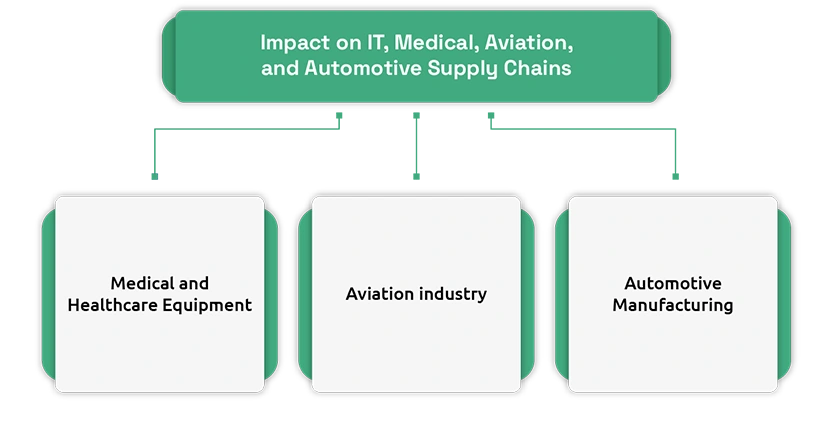
Impact on IT, Medical, Aviation, and Automotive Supply Chains
Critical supply chain industries are already feeling the pressure caused by China’s shifting container dynamics.
IT Industry
Manufacturers shipping technology infrastructure, components, servers, and devices depend on the predictable shipment of replacement parts and newly manufactured units. Any delays in container availability increase lead times, which can disturb scheduled projects and system deployment.
Medical and Healthcare Equipment
The medical sector cannot afford supply chain disruptions, specifically for diagnostic machines, hospital devices, testing equipment, or mission-critical goods. Container shortages and higher rates can delay equipment deliveries, affecting hospital planning and vendor service levels.
Aviation industry
Aviation suppliers heavily rely on accurate delivery schedules for aircraft components, MRO parts, and ground support equipment. Shipping changes due to reduced equipment availability can help increase equipment stock and plan servicing far in advance.
Automotive Manufacturing
Vehicle manufacturers and suppliers frequently work on scheduled production sequencing. Delays in container release or shipping can quickly cause production stops and increase working capital load across the supply chain.
Rising China Import-Export Operational Costs for Global Shippers
With demand heavily toward China’s outbound shipping, carriers are increasing pricing to reflect:
- Higher equipment repositioning costs
- Greater demand for outbound spaces
- Limited inbound capacity
For many businesses, this means spending more simply to maintain existing service dependability. Organizations with manufacturing chains across multiple regions are now reevaluating freight giving out, shipment frequencies, and vendor contracts to handle the added pressure.
Conclusion
China’s widening import-export gap is no longer just a statistical trend; its impact is being felt directly in container movement, global capacity allocation, and the working realities of shipping to and from China. Industries such as IT, aviation, medical devices, and automotive manufacturing must now plan further ahead, maintain a greater inventory safety side, and prepare for a growing freight cost system. Organizations that build flexible supply plans and work closely with dependable partners will be better situated to guide the capacity challenges ahead.
DID YOU KNOW?
According to Indonesia’s latest import statistics, in 2024, the total value of Indonesia’s imports from China reached 72.72 billion USD, while according to Indonesia’s export statistics and China’s import statistics, Indonesia’s exports from China amounted to 62.43 billion USD.
FAQs:
- Why is China’s trade imbalance increasing container shortages?
China is exporting much more than it imports, causing containers to pile up in Chinese ports instead of circulating globally. This reduces equipment availability in other regions and increases shipping delays.
- How does this imbalance affect shipping costs?
Carriers now face higher repositioning costs to move empty containers and are increasing rates for outbound capacity, leading to higher operational expenses for shippers.
- Which industries are impacted the most?
Industries that rely on time-sensitive global supply chains, such as IT hardware, medical equipment, aviation components, and automotive manufacturing, are experiencing longer lead times and rising logistics pressure.
- How is port congestion connected to the trade gap?
As containers accumulate in China due to fewer inbound shipments, port infrastructure becomes strained, leading to congestion, slower turnaround, and delays in equipment release.
- What can companies do to reduce risk?
Businesses should plan shipments earlier, hold additional safety stock, reevaluate freight commitments, and work closely with reliable logistics partners to maintain schedule assurance and supply chain stability.