Overview
Air transport plays a vital role in shipping temperature-sensitive healthcare devices across borders quickly and safely. Diagnostic tools and implantable devices to monitoring equipment, many healthcare equipment goods require strong temperature control during logistics to confirm the working and safety of devices during air shipments in global trade. As global healthcare equipment trade growth increases, approval with air transport rules, customs clearance processes, and international shipping terms is necessary for manufacturers, exporters, and logistics providers of medical devices globally.
Why Is Temperature sensitive Transport Important in Healthcare Devices?
Protecting Product Integrity
Healthcare devices frequently work with sensitive components that can be damaged when exposed to temperature changes during shipments. Improper handling during air transport may reduce accuracy, shorten device life, or result in complete product failure during shipments.
Regulatory and Patient Safety Problems
Regulatory officials expect healthcare devices to arrive in the same condition as approved during certification. Failure to have temperature conditions can result in shipment rejection, regulatory penalties, and risks to healthcare devices during global trade. This is why controlled temperature transport is a core part of new logistics planning and supply chain optimization.
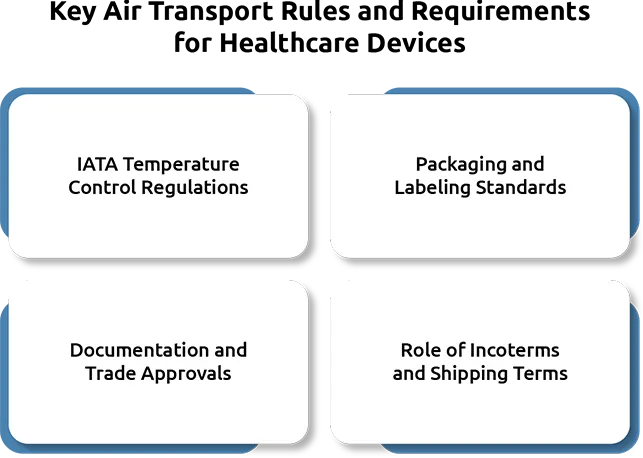
Key Air Transport Rules and Requirements for Healthcare Devices
Packaging and Labeling Standards
Healthcare devices must be packed using validated thermal packaging and clearly labeled with temperature requirements. Active and passive cooling solutions are commonly used in premium delivery service models to reduce risk during transit.
Documentation and Trade Approvals
Accurate documentation is necessary in global trade. Shipments must include the correct HS code or HTS Harmonized Tariff Schedule categorizations to avoid delays in shipments. Trade systems such as the generalized system of preferences (GSP) may apply in some stations, changing duty systems and approval problems in the supply chain.
Trade Compliance Program for Healthcare Device Shipments
A trade compliance program helps businesses review product classification, export controls, customs documentation and destination requirements before healthcare devices are shipped internationally. For temperature-sensitive equipment, these checks can be coordinated with packaging, handling and transport requirements to support the shipment from dispatch through delivery.
Role of Incoterms and Shipping Terms
International shipping terms such as Incoterms help define responsibility for temperature control, insurance, and delivery risk in global trade. Options such as DAP and DAPs are frequently used for healthcare shipments, confirming clarity between exporters, importers, and freight partners for global trade.
Maintaining Safe Healthcare Device Shipping Through Cold Chain Logistics
Cold chain logistics helps to make sure the safety of healthcare device shipment by maintaining proper temperature control from pickup to delivery. This helps to avoid sensitive medical devices from damage during shipping. Proper packing, careful handling, & regular temperature checks are also important elements of good medical logistics. Following air cargo compliance rules allows goods to pass through customs without delay. These processes increase product safety, reduce shipping risks, & make sure that healthcare goods reach at hospital and customers in proper condition.
Why Temperature-Sensitive Air Cargo Is Needed for Medical Devices
Speed and Reliability
Air transport mostly reduces logistics time, which is vital for devices with strong temperature windows. International freight services specializing in healthcare logistics provide complete handling and tracking to reduce exposure risks in the supply chain.
Global Market Access
Many healthcare equipment manufacturers depend on air cargo to reach hospitals, distributors, and laboratories globally. Importer of record service and exporter of record services simplify cross-border trade approval, mainly when devices move through multiple officials during shipments.
Inventory and Order Management
Temperature-sensitive air cargo supports just-in-time delivery methods. This reduces storage requirements, improves inventory and order management, and helps healthcare equipment providers maintain a continuous supply without overstocking in the warehousing systems.

Benefits of Air Transport Rules for Temperature-Sensitive Healthcare Devices
Improved Approval and Reduced Risk
Clear air transport rules provide structured guidelines for handling sensitive healthcare devices. With support from experienced customs broker services, organizations can achieve easy customs clearance and lower the risk of shipment holds in global trade.
Increased Supply Chain Tracking
Temperature tracking in logistics, documentation, and standardized processes improves clarity across the supply chain. This visibility supports a better decision process and long-term supply chain optimization in global trade.
Customer Satisfaction and Trust
Dependable delivery under temperature-sensitive conditions strengthens trust among healthcare equipment providers and regulators. Premium delivery service methods improve brand credibility by confirming products arrive on time and within validated temperature ranges in logistics.
Conclusion
Air transport rules for temperature-sensitive healthcare devices are necessary for maintaining product integrity, regulatory approval, and device safety in global trade. By following established guidelines, using the right international shipping terms, and working with special logistics providers, organizations can ship healthcare equipment devices effectively across borders. Using correct HS code categorizations in the customs clearance process, every step contributes to a flexible and dependable healthcare equipment supply chain in a mainly globalized market.
DID YOU KNOW?
Despite growing exports, India relies heavily on imports for medical devices, with imports worth $8.4 billion in FY25, accounting for over 80% of the total market.
FAQs:
1. Why is temperature control important for healthcare devices during air transport?
Temperature control helps protect sensitive components from damage, ensuring devices maintain accuracy, safety, and regulatory compliance throughout international shipments.
2. What air transport regulations apply to temperature-sensitive healthcare devices?
IATA temperature control regulations outline acceptable temperature ranges, packaging requirements, labeling standards, and documentation needed for air shipments.
3. How does packaging support temperature-sensitive air cargo?
Validated thermal packaging, along with active or passive cooling systems, helps maintain stable conditions and reduces risk during transit and handling.
4. What role does customs documentation play in healthcare air shipments?
Accurate HS code classification, trade approvals, and proper documentation help prevent delays, reduce approval risks, and support smooth customs clearance.
5. How should temperature-sensitive healthcare devices be prepared for air transport?
Temperature-sensitive healthcare devices should be packed according to the required transport conditions, with suitable thermal packaging, labeling, and handling instructions. The shipment should also be checked for applicable airline, customs, and destination requirements before dispatch.