Overview
In today’s strongly regulated global trade, even small agreement issues can give huge fines, shipment holds, and long-term scrutiny. Businesses required customs clearance, international freight services, and cross-border trade frequently manage difficult documentation such as HS code classification, valuation, origin declarations, and international shipping terms. When mistakes happen, waiting for authorities to discover them usually leads to rough outcomes. This is where voluntary disclosure becomes a major advantage for officials. Organizations can frequently reduce penalties, avoid issues, and improve trust with customs officials while securing their logistics work and supply chain optimization.
What Is a Voluntary Disclosure Agreement?
A VDA is a formal process where a business proactively informs customs or tax officials about past non-agreement before an audit or investigation starts. These issues may involve misdeclared values, incorrect HTS Harmonized Tariff Schedule categorization, improper use of the generalized system of preferences (GSP), or documentation errors combined with Incoterms and international shipping terms.
Instead of waiting for execution action, organizations submit a detailed report explaining what went wrong, over what issues, and how they plan to fix it. VDAs are widely used by Exporter of Record services and Importer of Record service providers who want to correct data filings while continuing smooth international freight services and customs clearance process.

How Does the Voluntary Disclosure Agreement Process Work to Reduce Fees?
Complete Step-by-Step procedure
The VDA process mainly starts with an internal approval review. Organizations examine past shipments, customs entries, freight forwarding records, and inventory and order management systems to identify exposure. This may include errors in HS code usage, incorrect usage of DAP or DAPs delivery terms, or missing documentation connected to a premium delivery service.
Once issues are identified, the company submits a voluntary disclosure to the relevant authority, indicating the problem, the right actions, and a plan to prevent remember of unwanted fees. Authorities usually allow time to calculate duties or taxes. Because the business self-reported before enforcement, penalties are frequently reduced completely.
Why Timing Matters
Early disclosure demonstrates good trust. If customs officials uncover violations frequently through audits of freight forwarding companies near me, carrier data, or port inspections, penalties are mainly higher and may include seizure of goods, suspension of advantage, or illegal dependability.
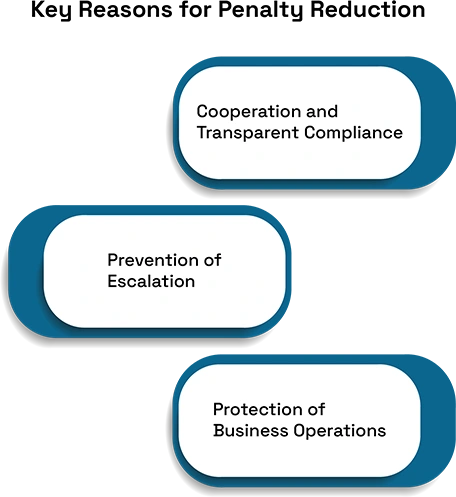
Key Reasons for Penalty Reduction
Cooperation and Transparent Compliance
Authorities view voluntary disclosure as a sign of cooperation. It shows that a company is not attempting to evade duties or misuse customs clearance procedures. This common posture frequently leads to a reduction of fines and, in many cases, a reduction of penalties.
Prevention of Escalation
Unreported errors can multiply over time. A single misclassified HS code applied across years of international freight services can result in massive unpaid duties exposure. VDAs stop the clock early, limiting the financial and operational impact on logistics and supply chain optimization.
Protection of Business Operations
Companies dependent on importer of record service arrangements, exporter of record services, and premium delivery service responsibilities depend on uninterrupted shipping. A VDA helps protect business continuity by resolving issues quietly, without public execution actions that disrupt inventory and order management or customer trust.
Do You Need a Voluntary Disclosure Agreement to Reduce Penalties?
Indicators That a VDA May Be Necessary
You should strongly consider a VDA if you discover:
- Repeated HS code or HTS harmonized tariff Schedule code categorization errors
- Incorrect use of Incoterms, such as DAP, in customs documentation
- Misuse of the generalized system of preferences during shipment.
- Undervalued imports or missing customs clearance filings
- Systemic problems with international freight services or third-party logistics partners
When Professional Support Helps
If your operations involve high shipment volumes, multiple countries, or a difficult freight forwarding chain, professional trade agreement advisors can assess risk and structure a disclosure that protects your legal and trade interests.
Conclusion
Voluntary disclosure is not just a legal safeguard; it is a major approval tool. When done early, a VDA can mostly reduce penalties, stop audits from growing, and protect the smooth shipping of goods across borders. For organizations working in international freight services, customs clearance, and logistics, proactive disclosure protects long-term work, improves relationships with officials, and supports responsible global trade methods. In an era where ports, carriers, and regulators are growing, clarity is frequently the most affordable and business-friendly decision.
DID YOU KNOW?
57 percent of respondents in public companies considered self-disclosure under the revised policy, while only 37 percent of respondents in private companies did so.
FAQs:
What is a Voluntary Disclosure Agreement (VDA)?
A Voluntary Disclosure Agreement is a formal process where a business proactively reports past customs or trade compliance errors to authorities before an audit or investigation begins, often resulting in reduced or waived penalties.
How does voluntary disclosure reduce customs penalties?
Because the business self-reports in good faith, authorities usually reduce or eliminate fines, limit enforcement actions, and allow payment of duties without severe penalties.
When should a company consider filing a VDA?
A VDA should be considered as soon as a company discovers repeated HS code errors, valuation issues, misuse of GSP, Incoterms mistakes, or missing customs clearance documentation.
Who typically uses voluntary disclosure agreements?
VDAs are commonly used by importers, exporters, freight-forwarding dependent businesses, and companies using importer of record or exporter of record services to correct filings and protect ongoing trade operations.
Does filing a VDA stop audits and investigations?
While it does not guarantee immunity, early voluntary disclosure significantly lowers the chance of aggressive audits, cargo seizures, or heavy enforcement actions.