Overview
As global data usage, cloud computing, and AI workloads expand, physical servers are moving across borders more frequently than ever. However, many importers are surprised to find that customs authorities frequently treat servers not just as IT hardware, but as telecom equipment. This categorization affects customs clearance, documentation requirements, and duties during global shipping. Knowing why this happens is necessary for avoiding delays, penalties, and approval risks when managing cross-border server deployments.
Avoiding Common International Trade Compliance Mistakes for Telecom Companies
Telecom organizations frequently face approval issues due to incorrect assumptions about server classification. A common mistake is assuming servers fall purely under general computing categories, without considering their functional role in transmitting, switching, or routing data. When servers are used in network infrastructure such as data centers, cloud platforms, or telecom exchanges, customs authorities may evaluate them under the system with the HTS Harmonized Tariff Schedule. Failing to recognize this can result in misdeclared HS code entries, shipment holds, or post-clearance audits. Exact work between engineering, procurement, and trade approval teams is necessary to reduce pressure in international freight services and avoid unnecessary reclassification.

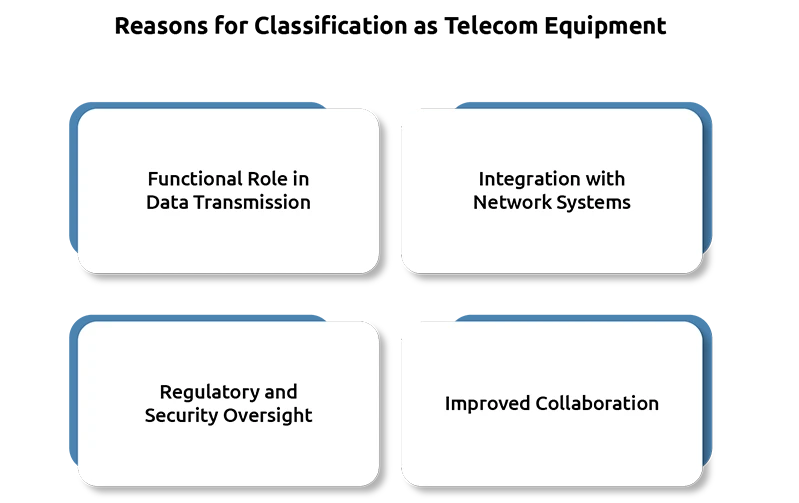
Reasons for Classification as Telecom Equipment
Functional Role in Data Transmission
Customs authorities assess products based on their principal function, not just their physical appearance. Modern servers do more than compute; they actively support data transmission, routing, switching, and signal processing. When servers are integral to communication networks, they work closely with telecom devices.
Integration with Network Systems
Servers deployed alongside routers, switches, and optical equipment may be viewed as part of a combined telecom system. This is specifically common in 5G networks, edge computing, and cloud-based communication platforms, where servers directly allow connectivity and service delivery.
Regulatory and Security Oversight
Telecom-classified equipment frequently falls under additional regulatory scrutiny due to national security and data sovereignty issues. As a result, customs brokers may apply telecom-related controls during customs clearance, even if the shipment is labeled as standard IT hardware.
Invalid Harmonized System (HS) Code Classification of Server Equipment
Incorrect or outdated HS code selection is one of the most frequent causes of shipment disruption. Servers may be mistakenly declared under generic computer categories when their end use clearly supports telecommunications. An invalid classification can initiate a review under the HTS Harmonized Tariff Schedule, leading to revised duties, documentation demands, or even seizure in extreme cases. This risk increases in automated environments where automated freight forwarding systems reuse HS codes without reusing product working.
To avoid these issues, importers must evaluate:
- Server architecture and embedded communication capabilities
- End-use environment (data center vs. telecom network)
- Software-defined networking roles
Aligning classification with real-world use helps confirm simple international shipping terms approval and predictable clearance outcomes.
How One Union Solutions Help You with This Problem
We specialize in resolving difficult server and telecom equipment classification challenges. Working as a trusted approval partner, they support businesses through every stage of cross-border trade. Their Importer of Record Service and Exporter of Record Services confirm shipments remain compliant even when local organizations are not established in the destination country. This reduces risk while maintaining control over regulatory issues. Also, One Union Solutions coordinates international freight services with accurate documentation, optimized routing, and proactive classification reviews. Their expertise in customs clearance, supply chain optimization, and premium delivery service methods allows faster deployment schedules without compromising the agreement. Whether shipments are moving under standard Incoterms or special international shipping terms, their expertise approach reduces reclassification risks and unexpected costs.
Conclusion
Servers are no longer separate computing devices; they are core components of modern communication ecosystems. As a result, customs authorities increasingly evaluate them as telecom equipment based on work, integration, and regulatory effect. Misunderstanding this difference can lead to invalid HS classifications, delayed customs clearance, and increased approval exposure. Proactively addressing categorization strategies and working with experienced partners such as One Union Solutions, businesses can guide international shipping with trust, efficiency, and regulatory reliability.
DID YOU KNOW?
India’s telecom exports have witnessed a significant increase of 72%, rising from ₹10,000 crore (US$1.10 billion) to ₹18,406 crore (US$2.03 billion).
FAQs:
Why do customs authorities classify servers as telecom equipment?
Customs authorities assess products based on their principal function. When servers support data transmission, routing, switching, or communication networks, they may be classified as telecom equipment rather than general IT hardware.
Does every server shipment fall under telecom classification?
No. Servers used solely for internal computing or standalone processing may remain under general computer HS codes. Classification depends on architecture, embedded communication functions, and end-use environment.
What are the risks of incorrect HS code classification for servers?
Incorrect classification can result in shipment holds, revised duties, documentation requests, post-clearance audits, or penalties under the Harmonized Tariff Schedule.
How does server deployment location affect customs classification?
Servers deployed in telecom exchanges, 5G infrastructure, edge computing sites, or cloud communication platforms are more likely to be evaluated as telecom equipment during customs clearance.
How can businesses avoid server classification and clearance issues?
Businesses should assess server functionality, confirm end use, align HS codes with real-world deployment, and work with experienced trade compliance partners to manage customs clearance accurately.