In international trade, importers often face a confusing situation. Two identical products—same design, same material, & same use—are charged different import duties at customs. At first, this may seem unfair. However, this happens often because import duties are not based only on how a product looks. They depend on trade rules, customs laws, & government policies.
Import duties are influenced by many technical & legal factors. Understanding these factors helps businesses plan their costs better, follow trade rules, & avoid unexpected expenses.
Product Classification and HS Codes
Every product entering a country is given a Harmonized System (HS) code. This code tells customs how much duty & tax should be charged and which rules apply. Even when two products look the same, they can be given different HS codes. This can happen if there are small differences in the materials used, how the product is used, how it is assembled, or how it is described in the documents. Because of this, even a small mistake in classification can lead to a big difference in duty charges. That is why choosing the correct HS code is very important.

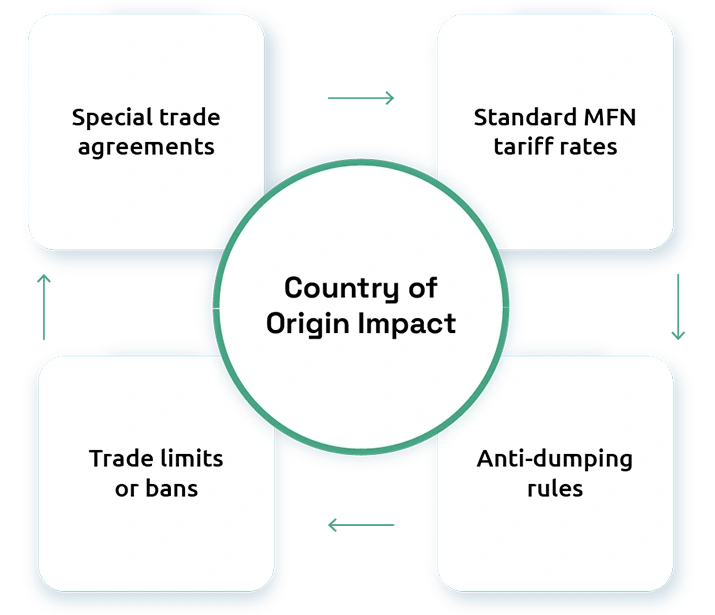
Country of Origin Impact
The country of origin strongly affects import duties. Customs decides duties based on where the product was made or where major changes were made to it. It does not depend on where the product was shipped from.
Two identical products made in different countries may pay different duties because of trade policies such as:
- Special trade agreements
- Standard MFN tariff rates
- Trade limits or bans
- Anti-dumping rules
Products from countries with better trade relations often pay lower or zero duties. Others may face higher charges.
Role of Free Trade Agreements
Countries sign Free Trade Agreements to make trading easier. These agreements allow certain products to be imported at lower duty rates or without paying duty at all.
To get these benefits, importers must submit correct Certificates of Origin and follow origin rules. If one shipment has proper documents & another does not, customs may charge different duties even for the same product.
Customs Valuation Differences
Import duties are usually calculated based on the declared value of the goods. Even identical products can have different values. This may happen because of different purchase prices, shipping & insurance costs, exchange rate changes, or pricing between related companies. If customs believes the declared value is too low, they may review and change it. This can increase the duty amount for one shipment compared to another.
Additional Duties and Trade Measures
Different from normal customs duties, governments may add extra charges. These include Protection duties, control duties, & security duties. These charges are usually applied to products from some countries to save local industries. Two identical products from different countries can end up with very different total duty costs.
Importance of Accurate Documentation
Incorrect documents can also change duty amounts. Errors in product descriptions, HS codes, origin details, or invoice values may cause customs to review the shipment again. This can lead to higher duties, delays, or penalties—even when the products are exactly the same.
Conclusion
Two same name have to pay different import duties because international trade rules are different. Like HS codes, country of origin, trade agreements, product value, & end-use all affect how duties are calculated.
For businesses that are involved in international trade, understanding these points is useful. Correct documents, accurate classification, & support from customs brokers or Importer of Record help ensure duties are applied correctly, costs stay under control, & customs issues are stopped.
Did you know?
Customs Duty refers to the tax imposed on goods when they are transported across international borders. The objective behind levying customs duty is to safeguard each nation’s economy, jobs, environment, residents, etc., by regulating the movement of goods, especially prohibited and restricted goods, in and out of any country.
FAQ
1. Why do two identical products sometimes have different import duties?
Even if products appear identical, duties can vary due to factors such as HS code classification, country of origin, trade agreements, declared value, and intended use. Customs doesn’t base duties solely on appearance.
2. How does the HS code affect import duties?
Every product is assigned a Harmonized System (HS) code. This code determines the duty rate. Small differences in materials, use, assembly, or documentation can result in different HS codes—and, consequently, different duties.
3. Can the country of origin change the duty amount?
Yes. Customs looks at where a product was made or significantly changed, not where it was shipped from. Products from countries with favorable trade agreements may have lower duties, while others may pay more.
4. Do trade agreements or exemptions affect import duties?
Absolutely. Products eligible under Free Trade Agreements (FTAs) or duty relief programs may pay less or no duty. Missing documents or incorrect information can prevent these benefits, even for identical goods.
5. Why can a declared value or documentation change the duty?
Duties are often based on the declared invoice value. If customs believes the value is too low or documents are incomplete, they can reassess the value or classification, leading to higher duties or delays.