
Overview
When goods cross global borders, customs authorities must decide whether a product is new or used. This classification directly affects customs clearance, documentation requirements, inspection levels, and even eligibility for import approval of goods. Many importers suppose that a product’s invoice description alone is enough, but customs officials depend on multiple technical and regulatory indicators before making a final determination. Understanding this process helps businesses avoid delays, penalties, or rejection during international shipping terms approval.
Major Criteria Customs Officials Use
Customs authorities apply standardized evaluation methods while examining shipments, mainly for high-value goods, machinery, electronics, and industrial equipment.
Physical Condition and Visual Inspection
The first step in customs clearance is a physical or X-ray device inspection. Signs such as scratches, wear marks, dim labels, repackaging, or missing original seals can show previous use. Products shipped through international freight services are frequently inspected for inconsistencies between the declared and the actual condition.
Packaging and Documentation Review
New goods are mainly shipped in original manufacturer packaging with factory seals unbroken. Customs officials cross-check invoices, packing lists, and shipping documents continuously. If packaging appears reused or incomplete, the product may be reported as used even if declared otherwise by the exporter of record services provider.

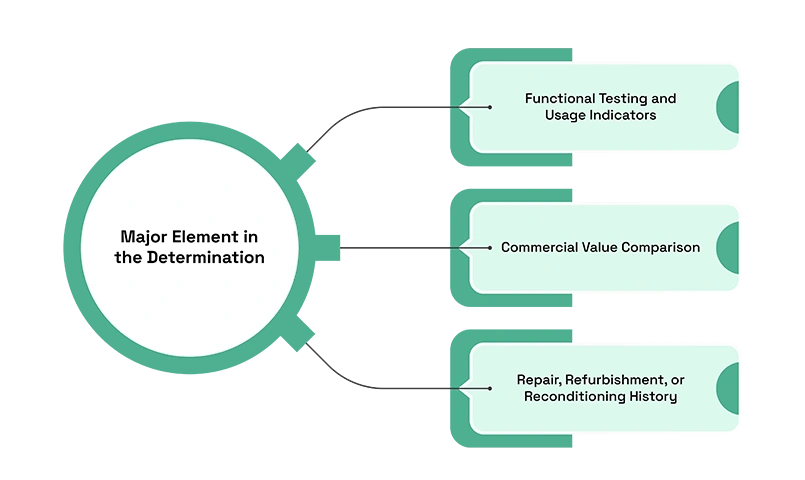
Major Element in the Determination
Beyond visual inspection, customs depend on deeper technical and commercial evaluation.
Functional Testing and Usage Indicators
For machinery and electronic equipment, customs may perform functional checks. Power-on hours, software logs, internal counters, or maintenance records frequently reveal previous usage. This is common for IT hardware imported under an importer of record service arrangement.
Commercial Value Comparison
Declared value plays a major role. If the declared price is significantly lower than the market value of a new product, customs may suspect depreciation due to prior use. This is especially survey in premium delivery service shipments where valuation accuracy is necessary.
Repair, Refurbishment, or Reconditioning History
Goods described as “refurbished,” “repaired,” or “reconditioned” are almost always classified as used, regardless of current appearance. Customs officials assess whether the product has undergone any operational lifecycle before import, which impacts approval under country-specific regulations.
Customs Decides Serial Numbers & Manufacturing Dates
Serial Number Verification
Serial numbers are one of the strongest indicators that customs officials use. These numbers allow authorities to trace production batches, warranty activation, and service history. If a serial number shows prior registration or deployment, the good may be reclassified as used.
Manufacturing Date vs Import Date Gap
A long gap between the manufacturing date and import date can raise suspicion. While warehousing delays are normal in supply chain optimization, customs may request additional proof that the goods remained unused during storage or logistics under multi-modal logistics services.
Country-Specific Import Rules and Approval
Each country has its own regulatory system governing new and used goods.
Restrictions on Used Goods Imports
Some countries impose strict bans or approvals for used machinery, IT, or medical devices. Customs authorities check the agreement with guidelines, safety, and waste management regulations before giving entry.
Certification and Approval Requirements
Used goods may require extra permits, checking reports, or import permission. Failure to meet these requirements can lead to shipment holds or re-export orders, even if international shipping terms were used correctly.
Risk Profiling and Past Import History
Customs systems use risk profiling based on the importer’s past shipping, product category, and shipping patterns. Frequent misdeclarations can cause good inspections in future shipments, affecting the clearance schedule and international freight services.
Conclusion
Customs’ categorization of goods as new or used is a systematic process, not a subjective decision. From physical inspection and serial number to documentation analysis and country-specific import rules, every part plays a vital role in the complete decision. Customers using the importer of record service or exporter of record services must confirm clear declarations, correct valuation, and proper documentation to avoid disruptions. Customs officials evaluating product condition helps businesses simplify customs clearance, reduce approval risks, and maintain dependable global trade.
DID YOU KNOW?
They must have imported goods worth 10 crore rupees in the previous year, or paid customs duty exceeding 1 crore rupees in the previous financial year, or, if the importers are also Central Excise taxpayers, exceeded 1 crore rupees from their Personal Ledger Account in the previous year.
FAQs:
How do customs authorities determine if a product is new or used?
Customs officials assess physical condition, packaging, serial numbers, manufacturing dates, declared value, and documentation to decide whether goods are new or previously used.
Can customs classify goods as used even if they are declared new?
Yes. If inspections reveal wear marks, reused packaging, prior serial number registration, or undervaluation, customs may reclassify the goods as used.
Do serial numbers affect customs clearance decisions?
Yes. Serial numbers help customs trace production history, warranty activation, and prior usage, making them a key indicator in classification decisions.
Are used goods subject to different import regulations?
In many countries, used goods require additional permits, certifications, or approvals, and may face restrictions depending on the product category.
How can importers avoid delays related to new or used classification?
Accurate declarations, correct valuation, original packaging, clear documentation, and compliance with country-specific import rules help prevent clearance delays.