
Overview
The year 2026 is going to be a year for artificial intelligence in supply chains all around the world. Artificial intelligence has been getting bigger in companies for a year now. But now companies are not just trying it out, they are really using intelligence. For companies that import and export things, in industries, like information technology, aviation, medical and automotive, artificial intelligence is not something they can choose to use or not. Artificial intelligence is something these companies really need to stay competitive with companies that use artificial intelligence.
The world of trade is getting more complicated. Companies are dealing with businesses who want things done fast. They want to know what is going on. So companies are looking for ways to do things. They are using analytics and automated documentation. Artificial intelligence is changing how goods are moved from one country to another. It is also changing how companies make decisions. They are making these decisions right away. Trade and artificial intelligence are really changing things.
AI in Logistics
Logistics operations are changing in a way because of artificial intelligence. One thing that is really making a difference is analytics. This helps businesses figure out what businesses want to buy, find problems before they happen and plan the routes for delivery. Logistics operations are changing because of intelligence. This means companies can get things done on time and work better overall without having to do everything by hand. Artificial intelligence is really helping with this.
Automation is a part where Artificial Intelligence is making a difference. Artificial Intelligence is assisting with tasks such as paperwork, tracking shipments and ensuring accuracy. It helps to get things done quickly and correctly. That’s a big plus. Artificial Intelligence is really helping with tasks, like documentation processing, shipment tracking and compliance checks.
In warehouses artificial intelligence systems are helping us see what we have in stock and get the numbers right. These smart tools look at how we manage our inventory and orders so we can keep the amount of stock on hand and get orders to people on time. This is really important for things like equipment and airplanes where getting things delivered on time is very important, for medical equipment and aviation.
Additionally artificial intelligence is making customer experience better. It does this by giving updates on shipments in time and telling customers when their deliveries will happen. Businesses can now be clearer about what’s happening. This helps build trust and makes clients more likely to stick with them over time.
Future of AI in Logistics
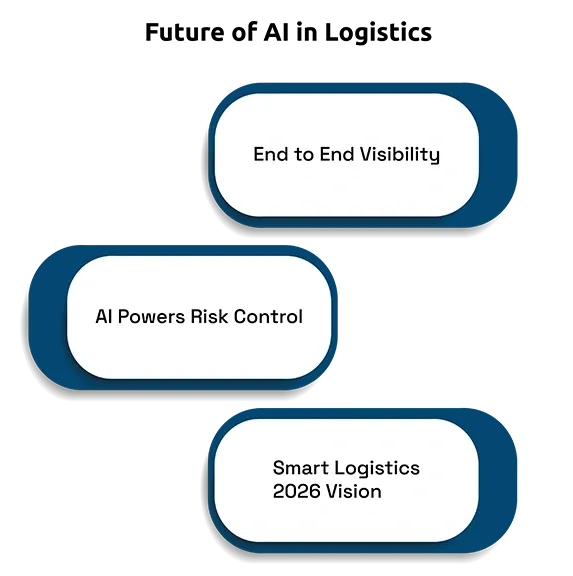
The future of Artificial Intelligence in logistics is going to be really big. One thing that will happen is that Artificial Intelligence will work together with new technologies like the Internet of Things and blockchain. When we use Artificial Intelligence and the Internet of Things and blockchain together it will be easy to see what is happening at every step of the way when we move things from one place to another. This means that companies will be able to watch their shipments, check the conditions they’re in and make sure everything is done correctly at every single stage of the process, with Artificial Intelligence.
Another important development is the rise of autonomous systems. From self-driving delivery vehicles to automated drones, AI is set to revolutionize transportation. While these technologies are still evolving, 2026 is expected to bring significant advancements that will make them more viable for commercial use.
AI will also play a critical role in risk management. By analyzing large volumes of data, AI systems can identify potential compliance issues, predict disruptions, and recommend corrective actions. This is particularly valuable in the import-export sector, where regulations and requirements can vary significantly across regions.
Businesses are using tools to deal with complicated rules and make sure everything is done correctly. These tools are really important for companies to do business around the world without any problems and to stay ahead of others in a world that is changing fast. Businesses need these tools to handle trade and businesses need to have these tools to stay competitive.
The Turning Point: Why 2026 Is a Make-or-Break Year for AI Adoption
This is the year when 2026 starts to be about all companies using intelligence. Companies that have already started using intelligence are beginning to see that it is actually helping them and they can measure the good things it is doing. On the other hand , companies that have not started using artificial intelligence yet are feeling a lot of pressure to start using it so they can feel the difference.
Regulatory changes and digital transformation initiatives across major economies are also accelerating AI adoption. The government and companies are telling people to use computers and digital systems to make things more open and to get things done faster. This is why artificial intelligence solutions, like the ones that use AI, are really important now. The government and companies think that artificial intelligence solutions or AI solutions can really help people. So the use of intelligence solutions or AI solutions is a big deal.
For import-export businesses, this means that relying on traditional methods is no longer sustainable. The ability to process large volumes of data, automate workflows, and respond quickly to changes will determine long-term success. Companies that embrace AI will be better equipped to handle disruptions, reduce costs, and deliver superior service.
The automotive and aviation industries are using Artificial Intelligence to get things done. This is because they need to be very careful and follow a lot of rules. The IT and medical sectors are also using Artificial Intelligence. They want to work faster so they can get important things to people on time. Artificial Intelligence is helping them do this.

Conclusion
As global trade continues to evolve, 2026 stands out as a pivotal year for the future of AI in logistics. The transition from manual processes to intelligent systems is no longer a distant goal—it is happening now.
For businesses in import-export sectors, especially those operating in IT, aviation, medical, and automotive industries, adopting AI is essential to remain competitive. By leveraging advanced technologies, improving operational efficiency, and enhancing decision-making capabilities, companies can navigate the complexities of modern supply chains with confidence.
People who put their money into Artificial Intelligence now will help decide what the future of logistics will look like. On the other hand Artificial Intelligence will move forward with or without them. If they wait long to get on board with Artificial Intelligence they will probably get left behind in a world that is becoming more digital and relying on data every day. The future of logistics is closely tied to Artificial Intelligence.
DID YOU KNOW
“AI progress as a signal of future competitiveness”
FAQs
How is AI improving decision-making in logistics?
AI analyzes large datasets in real time, helping businesses make faster and more accurate operational decisions.
Can AI reduce delays in global shipments?
Yes, AI predicts disruptions and suggests alternative routes or actions to minimize delays.
Is AI expensive to implement in logistics operations?
Initial costs can be high, but long-term savings and efficiency gains often outweigh the investment.
Which industries benefit the most from AI in logistics?
Industries like aviation, medical, automotive, and IT benefit greatly due to their need for precision and speed.
Will AI replace human roles in logistics?
AI will automate repetitive tasks, but human expertise will still be essential for strategic decision-making.