
Overview
The global semiconductor industry is witnessing a major shift as China adapts to tightening export controls imposed by the United States. These restrictions, primarily targeting advanced chipmaking equipment and technology, have forced Chinese companies to rethink their sourcing strategies. As a result, Southeast Asia has emerged as a key alternative region for procuring semiconductor tools and components.
This transition is not just a regional adjustment—it reflects a broader transformation in global trade patterns. For businesses involved in import-export operations, particularly in IT, aviation, medical, and automotive industries, these changes are highly significant. Semiconductor supply chains are deeply interconnected with these sectors, making any disruption or shift a matter of strategic importance.
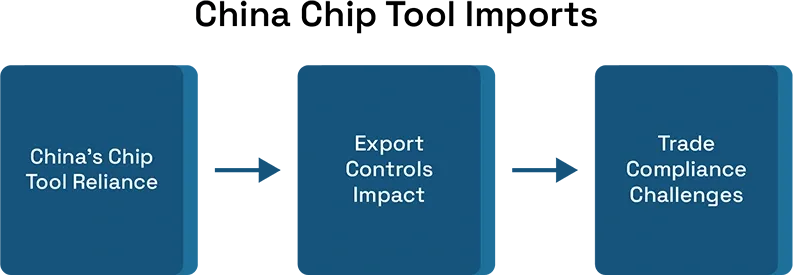
China Chip Tool Imports
China has long been one of the largest importers of semiconductor manufacturing equipment. These tools are essential for producing advanced chips used in everything from smartphones and data centers to aircraft systems and medical devices. However, recent export controls have limited China’s access to high-end chipmaking technologies from key suppliers.
Chinese companies are trying to find ways to get the things they need from other places. This has led to an increased focus on mid-range and mature node technologies, which are still widely available through other markets. At the moment, efforts to innovate within our own country are speeding up. We are making investments to reduce our reliance on technology from other countries.
This change has brought problems and chances for companies that import and export things. Businesses have to deal with changing rules and make sure that sensitive equipment can move easily across borders. It is really important for companies to classify things correctly, have the documents and follow the rules of trade that are always changing. Companies that import and export things have to be very careful with this.
Imports Shift to Southeast Asia
Southeast Asia is really important now. Countries like Vietnam, Malaysia and Singapore are getting more involved in the semiconductor supply chain. Vietnam, Malaysia and Singapore are helping out. People are looking at them for other options. This is because Vietnam, Malaysia and Singapore have a system in place for making things. They have good rules for trading and they are getting better, with technology so people want to work with Vietnam, Malaysia and Singapore.
This shift is driven by both necessity and opportunity. As direct access to certain technologies becomes restricted, companies are leveraging regional networks to maintain continuity. Southeast Asia’s role is not limited to redistribution; it is also becoming a center for assembly, testing, and even partial manufacturing of semiconductor components.
For import-export businesses, this trend opens new trade corridors and partnerships. However import-export businesses also need to know a lot about the rules in regions and the rules they have to follow. When import-export businesses are working with countries they have to be very careful especially when they are dealing with very important and sensitive things like semiconductor equipment, for import-export businesses.
Strategic Implications for Global Supply Chains and Trade Networks
The thing about chip tool imports going to Southeast Asia shows that companies are changing how they get things from around the world. Companies do not want to rely on one place for the things they need. So they are trying to get things from different places. This way is safer for companies because they are not depending on one place.. It is also harder for companies to manage how they get things because it is more complicated. Chip tool imports are a part of this change. Companies are really trying to make their supply chains stronger, by changing how they do chip tool imports.
Digital transformation is playing a key role in addressing this complexity. Businesses are increasingly relying on advanced compliance tools and data-driven systems to manage regulations and ensure transparency. Real-time tracking, automated documentation, and integrated platforms are becoming essential for maintaining efficiency.
Additionally, geopolitical factors are now a central consideration in trade decisions. Companies must balance cost, compliance, and risk while planning their sourcing and distribution strategies. This is particularly relevant for industries like aviation and medical equipment, where reliability and regulatory adherence are non-negotiable.
The shift also shows that it is really important for people like manufacturers and suppliers and service providers to work together. We need to have relationships with each other and make sure we talk to each other clearly so we can deal with all the changes that are happening in trade.
Conclusion
China’s chip tool imports are moving to Southeast Asia. This is a big change for the global semiconductor supply chain. The reason for this move is because of export controls and what is happening with countries and their relationships. This change is affecting how things are traded. It is creating new chances for companies all around the world. China’s chip tool imports are really changing the way things are done.
For companies that do business in import and export it is really important to stay on top of things with their import and export. This is especially true for companies that work with IT, aviation, medical, and automotive industries. If these companies want to stay they need to be able to change with the times. They can do this by trying ways to find the things they need by learning about what is going on in different parts of the world and, by using special tools to help them follow the rules and get things done. This way companies can turn the things they face into good things for their business like import-export companies.
Global trade is always changing. To do well in this world you need to be flexible and think of ideas. Having a plan is also very important. The world of trade is always getting things so you have to change with it. Global trade is like an area that is always moving but if you do things the right way your business can do very well. Global trade is the key. If you want to succeed in global trade you have to be ready for anything.
DID YOU KNOW
“China’s imports of semiconductor manufacturing equipment from Southeast Asia surged in 2025, surpassing direct shipments from the US”
FAQs
1. Why is China shifting chip tool imports to Southeast Asia?
Due to U.S. export controls, China is sourcing semiconductor equipment from alternative regions like Southeast Asia to maintain supply continuity.
2. Which Southeast Asian countries are benefiting from this shift?
Countries such as Vietnam, Malaysia, and Singapore are emerging as key hubs for semiconductor supply and processing.
3. How does this impact global supply chains?
It diversifies sourcing networks, reduces dependency on a single region, and increases supply chain complexity.
4. What challenges do import-export businesses face in this shift?
They must navigate evolving trade regulations, ensure compliance, and manage documentation for sensitive semiconductor equipment.
5. Which industries are most affected by this change?
Industries like IT, aviation, medical devices, and automotive are highly impacted due to their reliance on semiconductor components.