The Shift from Globalization to Strategic Trade Regionalization
Global trade is entering a new phase shaped by geopolitical tensions, economic nationalism, and increasing concerns over national security. For decades, businesses focused primarily on cost-efficient globalization by sourcing products and components from multiple low-cost international markets. However, recent events such as trade wars, export controls, sanctions, and regional political conflicts have exposed the vulnerabilities of highly interconnected supply chains. Governments across major economies are now prioritizing domestic manufacturing, strategic sourcing, and regional trade partnerships to reduce dependency on foreign markets for critical goods and technologies.
This transition is significantly impacting industries that rely heavily on cross-border operations, including automotive, IT hardware, aviation, and medical equipment sectors. Semiconductor shortages, restrictions on advanced technology exports, and disruptions in transportation networks have forced companies to rethink their global sourcing strategies.
Businesses that do import and export work are paying attention to making sure their supply chains are strong that they follow all the rules and that they have many different suppliers. This is so they can keep doing business without any problems. The way the world does trade is changing from trying to be the efficient, to being more secure and local. Companies have to be able to change to keep up with new rules, different trade routes and more geopolitical risks if they want to stay competitive when they export to other countries. Import and export businesses have to be ready for these changes to keep doing.
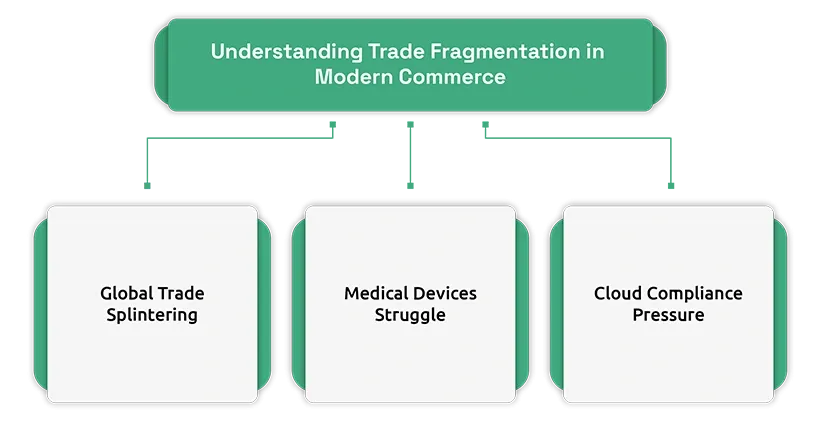
Understanding Trade Fragmentation in Modern Commerce
Trade fragmentation is when the world trade networks are getting more and more divided. This is happening because of rules that protect certain countries, groups of countries making their own trade deals taxes on imported goods limits on using certain technology and rules that say products have to be made locally. Working with a few other countries they trust. This change is causing problems with the way import exports are made and delivered in areas especially in places that rely on new technology. For example rules, about sending semiconductors to countries are affecting the people who make cars. They are not making many cars as they used to because they do not have all the parts they need.
The aviation industry is having a time with rules about electronic systems and technology. This is making it hard for them to import from countries. Medical device companies are also having trouble finding the parts they need. Cloud and data center equipment providers have to deal with a lot of rules and regulations. Because of this companies that help in import export around the world. Get them through customs are changing how they do things. They want to be better at following the rules and managing their inventory and orders.
Why Governments Are Prioritizing Domestic Production
Governments around the world are focusing on manufacturing at home. They want to be less dependent on countries for the things they need. This is because the way countries trade with each other is changing and there are a lot of tensions between nations. They are also limiting what can be sent to countries and starting programs to make their own computer chips. This way they can be safer. Not have to worry about other countries for important things. Some areas are very important to countries like making cars, parts for airplanes, computer hardware for artificial intelligence and having enough medical supplies. These areas are getting a lot of support from the government.
This change is making businesses focus on being prepared for supply chain problems following trade rules and adjusting to import and export laws. As cross-border trade becomes more complex, companies operating in automotive, aviation, IT, and healthcare industries have to get customs papers right because trade across borders is getting more complicated. They need to find ways to get goods from sources in case one source has problems so they can keep working smoothly even when countries are being more protective of their own markets.
Digital Trade Compliance and Smart Risk Management
Global commerce is changing a lot because of trade fragmentation and economic nationalism. So businesses are using digital trade compliance solutions more and more. This helps them work well and follow the rules. Things like customs processes and compliance systems that use artificial intelligence are really helpful. There are also tools that let businesses see where their shipments are and systems that can predict what will happen. All these things help organizations keep up with the rules of trade as they change. It also helps reduce delays and mistakes with paperwork.
Companies operating in sensitive industries such as automotive, aviation, medical equipment, and IT infrastructure need to get HS code classification right. They must also manage HTS schedules properly. This helps companies avoid getting fines and having delays in shipping. Proper classification and documentation are really important. Nowadays logistics operations rely a lot on platforms that monitor rules and regulations. The best software, for following import and export rules is also very important. This software helps businesses make decisions make their supply chain stronger and get through customs faster when shipping to other countries.

Conclusion
Globalization is not going away. It is changing into a system that’s more balanced and focused on being strong. As countries start to do business with their neighbors and less with other parts of the world and as governments start to control trade more companies can not just look for the cheapest way to make things anymore. Now companies need to have supply chains that can handle problems they need to get things from different places and they need to be able to change quickly if they want to be successful, in the long run.
Companies in the automotive IT, aviation and medical industries need to improve their compliance processes. They must also make their supply chains more transparent. In today’s changing world businesses that focus on being flexible making partnerships and streamlining their international operations will be in a better spot. These companies will be able to handle the uncertainty and stay ahead of the competition in markets by investing early in these areas, such, as flexibility and efficient cross-border operations.
DID YOU KNOW
“Trade fragmentation and economic nationalism describe the modern shift where nations prioritize domestic production, geopolitical security, and industrial policy over global free-trade efficiency.”
FAQs
1. How does economic nationalism differ from historical protectionism?
Modern protectionism is less about isolating a country and more about strategic control. Instead of relying solely on broad tariff walls, modern economic nationalism involves targeted industrial policies, “buy national” public procurement laws, and “friend-shoring” of investments
2. How are businesses adapting?
Multinational corporations are moving from just-in-time supply chains to just-in-case models. They are embracing near-shoring (moving production closer to the end consumer) and friend-shoring (relocating supply chains to countries with shared values) to insulate against geopolitical shocks
3. What are the global economic impacts?
Increased Costs, Loss of Efficiency and Impact on Developing Nations are the global economic impacts
4. Why is supply chain resilience important in modern trade?
Supply chain resilience helps businesses manage problems caused by trade conflicts. It helps with transportation delays too.
5. How does economic nationalism affect the automotive and IT industries?
Economy is affected when a country becomes very nationalistic. This can lead to taxes on imported goods more rules for what can be sent out of the country and requirements that companies make things in their own country.