Introduction
The growth of medical device nationalism, driven by the COVID-19 pandemic with supply shortages & geopolitical tensions, has led nations to prioritize domestic manufacturing of important healthcare technology, transforming focus from pure cost-efficiency to supply chain resilience. While this drive towards self-reliance promises greater national health security & economic growth, it must be balanced with global supply chains to ensure access to cutting-edge technology & cost-effective devices.
On-shoring entire medical product supply chains from raw materials to finished production would be logistically & economically challenging, while on-shoring only the final stage of production would not have a major effect in minimizing risk to foreign shocks. Domestic medical product supply chains, used to manage the expected demand in nonemergency times, would still be unable to immediately expand production easily to meet the national needs in the case of a global health emergency.
What is Medical Device Nationalism?
Medical device nationalism is used to the strategic push by countries to strengthen local production capabilities for useful healthcare equipment. Governments are encouraging domestic manufacturing through incentives & regulatory updates. Medical devices mainly depend on globally sourced components, making it necessary for businesses to navigate export rules, classification systems like HS codes, & structured tariff frameworks such as the Harmonized Tariff Schedule.
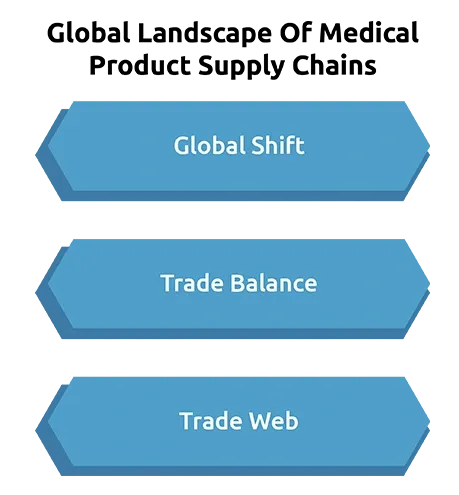
Global Landscape Of Medical Product Supply Chains
Manufacturing of medical products is reflective of a broader trend on the part of the U.S. medical product industry. The shift to manufacturing outside of the contiguous United States began in the 1970s with production moving to Puerto Rico, then Europe, China, and India. Companies have moved to adopt lean manufacturing strategies & globalize sourcing & production in search of cost reduction.
The medical product industry has grown to depend on multilateral relationships & global trade. Although the United States is both an importer & exporter of medical products, the discussion that follows evaluates the dependence of the United States on medical products that are sourced or manufactured outside of the United States, per the statement of task. Despite this lack of specific data, it is clear that the United States is heavily dependent on other countries for medical products, including China, India, the European Union (EU), Mexico, & Canada. Whether a finished medical product is manufactured in the United States, Germany, or China, the product is likely composed of parts that were manufactured by different companies in various countries.
Regional Landscape
The majority of the United States’ import revenue for medical equipment, healthcare products, & related supplies comes from Europe.
As countries tighten regulations, compliance has become the main factor in the medical device trade. Businesses must ensure proper documentation, accurate classification, & adherence to customs import export rules for medical devices. Obtaining an import license for medical devices is often mandatory, depending on the destination country and product category. Customs clearance processes require precise documentation & coordination to avoid delays.
While frameworks like the Generalized System of Preferences (GSP) can offer duty advantages, companies must also align with globally accepted standards & Incoterms to define responsibilities in international shipments.
Risks of Extreme Medical Device Nationalism
Domestic manufacturing enhances resilience; excessive protectionism can create unintended consequences for healthcare systems, businesses, & patients.
1. Over Costs & Reduced Efficiency
Over-reliance on domestic production, especially in countries where manufacturing ecosystems are still developing, can mainly increase costs. Medical devices often need specialized components, precision engineering, & economies of scale that are typically achieved through global production networks.
2. Delay of Access to Innovation
Policies such as strict import restrictions or export controls can limit access to cutting-edge medical technologies developed in other countries.
Medical innovation is basically global. Advanced diagnostic equipment, imaging systems, & life-saving devices often depend on cross-border collaboration, research, & component sourcing.
3. Fragmentation of Global Supply Chains
High nationalism can lead to divided supply chains, where countries operate in isolation rather than as part of an interconnected system. This fragmentation minimizes efficiency & increases duplication of efforts across regions.
4. Increased Regulatory Complexity
As countries made independent regulatory frameworks to support domestic industries, global standardization became more problematic. Different regulations can create issues for manufacturers trying to enter multiple markets.

Conclusion
The development of medical device nationalism indicates an important shift in how countries use healthcare security, resilience, & economic independence. While strengthening domestic manufacturing capabilities can reduce risks to external shocks & improve emergency, complete self-reliance is neither practical nor sustainable in a highly related global economy.
Did you know?
China has risen to global scientific leadership, and U.S.–Chinese scientific collaboration has significantly declined, with co-authorships dropping by some 20 percent in recent years.
FAQ
What does “medical device nationalism” mean?
It is the trend of countries prioritizing domestic production of medical devices over imports to ensure supply chain security and reduce dependence on other nations.
What are the drivers behind the rise of medical device nationalism?
Key drivers include lessons learned from the COVID-19 pandemic, geopolitical tensions impacting trade, and a desire to control the quality, price, and availability of critical medical technologies.
Why is balancing self-reliance with global supply chains difficult?
While domestic production improves security, fully localizing production of high-end, complex components (like MRI, CT scanners, and semiconductors) is challenging and time-consuming, necessitating continued reliance on international partners.
What are the risks of excessive medical device nationalism?
It can lead to higher consumer prices due to less efficient production, lower quality standards due to a lack of competition, and innovation stagnation.
What are the key medical device supply chain challenges in 2026?
The defining challenges for 2026 include managing component shortages, navigating complex regulations (like EU MDR), cybersecurity threats, and balancing costs with resilience.