Transporting IT & telecom equipment into India requires mandatory certifications, mainly MTCTE (Telecommunication Engineering Centre) for telecom, BIS CRS (Bureau of Indian Standards) for IT/electronics, & WPC ETA (Wireless Planning & Coordination) for wireless devices. These ensure compliance with technical, security, & radio frequency standards. Non-compliance results in cargo detention, while foreign manufacturers must appoint an Indian Authorized Representative (IAR).
Why Certifications Are Required
Certifications like TEC, BIS, and WPC are important for transporting IT & telecom equipment to ensure safety, quality, & network connectivity, securing sub-standard or insecure products from entering the country. They ensure compliance with national standards, secure users from risky products, & avoid network issues made by mismatched devices.
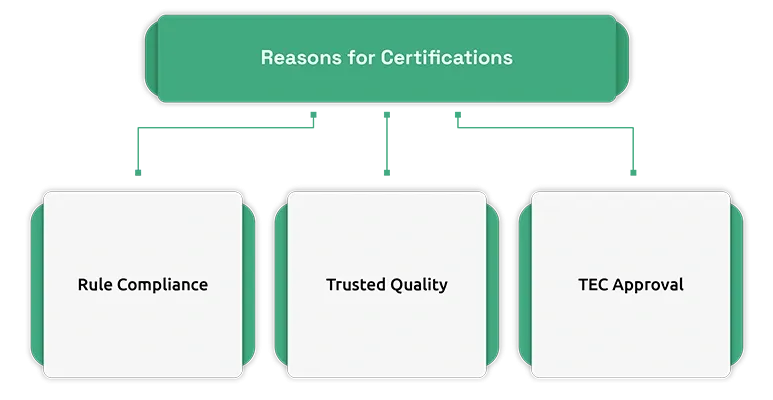
Reasons for Certifications
Safety Standards: Makes sure that products conform to Indian Essential Requirements, added with electromagnetic compatibility & radio frequency standards.
Legal Compliance: Mandatory compliance with the Indian Telegraph Rules 2017 to avoid product detention, penalties, or illegal import charges.
Network Stability: Secure interference with existing network infrastructure & ensures user safety.
Quality Assurance: Guarantees customer trust & confirms that products meet main technical quality benchmarks.
Regulatory Access: An important certification from bodies like the Telecommunication Engineering Centre is useful for entry into the Indian market
Key Certifications Required
TEC (MTCTE), BIS-CRS, and WPC licenses are mandatory regulatory approvals for selling or importing telecommunication, electronic, & wireless equipment in India. TEC/MTCTE ensures telecom network compatibility, BIS-CRS guarantees consumer safety, & WPC regulates radio frequency usage. These certifications prevent legal penalties & ensure product compliance.
1. TEC Certification (MTCTE – Mandatory Testing & Certification of Telecommunication Equipment)
Operated by the Telecommunication Engineering Centre (TEC), this is required for any equipment connecting to Indian telecom networks to ensure interoperability & performance.
Purpose: Safety, security, & network usability.
Covered Products: Routers, switches, Modems, PABX, Cordless phones, & Customer Premises Equipment.
Process: Products must be tested in managed labs, followed by application submission.
2. BIS Certification (CRS – Compulsory Registration Scheme)
Operated by the Bureau of Indian Standards (BIS) under the Ministry of Electronics & IT (MeitY), this focuses on product safety.
Purpose: Ensures the safety of electronic components & prevents electronic hazards to users.
Covered Products: Mobile phones, laptops, smart watches, power adapters, & LED lights.
3. WPC License (ETA – Equipment Type Approval)
Managed by the Wireless Planning & Coordination (WPC) wing, this applies to all wireless devices operating in de-licensed frequency bands.
Purpose: Ensures radio frequency devices do not interfere with other wireless networks.
Covered Products: Bluetooth devices, Wi-Fi routers, IoT devices, & any equipment with Wi-Fi/Bluetooth capabilities.
Challenges for Certifications Required for Importing IT & Telecom Equipment
Transporting IT & telecom equipment into India is difficult. The rules are changing, & it can be difficult to stay up to date. Certifications like MTCTE, BIS, & WPC are needed, but the process takes lots of time & costs a lot. Products often need testing in approved labs, which can delay shipments. Many importers also face problems with documents, such as missing details or errors, which can cause rejection or delays. Important approvals are needed for items like laptops, which adds more confusion. There are also limits in testing facilities, which can slow things down even more. Because of all this, importers need to plan carefully & follow every step properly to avoid issues.

Conclusion
Certifications for transporting IT & telecom equipment into India are not just formalities; they are useful for meeting the standards. Telecommunication Engineering Centre, Bureau of Indian Standards, & Wireless Planning & Coordination section make sure that products are safe, usable, & easy with networks.
This process can feel difficult for customers due to changing rules & regulation and lack of time, testing requirements, & documentation. Going with the correct steps & regulation helps to avoid delays, fines, & rejected shipments. Staying aligned with these standards not only ensures easy imports but also builds trust between customers, protects users, & supports long-term business development & also helps with business growth.
Did you know?
Cyber Security Rules prohibit any person from intentionally removing, obliterating, changing, or altering the unique telecommunication equipment identification number; or using, producing, trafficking in, having control or custody of, or possessing hardware or software related to the telecommunication.
FAQ
What is the HSN Code for IT/Telecom equipment?
HS codes vary by exact product (e.g., smartphones often fall under 8517.12, routers under 8517.62). Proper classification is critical for customs clearance.
Do I need a local agent to import?
Yes, for US FCC certification, non-US companies must hire a local representative. For India, an Authorized Indian Representative (AIR) is mandatory for foreign OEMs.
What happens if I don’t have these certificates?
Goods will likely be detained by customs, leading to hefty fees, mandatory re-export, or destruction of the goods.
Who is eligible for a TEC certificate?
Any manufacturer, importer, or authorized Indian representative of telecom equipment intended for sale, import, or use in India is eligible to apply for TEC certification.
Why is a TEC certificate required?
TEC certification is mandatory to ensure telecom equipment meets Indian safety, EMC, and interoperability standards before deployment on public networks.