Overview
Trade agreements frequently result in long-term trade that provides security for cross-border trade. Also, recent global events have shown that trade agreements can be suspended overnight, disrupting routes, pricing structures, and approval systems. When such suspensions occur, businesses involved in global trade must react quickly, reviewing HS code categorization, reevaluating duties under the HTS Harmonized Tariff Schedule, and adjusting agreements based on changing International shipping terms and Incoterms.
Sudden policy changes can impact everything from customs clearance procedures to inventory and order management, making it necessary for organizations to have flexible trade partners and dependable freight forwarding companies near me that can respond without delay.
Reasons for Sudden Suspensions of Trade Agreements
Geopolitical and Economic Triggers
Trade agreements are closely tied to diplomatic relations. Political issues, national security concerns, or economic protectionism can lead governments to withdraw benefits such as the Generalized System of Preferences (GSP) or impose new controls under systems such as DAP and regional DAPs. These changes frequently take effect with little notice, instantly altering landed costs and documentation requirements.
Regulatory and Compliance Concerns
Trade advantage may also be suspended due to concerns over misuse, misdeclaration, or regulatory non-agreement. Authorities may tighten inspections, revise tariff interpretations under the HTS Harmonized Tariff Schedule, or introduce new enforcement mechanisms that directly affect the exporter of record services and the Importer of record Service structures.

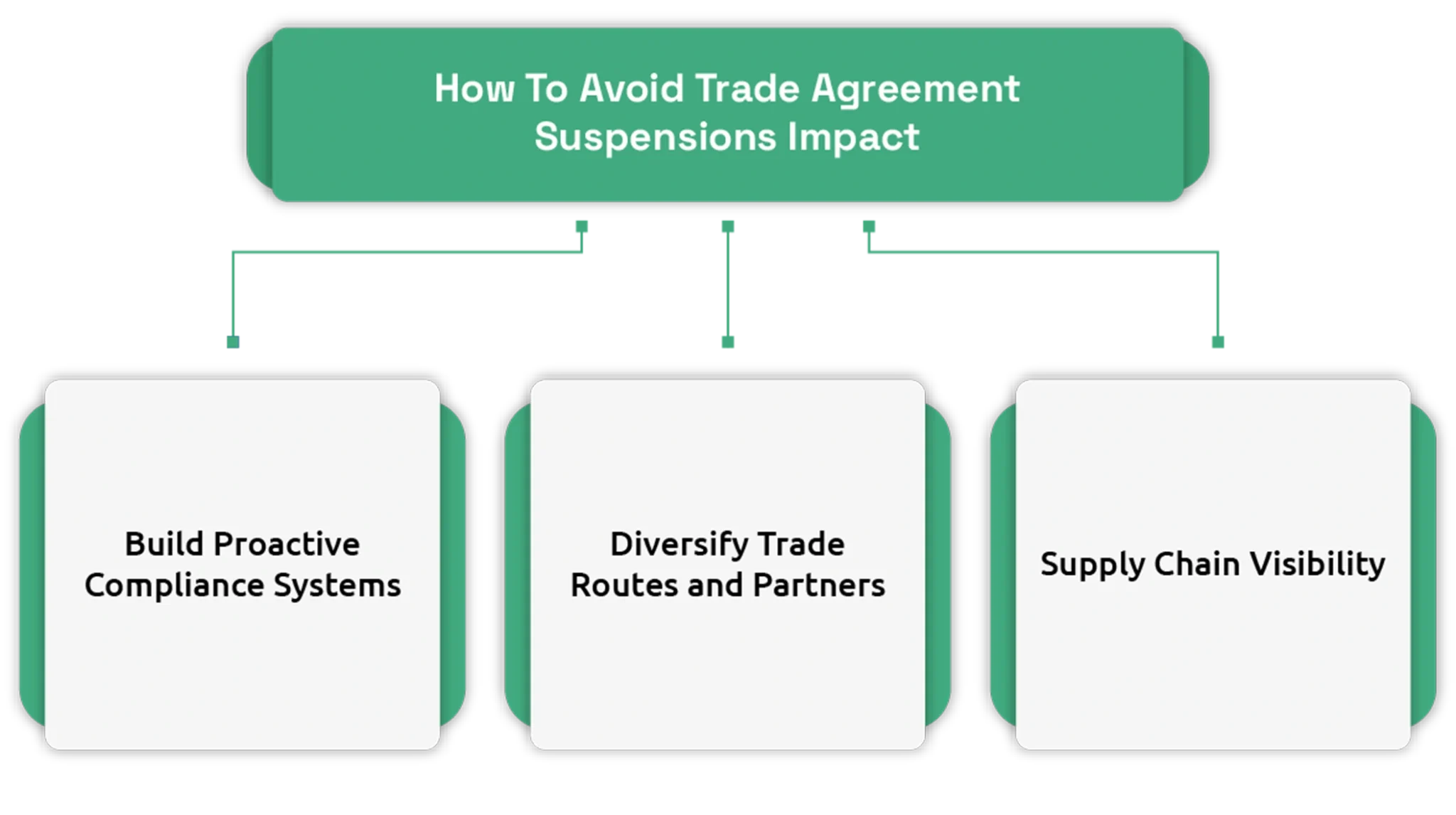
How To Avoid Trade Agreement Suspensions Impact
Build Proactive Compliance Systems
While businesses cannot prevent governments from suspending agreements, they can reduce exposure by building strong compliance systems. Correct HS code categorizations, tariff tracking, and documented use of correct International shipping terms help reduce the risk of shipment delays or fees.
Diversify Trade Routes and Partners
Depending on a single trade corridor increases vulnerability. Organizations that have varied sourcing locations, ports of entry, and International freight services providers are better positioned to change volumes quickly. Major partnerships in logistics and bonded operations also create flexibility when sudden policy changes occur.
Supply Chain Visibility
Digital tracking, documentation, and supply chain allow organizations to reroute cargo, update agreements, and reevaluate taxes in real-time, reducing issues.
Challenges You Face After Trade Agreement Suspensions
Cost Increases and Contract Uncertainty
The immediate effect of a suspension is frequently the loss of preferential duties, leading to higher import costs. This directly impacts pricing, margins, and customer responsibilities, especially for organizations providing premium delivery service models where delivery time and cost certainty are necessary.
Operational and Documentation Disruptions
Sudden regulatory requirements require quick changes to trade invoices, shipping documents, and customs clearance processes. Delays at borders can give tension to inventory and order management, increase demurrage, and stop production stages.
Pressure on Trade and Logistics Teams
Trade teams must quickly use Incoterms, renegotiate agreements, and work with carriers, insurers, and freight forwarding companies near me to keep cargo moving under new rules.
How One Union Solutions Help You
End-to-End Trade Support
One Union Solutions provides an integrated exporter of record services and an Importer of record Service to help businesses continue working even when trade systems change unexpectedly. By supporting regulatory responsibility where required, organizations can enter or exit markets without restructuring local entities.
Adaptive Logistics and Freight Management
Through a global network of International freight services, we support rerouting, expedited shipments, and agreed-upon shipping solutions. If managing duty changes under the HTS Harmonized Tariff Schedule or documentation with International shipping terms, the focus remains on continuity.
Supply Chain Optimization in Changing Conditions
From alternative routing plans to flexible logistics planning, we improve supply chain optimization that supports both stability and growth during uncertain regulatory environments.
Conclusion
Trade agreements create opportunity, but their sudden suspension reminds businesses that global trade is never static. When frameworks such as GSP or local arrangements change overnight, the ability to respond quickly determines whether operations stall or adapt. By investing in approval readiness, flexible logistics, and expert trade partners, organizations can protect revenue, maintain customer relationships, and guide disruption with confidence.
Combination of regulatory expertise, customs clearance support, and flexible International freight services, organizations can turn uncertainty into a competitive advantage even when trade agreements change without warning.
DID YOU KNOW?
In 2024-25, India’s bilateral trade in goods with the European Union amounted to $136.53 billion, comprising $75.85 billion in exports and $60.68 billion in imports. This makes the European Union India’s largest trading partner in goods.
FAQs:
1. What does it mean when a trade agreement is suspended overnight?
It means governments withdraw or pause trade benefits with little notice, instantly changing duty rates, customs clearance rules, documentation, and permitted trade flows.
2. How do sudden trade agreement suspensions affect importers and exporters?
They often lead to higher duties, HS code reclassification, shipping delays, new compliance requirements, and disruption to inventory and order management systems.
3. Why do governments suspend trade agreements suddenly?
Common reasons include geopolitical tensions, national security concerns, protectionist policies, regulatory non-compliance, misuse of benefits, or economic pressure tactics.
4. How can businesses reduce the impact of trade agreement suspensions?
By maintaining strong compliance systems, diversifying trade routes, working with reliable international freight services, and partnering with experienced exporter and importer of record service providers.
5. What role do logistics and trade partners play during suspensions?
They help businesses reroute cargo, manage customs clearance changes, reassess duties under the HTS Harmonized Tariff Schedule, and maintain supply chain continuity.