Overview
Export incentives are widely used by governments to increase global trade, grow local manufacturing, and improve global exchange inflows. As export incentives expand, customs officials, at the same time, increase import scrutiny to stop misuse, misdeclaration, and duty avoidance. This growing connection between innovation and inspections means businesses in logistics, customs clearance, and international freight services must work with good clarity.
What Are Export Incentives?
The Core Concept
Export incentives are financial or regulatory benefits provided to exporters to make their products more competitive in global trade. These may include tax refunds, duty exemptions, preferential tariffs under systems such as the generalized system of preferences (GSP), or faster regulatory approvals.
From a trade operations perspective, exporters frequently depend on systematic inventory and order management, compliant HS code categorizations, and accurate HTS harmonized tariff schedule mapping to qualify for such programs. Incentives are not automatic; they depend on whether the exporter follows recognized international shipping terms, accepted Incoterms, and clear pricing methods.
Role of Trade Service Providers
To guide these programs, many organizations work with exporter of record services, importer of record service providers, and specialized customs consultants who confirm that goods, invoices, and agreements work with incentive systems.

What Is the Export Incentive in International Trade?
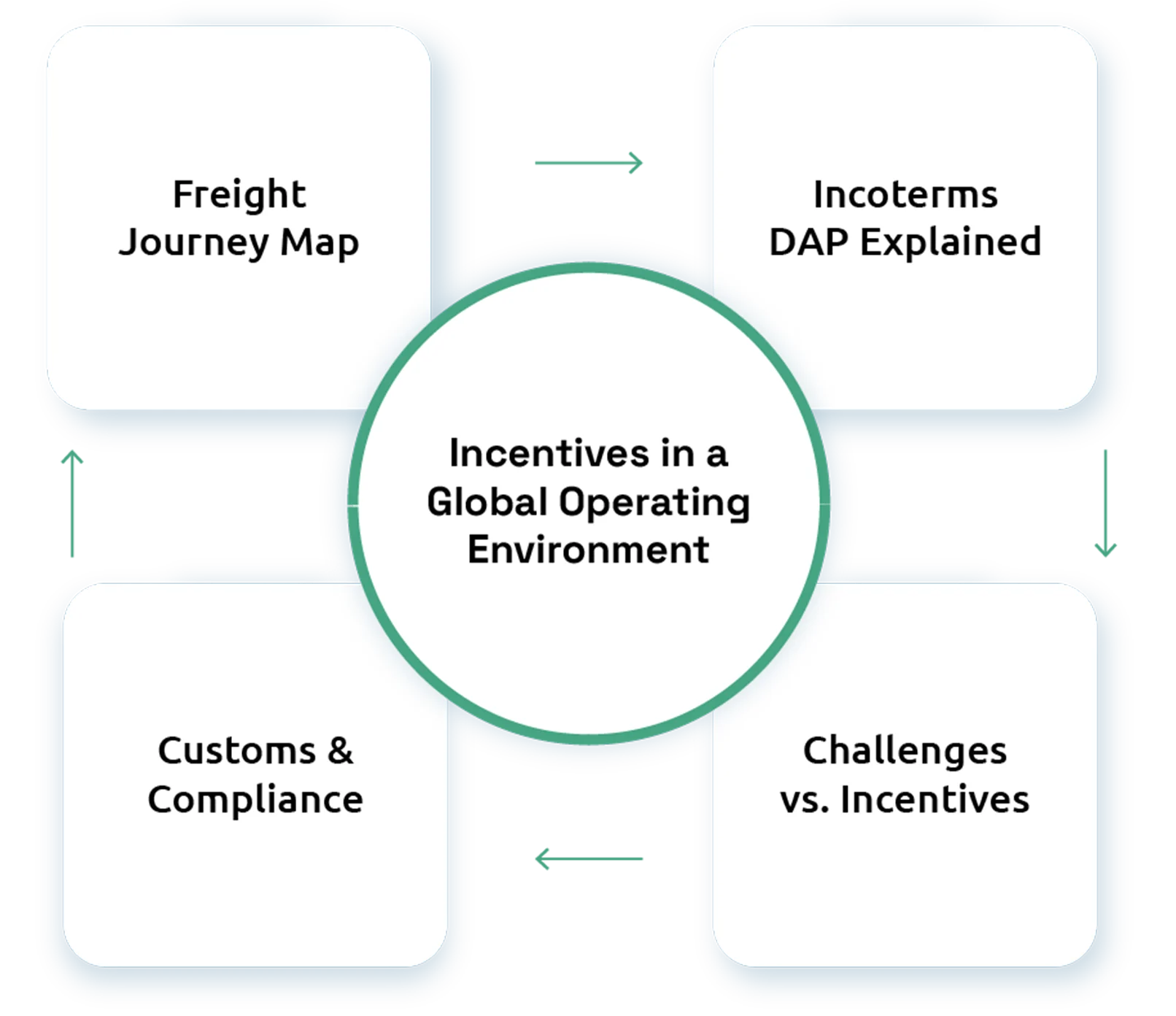
Incentives in a Global Operating Environment
In international trade, export incentives are policy tools designed to improve a country’s position in global supply chains. They support sectors by lowering transaction costs, improving margins, and allowing access to overseas buyers. For example, incentives may apply to shipments managed through complete international freight services, supported by end-to-end supply chain optimization plans.
Export incentives are frequently systematic around shipping responsibilities such as DAP or DAPs (Delivered at Place), which clarify responsibility for delivery, risk, and costs under Incoterms. These international shipping terms help customs officials trace the movement and ownership of goods, making them central to incentive eligibility.
Reasons for the Link Between Export Incentives and Import Scrutiny
Protecting Revenue and Preventing Abuse
When incentives are introduced, governments face increased risks of under-valuation, false origin claims, and misclassification. To counter this, customs authorities increase import checks. Scrutiny focuses on declared values, HS code accuracy, origin certificates, and consistency with the HTS harmonized tariff schedule.
Data, Documentation, and Digital Controls
Modern customs systems now integrate trade data from ports, airlines, and freight forwarding companies near me to detect inconsistencies. Authorities cross-verify exporter claims with the imports, especially where an importer of record service is required. Any mismatch between shipping documents, customs clearance filings, and physical inspections can cause audits or suspension of incentives.
Benefits of Export Incentives After Linking to Import Scrutiny
More Compliant Trade Operations
Although increased scrutiny may appear restrictive, it provides long-term advantages. Businesses that align their incentive strategies with approval controls frequently achieve better risk management, faster dispute resolution, and improved credibility with regulators.
Operational and Trade Gains
Companies that invest in complete logistics planning, accurate declarations, and professional exporter of record services are more likely to experience smoother clearances and fewer shipment holds. Strong documentation systems also improve supply chain optimization, allowing organizations to balance speed, cost, and agreement. Many traders now combine premium delivery service methods, increased cargo visibility, and secure warehousing into their export programs. When paired with dependable international freight services and systems inventory and order management, exporters can grow globally without increasing regulatory risk.
Conclusion
Export incentives are powerful tools for expanding global trade, but they attract closer attention from customs authorities. As governments look to protect revenue and stop misuse, import scrutiny becomes an extension of incentive policy. For businesses, this means success is no longer with only competitive pricing or faster shipping. It depends equally on agreement discipline, transparent documentation, and professional trade facilitation support. Export strategies with accurate customs clearance, internationally recognized Incoterms, and verified trade roles such as importer of record service and exporter of record services, organizations can benefit from incentives while remaining audit-ready. In today’s environment, incentives and scrutiny are not opposites; they are supportive forces changing a more responsible and flexible global trade system.
DID YOU KNOW?
The Bangladesh Bank (BB) has recently announced a comprehensive package of export incentives and support for 43 sectors to boost exports. Domestic textile units will receive an alternative cash assistance of 1.5 percent instead of duty drawback or bonded warehouse facilities.
FAQs:
1. What are export incentives in international trade?
Export incentives are financial or regulatory benefits offered by governments to help exporters reduce costs, increase competitiveness, and access global markets. These may include tax refunds, duty exemptions, or simplified procedures.
2. Why does import scrutiny increase when export incentives are offered?
Because incentives create higher risks of misdeclaration, false origin claims, and undervaluation, customs authorities increase import checks to protect revenue and prevent abuse of trade benefits.
3. How are the exporter of record and importer of record services involved?
Exporter of record services and importer of record service providers ensure shipments meet regulatory, documentation, and customs requirements, which is critical for qualifying for incentives and passing import scrutiny.
4. What role do HS codes and the HTS play in incentive eligibility?
Accurate HS codes and correct HTS harmonized tariff schedule mapping are essential for determining duty rates, origin status, and whether a product qualifies for export incentives.
5. How can businesses benefit from stricter import scrutiny?
Stricter scrutiny improves long-term compliance, reduces shipment disputes, strengthens credibility with customs authorities, and supports smoother international freight services and supply chain operations.