Insight
The global trade system operates through various stages, requiring numerous player groups to deliver goods between international borders effectively. An importer of record is one of the key stakeholders involved with global trade; this article explores their responsibilities and services that support worldwide operations – particularly within aviation, healthcare, IT, and automobile industries.
Importer of Record (IOR) ensures that shipments comply with all customs regulations, including tariffs, taxes, and documentation requirements. They act as a bridge between businesses and government authorities, simplifying complex import processes. By managing compliance, logistics, and risk, IOR helps companies move goods efficiently across international borders.
What is an Importer of Record?
An importer of record functions as the accountable partaker who verifies compliance with the law and all applicable regulations and tariff requirements when goods enter a country. Any duties or fees related to imported goods fall under the legal obligation of the importer of record. At the same time, proper submission of documentation, including HS code and EECN, is their additional requirement.
IOR plays a double role by handling all applicable customs payments and customs duties and managing the complete customs clearance process, resulting in the safe delivery of goods. As part of their duties, the IOR must follow various trade agreements, including the generalized system of preferences (GSP), which offers lower tariff rates for developing countries’ imports.

Importer of Record Responsibilities
Customs Clearance and Documentation: Customs Clearance and Documentation operations fall under the IOR’s purview, ensuring all customs requirements are met through proper documentation submission to customs officials. The IOR must submit accurate documentation of the HS code, HTS harmonized tariff codes, and ECCN required for customs clearance procedures.
Payment of Tariffs and Duties: The Incoterms regulate when IOR becomes responsible for all customs taxes, import duties, and tariffs to customs authorities. The payment process depends on product value, weight measurements, and the product’s HTS-harmonized tariff system classification.
Adherence to Incoterms: Global trade operations require organizations to follow Incoterms because these rules set out the duties of buyers versus sellers. Under DDP(Delivery Duty Paid), the seller must handle all expenses linked to shipping, duties, and taxes. The International organization responsible will guarantee goods clearance and deliver the shipment according to the specified conditions.
Warehousing and Supply Chain Management: The IOR regulates the storage of goods at warehouses, which function as temporary locations before final delivery happens. Through its IOR, the organization implements efficient warehousing and proper inventory management according to local legal requirements. Supply chain management effectiveness creates uninterrupted movement of goods from manufacturing facilities to completion points.
Compliance with Export Regulations: The IOR must evaluate the imports following the country’s import and export control regulations. The IOR must handle all products that fall under the ECCN requirements and follow AOG (Aircraft on Ground) standards in the aviation sector.
Understanding Importer Responsibilities and Tariff Accountability
The importer of record is central for keeping a legal and financial responsibility of shipment entering an international territory. The core activities of an importer go beyond paperwork to encompass legal requirements of the country and the specific international trade agreements, payment of duties on time as well as meeting shipment characteristics including classification and valuation. One broad area is the importer of record tariff responsibility whereby; identification of the appropriate tariff schedules, coding of product classifications, origin of goods and compliance with trade agreements. This means it is possible to have the following consequences; such as slowing down the process, fines, and regulatory probes.
Why is an Importer of Record Important?
An importer of record stands essential for maintaining goods compliance with customs standards and achieving a smooth import process. The failure of an importer of record to provide a defined and precise profile can result in delayed shipments and rejections, causing financial damage and total operational chaos.
For instance, the aviation and healthcare sectors experience substantial costs from any delays that occur. An aviation AOG situation requires prompt delivery of parts to avoid operational disruptions because AOG stands for Aircraft On Ground conditions. Medical devices and equipment require fast Customs Clearance to stop treatment disruptions from happening.
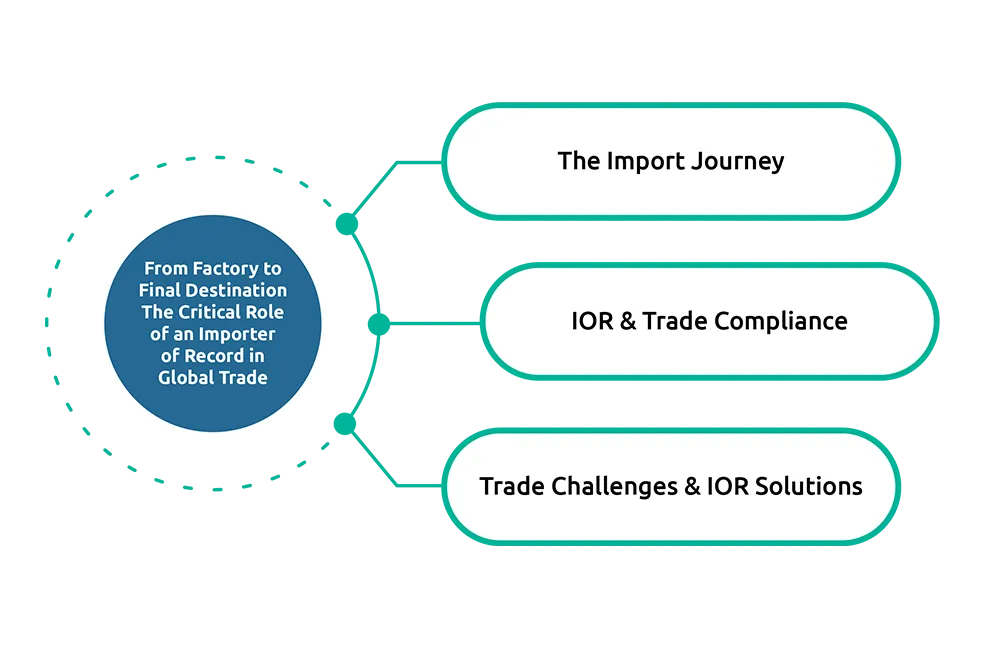
Key Terms and Processes Associated with the Importer of Record
The importer of record (IOR) needs essential terminology and operational procedures to maintain efficient and legal international import practices. International trade products are identified through the standardized HS (Harmonized System Code) classification system. The correct HS code enables customs authorities to calculate proper taxes and duties on goods by determining their applicable duties according to trade regulations. Tariff calculations require an accurate HS code. The HTS Harmonized Tariff acts as a classification system that imports to the United States use to assign tariffs to goods. The IOR requires you to provide the correct HTS code because it determines which duties will be properly assessed.
Products qualify for duty-free import through trade agreements such as GSP that provide reduced or zero tariff benefits. The IOR needs proper documentation to make use of these import preferences. Under the DAP (Delivered at Place) incoterm, the seller becomes responsible for delivery to the specified location, and the buyer assumes responsibility for customs clearance and all duty payments. The importer or receivers use the IOR to clear the goods at their destination. A customs broker supports the IOR by submitting paperwork to customs authorities, determining duties, and verifying that products fulfill all regulations set by authorities.
Conclusion
International trade requires businesses to have expertise in customs rules, tariff systems, and supply chain processes. The job of an established importer of record consists of directing goods from their manufacturing sites to their destination through all regulatory checkpoints. Business operations become more efficient when commercial operations rely on a trusted provider who avoids time-consuming process delays. One Union Solutions provides specialized importer of record services for aviation, healthcare IT, and automobile sectors, which optimize shipping customs clearance and guarantee compliant trade procedures.
Did You Know?
According to government statistics, the United States stands as the globe’s biggest importer because its total imports surpassed $2.7 trillion in 2022.
FAQs
How does international shipping differ between DDP and DAP?
Answer: Under DDP (Delivery Duty Paid), the seller pays all import duties and taxes. Under DAP (Delivered at Place), the buyer is responsible for these costs when the shipment arrives.
What identification do customs authorities use for imports?
Answer: Customs officials use the Importer of Record (IOR) number to identify the importer, track shipments, and ensure compliance with regulations.
Can a company act as both Exporter and Importer of Record?
Answer: Yes, the same company can serve as both IOR and Exporter of Record if it follows the rules set by the import and export countries.
What does a customs broker do in import transactions?
Answer: Customs brokers act as intermediaries between the importer and customs authorities. They prepare documentation, calculate duties, and ensure compliance with regulations.
Why is using the correct HS code important?
Answer: Correct HS codes ensure proper customs classification, help meet regulatory requirements, and prevent shipment delays or penalties.