
Introduction
In global aviation, some situations are more costly than an Aircraft on Ground (AOG). An aircraft remains grounded due to missing or delayed parts means lost economic value, affected passenger schedules, and problems across the supply chain. Traditional challenges such as Import export documentation delays, slow customs clearance, and difficult import duties and tariffs have created long delays for aviation spare parts arriving from international suppliers. Also, India is now undergoing huge changes in customs procedures, regulatory digitization, and logistics systems, helping airlines and MRO operators reduce dwell times and improve Supply chain optimization.
Why a Strategic Spares Inventory Matters
Dependable spare parts are necessary for airlines and maintenance teams to recover quickly from AOG incidents. Keeping a major inventory helps reduce dependency on expedited shipments and improves planning accuracy. Still, growing stock across multiple regions can be expensive and ineffective. Factors such as HTS harmonized tariff schedule classifications, HS code accuracy, and Incoterms selected during procurement affect cost structures and taxation. For example, choosing Delivered Duty Paid service instead of DAP or other Incoterms affects who bears responsibility for Importer of Record responsibilities and can impact total landed costs. India’s aviation sector, like others worldwide, must maintain sufficient spares without increasing storage costs, and this is where modern logistics strategies, including International freight services and fast last-mile delivery services, play an increasingly important role.

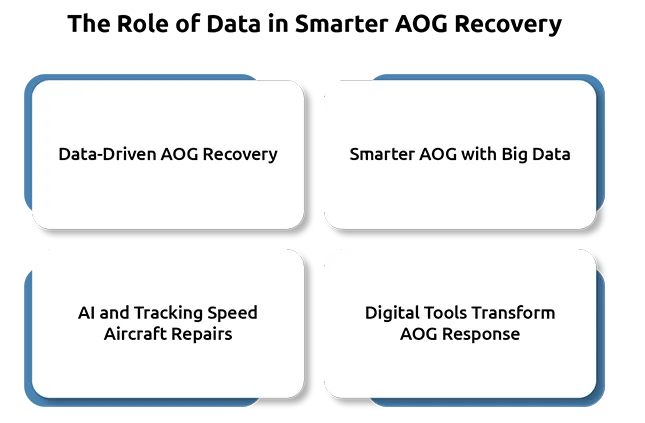
The Role of Data in Smarter AOG Recovery
Modern aviation supply chains have become more important with the use of big data, AI-driven planning systems, and live shipment tracking technologies. Instead of waiting for paper processes and slow updates, decision-makers can now see the location of critical components at every phase of logistics. This developing digital service allows systems to predict repair timelines, calculate alternative routing, automate Import export documentation, and even suggest the most possible HS code classification to improve import duties and tariffs. Airlines and MROs are increasingly depending on data-driven Supply chain optimization to determine whether a part should be sourced locally, held in bonded storage, or shipped from an overseas supplier through expedited International freight services.
India Aviation Sector Tax Reforms for Aircraft Spare Parts
India’s aviation industry has benefited from huge policy reforms aimed at speeding up port movement and lowering clearance delays. Major initiatives, including technology combined, faster duty processing, and standardized tariff reporting, are increasing working efficiency. Some reforms have worked with global standards, such as the Generalized System of Preferences (GSP) system and the global best method for evaluation procedures. Improved tariff categorization has helped importers better understand the HTS harmonized tariff schedule and apply the most accurate HS code during customs documentation. These reforms also complement the capabilities of IOR services and Exporter of Record definition processes, confirming that responsibility, agreement, and cost issues are clearly defined.
How the Indian Customs Department Has Improved Its Aircraft on-Ground Dwell Time
The Indian Customs Department has taken huge steps in growing the release of urgent aircraft components to reduce AOG-related losses. Digitization of Import export documentation, automated risk assessment, and pre-arrival processing have helped systems approve shipments before landing, allowing fast clearance upon arrival. Electronic data interchange and advanced logistics systems now cooperate with global freight services and last-mile delivery services to push spares to service locations quickly. With faster document verification, customs officers no longer rely on heavily manual documentation, and airlines experience reduced dwell time even for shipments filed under demanding Incoterms such as DAPs and Delivered Duty Paid service. This efficiency converts directly into improved equipment dependability and reduced financial exposure.
Conclusion
India’s aviation industry is changing its approach to AOG events by using digital systems, structured taxation reforms, and stronger supply chain visibility. Improvements in customs processes, combined with smarter logistics planning and accurate tariff reporting, are helping airlines reduce downtime while improving working predictability. With clearer Importer of Record responsibilities, better HS code accuracy, and live data access, India is developing as a more flexible aviation ecosystem capable of meeting the intense pressures of modern air logistics work.
DID YOU KNOW?
As part of Vision 2040, Tata-Air India has now begun construction of an MRO facility in Bengaluru with an initial investment of $166 million.
FAQs:
- What does Aircraft on Ground (AOG) mean?
AOG refers to a situation where an aircraft is unable to fly due to a missing or faulty part, causing financial loss and operational disruption until the issue is resolved.
- Why is customs processing critical for AOG spare parts?
Because many spare parts are sourced from overseas, delays in customs paperwork, tariff classification, or clearance directly increase aircraft downtime and operational cost.
- How are Indian customs improving AOG clearance times?
India has introduced digital documentation, pre-arrival processing, automated risk checks, and EDI systems that enable faster cargo approval and reduced manual handling time.
- How does accurate HS/HTS classification help in aviation imports?
Correct HS codes ensure the right duties, tax rates, and evaluation rules are applied, preventing unnecessary delays, legal issues, or financial penalties during import processing.
- How does data improve AOG response planning?
AI-based tracking and digital logistics systems give airlines real-time visibility of shipments, allowing smarter routing, faster decision-making, and better spares inventory planning.