In today’s fast-paced IT industry, ensuring smooth data center hardware imports is vital for maintaining working agility and competitiveness. By using expert Importer of Record (IOR) and Exporter of Record (EOR) services, businesses can easily guide difficult global trade laws, including accurate classification under the HS code and maximize benefits under the Generalized System of Preferences (GSP). This expert support not only confirms approval but also minimizes delays and unexpected costs, allowing data centers to keep their critical infrastructure up to date and fully working without supply.
The Components for Successful Data Center Imports
Regulatory Compliance and Accurate Documentation
Successful data center imports begin with proper compliance and complete documentation. Servers, storage devices, networking equipment, cooling units, batteries, and power systems must be classified correctly using HS codes and supported with invoices, packing lists, certificates of origin, and technical documents. Many countries also require safety, environmental, or telecom certifications before goods can enter the market. Meeting local import regulations helps prevent customs delays, penalties, shipment holds, or rejected cargo. Proper documentation also speeds up border clearance and creates a smoother delivery process.
Efficient Logistics and Customs Clearance
Reliable logistics planning is essential when importing sensitive and high-value data center hardware. Choosing the right transport method, whether air freight for urgent shipments or sea freight for larger loads, helps balance cost and delivery speed. Secure packaging, cargo insurance, climate-sensitive handling, and real-time tracking are also important to protect valuable equipment during transit. Working with customs experts or an Importer of Record (IOR) provider can simplify clearance procedures, duty payments, and legal requirements in foreign markets. This reduces delays and ensures hardware reaches the site on schedule.
Supply Chain Coordination and Risk Management
Data center projects often run on strict schedules, so imported equipment must arrive on time and in the correct order for installation. Strong coordination between suppliers, freight partners, warehouses, customs agents, and deployment teams is critical for smooth execution. Delays in one shipment can affect rack installation, cabling, testing, and final commissioning. Businesses should also prepare for supply chain disruptions by using backup vendors, alternate shipping routes, and buffer inventory for critical components. Proactive planning and clear communication help reduce risks and keep infrastructure projects moving efficiently.
How IOR Services Benefit Data Center Imports
Using IOR administrations is a huge benefit for server farms hoping to smooth out the import interaction. IOR administrations assist organizations with exploring the intricacies of worldwide exchange guidelines, including complying with frameworks like the Generalized System of Preferences (GSP), which can offer exchange advantages and obligation decreases for qualifying products. By guaranteeing that server farm gear meets customs necessities and that obligations are accurately dealt with, IOR administrations limit delays, decrease dangers of resistance, and guarantee a smoother cycle for bringing in basic equipment, which are all fundamental for keeping up with continuous server farm tasks.
Importance of Data Center Hardware Imports
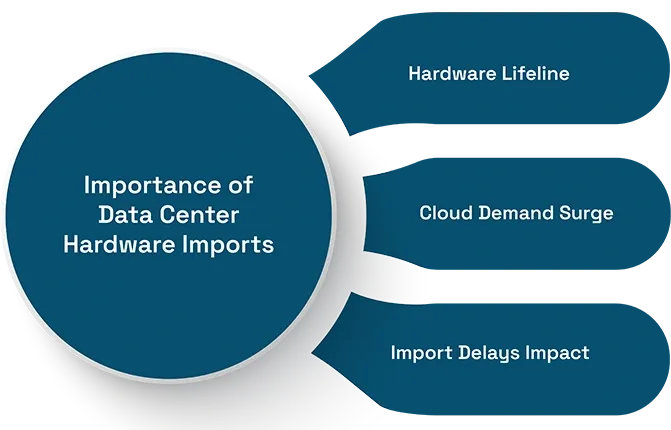
Data center hardware imports play a vital role in supporting the rapid growth of digital infrastructure across the world. Many businesses rely on imported servers, storage systems, networking equipment, cooling units, power backup systems, and security devices because advanced hardware is often manufactured in global technology hubs. Importing these components allows organizations to access the latest innovations, improve operational efficiency, and build high-performance data center environments.
Hardware imports are especially important for companies expanding cloud services, colocation facilities, enterprise IT networks, and AI-ready infrastructure. Access to international suppliers gives businesses more options in terms of technology, pricing, scalability, and product availability. This helps organizations meet rising demand for faster processing, secure data storage, and uninterrupted connectivity.
Challenges in Importing Data Center Equipment
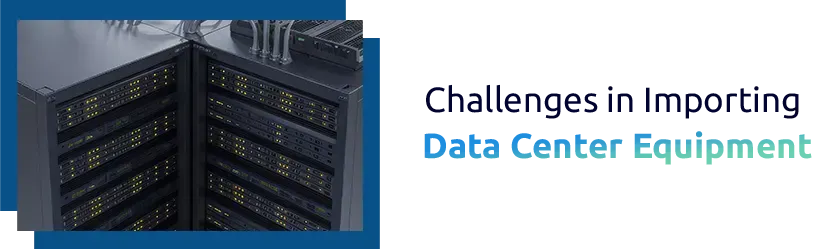
Importing data center equipment can be complex due to the high value, technical nature, and time-sensitive demand of the hardware involved. Servers, storage systems, networking devices, cooling units, batteries, and power equipment often require careful planning to ensure smooth delivery and installation. Without proper coordination, businesses may face delays, extra costs, or operational setbacks.
One major challenge is regulatory compliance and customs documentation. Different countries have specific import rules, product certifications, labeling standards, and HS code classifications for IT and electrical equipment. Incorrect paperwork or missing approvals can lead to shipment holds, penalties, or rejected cargo at customs checkpoints.
Logistics and transportation also create difficulties. Data center equipment is often fragile, expensive, and sensitive to shock, moisture, or temperature changes during transit. Improper packaging, poor handling, or route disruptions can result in damage or delays. Choosing the right freight mode and reliable carriers is essential for protecting critical assets.
Conclusion
In the fast-evolving IT landscape, managing import duties and tariffs efficiently is necessary for confirming timely and compliant delivery of data center hardware. By using expert Importer of Record services and expert freight logistics services, businesses can simplify difficult global trade processes, confirm adherence to customs regulations, and stop costly delays. One Union Solutions provide end-to-end support that simplifies data center imports, covering everything from documentation and HS Code classification to smooth logistics helping IT organizations maintain working speed, agreement, and competitiveness globally.
DID YOU KNOW
Nearly half of the data centres expected to come online in the United States by 2026 are likely to face delays or cancellations. This may come as a shortage of key electrical infrastructure begins to constrain the country’s expansion of artificial intelligence (AI).
FAQS
1.What is an Importer of Record (IOR), and why is it important for data center hardware imports?
An Importer of Record (IOR) is responsible for making sure imported goods meet all customs, tax, and legal requirements in the destination country. For data centers, an IOR helps prevent delays, avoids compliance issues, and ensures smooth import of high-value equipment like servers and networking devices.
2.How does an Exporter of Record (EOR) support the import process?
An Exporter of Record (EOR) manages export laws and documentation when goods leave a country. Together, IOR and EOR services ensure that both export and import rules are followed, making cross-border shipments smooth and compliant.
3.What are the benefits of using DDP Incoterms for data center imports?
With DDP (Delivered Duty Paid), the seller handles all duties, taxes, and customs clearance. This helps data centers avoid unexpected costs, reduces paperwork, and ensures faster delivery of critical hardware.
4.How does One Union Solution’s white glove delivery help data center imports?
White glove delivery ensures sensitive data center equipment is handled carefully from pickup to installation. It includes specialized handling, unpacking, and precise placement, making it ideal for fragile and high-value hardware.
5.What compliance advantages do One Union Solution’s IOR/EOR services provide?
One Union Solution manages full trade compliance, including HS codes and GSP benefits. This reduces the risk of customs delays, penalties, and disruptions, helping data centers receive equipment faster and without compliance issues.