
Introduction to Blockchain in Global Trade Documentation
Global trade runs on proper documentation and smooth coordination between different stakeholders. Documents that include invoices, certificates, and shipping records are important to make sure goods & items are moved internationally without any issues & complete customs clearance on time.
However, handling these documents internationally is not always simple. Different countries have different rules, along with requirements including HS code classifications & trade programs like the generalized system of preferences (GSP). For businesses involved in global freight forwarding & international logistics solutions, managing all this can become time-consuming and may increase the risk of delays.
This is where blockchain technology is making a difference. It gives a safe & transparent way to handle trade documents and store them in a shared digital system. The information is updated in real time and cannot be easily changed, which helps to minimise manual work & builds trust among all parties involved in global trade.
Challenges in Traditional Trade Documentation Systems
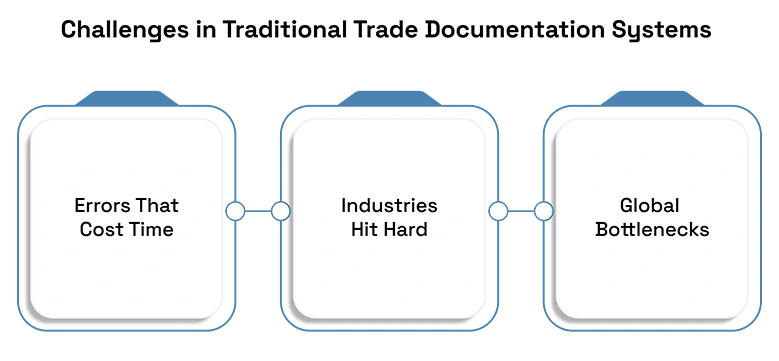
Traditional trade documentation depends a lot on manual processes, which can lead to delays & increase the chances of errors. Documents usually need to be managed by multiple parties, like logistics providers, customs authorities, and financial institutions, making the process more difficult.
Even small mistakes, like incorrect classification under the HTS harmonized tariff schedule or missing details in paperwork, can cause shipment delays. This becomes even more critical for industries like IT, aviation, medical, and automotive, where delays can directly impact operations and timelines.
One more common challenge is the lack of real-time visibility. After customs clearance, businesses mostly find it difficult to track shipments or to know exactly when they will reach. This uncertainty can affect planning, inventory management, and customer commitments.
There is also a higher risk of fraud or document duplication in traditional systems. Since there is no strong verification process, it becomes challenging to confirm whether documents are genuine and meet all international trade requirements.
How Blockchain is Transforming Trade Documentation Processes
Blockchain creates a digital system where all trade documents are stored safely and can be easily accessed by authorised people. This reduces the need for paper-based processes and makes the overall process faster and easier.
One major advantage is transparency. Everyone can see the same information in real time, which helps reduce confusion and build trust. This is especially helpful in complex operations like the automotive manufacturing supply chain, where many suppliers and partners are involved.
Blockchain also allows automation through smart contracts. When certain conditions are met, these digital agreements automatically execute tasks, which include permissions, document verifications, & payments. This minimises manual work and helps to complete the documentation process more quickly.
When integrated with Inventory and order management systems, blockchain further improves coordination across departments. It also supports better supply chain optimization by providing accurate and up-to-date data for decision-making.
Key Benefits of Using Blockchain in Global Trade
Blockchain offers many useful benefits for global trade. It helps to speed up processes by reducing paperwork and minimizing delays in documentation processing.
It also improves security by making sure that data cannot be altered once recorded. This minimizes the risk of fraud & develops confidence among stakeholders, especially when dealing with high-value shipments or sensitive goods.
Cost reduction is another major advantage. By streamlining processes and reducing errors, businesses can lower operational expenses in International freight services and logistics operations.
Blockchain also helps businesses to handle compliance more easily. When used alongside customs compliance solutions and modern solutions like the best trade compliance software for import export rules, organizations can maintain accuracy and avoid fines.
For organizations which are using cross-border shipping services, blockchain improves visibility to make it easy to coordinate with shipments & respond to them quickly to any issues that arise during transit.
Future Outlook and Adoption of Blockchain in Global Trade
In global trade, the use of blockchain is growing as organizations look for faster and more transparent ways to handle their operations. Many organizations are now investing in digital tools to improve how they handle trade documents & logistics.
In the coming years, blockchain will become an important part of international logistics services. It can connect everyone, including exporters, importers, and customs authorities, on one single platform. This will make processes simple, minimize paperwork, & improve overall performance.
However, there are some challenges, which include difficulties in connecting blockchain with existing systems, high initial costs, and a lack of common global standards. Even so, as technology improves & more businesses start using blockchain, these challenges are expected to reduce over time.
For organizations included in import and export, especially in IT, aviation, medical, and automotive industries, blockchain provides a strong opportunity to improve performance & reduce risks. By combining blockchain with services like Importer of Record services & advanced customs compliance service, companies can develop a more reliable, safe, & future-ready global trade strategy.

Did You Know?
A single international shipment can require over 20 different documents and involve more than 10 parties. Blockchain can bring all this information onto one platform, making the process faster and more organised.
FAQs
- What is blockchain in global trade documentation?
Blockchain is a digital system that securely stores trade documents in a shared network. It allows all authorized parties to access and verify information in real time. - How does blockchain improve trade documentation?
Blockchain reduces paperwork, speeds up document processing, and improves accuracy by storing data securely and making it available instantly to all stakeholders. - Can blockchain reduce delays in customs clearance?
Yes, blockchain helps reduce delays by ensuring documents are accurate, verified, and easily accessible, which speeds up customs clearance processes. - Is blockchain secure for handling trade documents?
Yes, blockchain is highly secure because once data is recorded, it cannot be easily changed. This helps prevent fraud and ensures document authenticity. - How does blockchain support supply chain optimization?
Blockchain provides real-time visibility and accurate data, helping businesses track shipments, manage inventory, and improve overall supply chain efficiency.