Introduction
In the developing global supply chain services, the transformation of ocean freight has become a defining part of success in the import and export business. With increased demand for efficiency, transparency, and real-time tracking, shipping works now depend massively on digital innovations. From customs clearance support to predictive analytics, technology confirms every container moves with accuracy. Organizations involved in import and export are using these advancements to improve DDP shipping, maintain agreement with international export regulations, and strengthen their competitive edge in a quickly connected trade ecosystem.
What Are Smart Ports?
Smart ports are digitally combined maritime hubs designed to increase efficiency, reduce costs, and simplify work in the importer-exporter services. They combine automation, AI-driven systems, and IoT sensors to monitor cargo flow and vessel movement. These innovations minimize downtime, improve safety, and simplify smoother Customs clearance support and export customs brokerage processes. By using smart port solutions, businesses benefit from faster cargo management and improved visibility necessary for Importer of Record services and organizations looking for comprehensive import-export support. In today’s interconnected trade world, smart ports are not just infrastructure; they are intelligent ecosystems growing smooth connectivity across borders.
Blockchain Technology in Ocean Freight Logistics
Ocean freight is becoming more secure and reliable because of the blockchain. It makes it simpler for each party to access the right information by storing shipping documents in a safe digital system. This reduces documents, avoids mistakes, and lessens the possibility of fraud. Additionally, blockchain improves trade efficiency by allowing real-time tracking of cargo details by companies, customs authorities, and logistics companies. This allows smooth international trade, increases shipment speed, and increases accuracy.
Key Technologies Powering Smart Ports
The change of ocean freight starts with the technologies powering modern ports. AI and machine learning increase predictive maintenance and automate sea scheduling. Blockchain confirms data integrity and clear import export registration, reducing inefficiency. IoT sensors collect real-time shipment data, while advanced analytics allow proactive decision-making. These innovations help IOR service providers and logistics organizations to track shipments, improve import and export agreements, and maintain the dependability of global supply chain services. Also, new documentation worked with Incoterms standards simplifies cross-border work between shippers, buyers, and brokers, reinforcing the importance of tech-related collaboration in sea logistics.
The Impact of Ocean Freight Cost on Port Efficiency
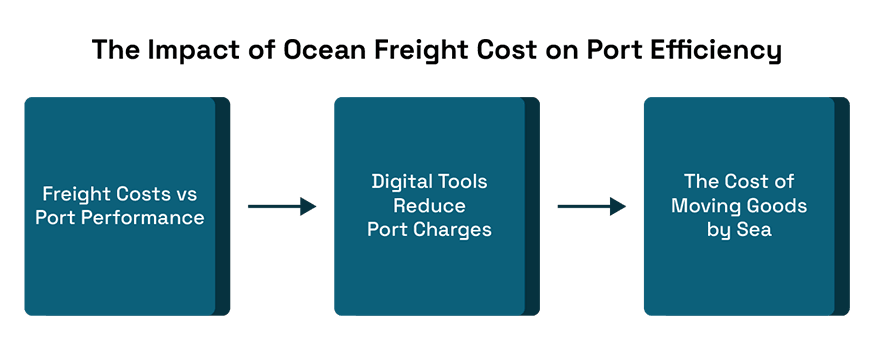
Ocean freight cost remains one of the biggest effects on port efficiency and trade. High shipping rates affect everything from container allocation to DDP shipping timelines, directly changing the competitiveness of import and export businesses. Through digital freight management systems, ports can now analyze costs and reduce inefficiencies caused by manual work. These technologies also help export customs brokerage teams and Importer of Record services providers supply quicker, more accurate clearances, reducing demurrage and unwanted port charges. By having stability between working expenses and digital innovation, ports confirm slow cargo flow and cost-effective trade continuity.
The Future of Ocean Freight: Growing Technologies and Trends
The next generation of ocean freight will be defined by automation, sustainability, and data combination. Autonomous containers, AI-related port cranes, and green shipping technologies are changing the sea landscape. For importers and exporters, this means fewer delays, optimized routes, and environmentally responsible operations. Digital twins and advanced analytics will soon allow comprehensive import-export support systems to simulate and manage difficult trade chains in real-time. Also, combining blockchain into import export business systems will increase visibility, while automated customs clearance support will further simplify trade. As ports change, technology will continue to be the driving force, confirming precision, safety, and profitability in ocean freight.
Conclusion
From automation to blockchain integration, the rise of smart ports and digital logistics platforms is redefining ocean freight with unmatched accuracy. For global traders and Importer of Record services providers, these advancements represent more than efficiency; they are the base of sustainable growth in the import and export business. As international export regulations continue to grow, organizations that improve technology port management and comprehensive import-export support will not only accept faster but also lead the transformation of global sea trade.
DID YOU KNOW?
The Freight and Logistics Market stood at USD 6.81 trillion in 2025 and is projected to reach USD 7.17 trillion by 2026 before climbing to USD 11.39 trillion by 2035 at a 5.28% CAGR during the 2026–2035 forecast window. .
FAQs:
What are smart ports in ocean freight?
Smart ports are technology-driven maritime hubs that use automation, AI, and IoT systems to monitor cargo, optimize port operations, and improve supply chain visibility.
How does technology improve port efficiency?
Technologies like AI, blockchain, and IoT streamline documentation, automate customs clearance, and enhance predictive maintenance, reducing delays and costs.
Why are ocean freight costs important for trade operations?
Ocean freight costs directly affect import-export competitiveness, delivery timelines, and overall logistics efficiency. Optimized digital systems help control these costs.
How does blockchain technology benefit ocean freight?
Blockchain ensures transparency, secure documentation, and traceable data flow, which minimizes fraud, reduces manual errors, and supports customs compliance.
What is the future of ocean freight logistics?
The future lies in automation, digital twins, AI-based analytics, and sustainable shipping solutions, making trade smarter, faster, and more environmentally friendly.