Understanding LTL & FTL Shipping: Definitions and Key Differences
LTL transportations imply sharing space with other deliveries and usually deals with smaller loads of 1 to 6 pallets or less than 15,000 pounds. FTL is a specialized truck traffic, with a full trailer load or a heavier cargo, usually above 10,000 pounds. LTL is a combination of freight originating from different sources, and this influences pricing, transit time, and risk of handling. FTL offers the exclusive rightful use of the truck, reducing transit time and freight handling. Such a difference has an effect on the cost efficacy and reliability in air freight distribution of sensitive aviation and medical devices.
How Can Businesses Optimize LTL and FTL Shipping Decisions?
Organization can improve their freight planning by select the right shipping model based on cargo size, delivery timelines, & shipping costs. LTL works well for small cargo that do not require full truck space, while FTL is better for large or sensitive cargo needing direct movement. A effective freight planning helps companies reduce extra costs, improve shipment handling, & maintain reliable supply chain operations. By checking shipment requirements regularly, businesses can select the most practical option for each delivery.
Industry Trends Shaping LTL and FTL in 2025
The trends in the freight industry focus on supply chain innovations and the incorporation of technology to enhance route tracking and optimization. Most companies trade off costs and speed of delivery by mixing LTL and FTL based on shipment size and urgency. Advanced logistics management systems use real-time shipment tracking to coordinate schedules at airports and ports involved in shipping specialized equipment. Sustainability efforts also push for optimizing freight loads to reduce carbon footprint in both LTL and FTL shipping.

Cost Comparison: LTL vs. FTL for Modern Businesses
LTL is more cost-effective for smaller shipments as costs are shared based on the freight space used. FTL costs a fixed rate for exclusive truck use, often providing better value for large, bulky, or high-value loads. When shipments exceed approximately 6 to 12 pallets or 10,000 pounds, FTL tends to be more economical. Costs also factor in freight class and route. In air freight, calculating volumetric weight accurately affects pricing for both models, especially for high-tech equipment with complex dimensions.
Speed & Delivery Considerations: Which Model Delivers Faster?
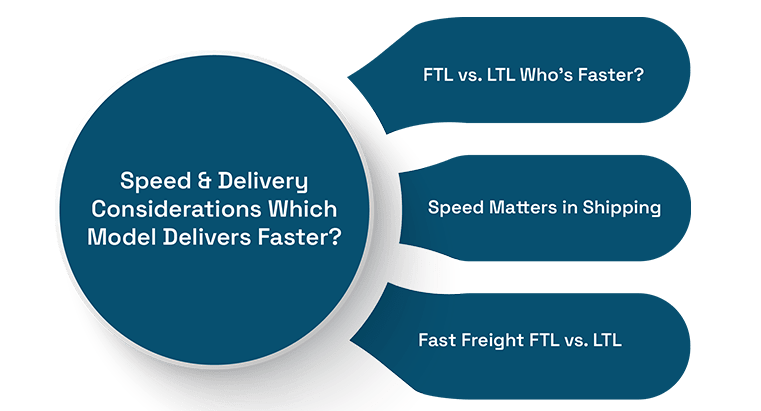
FTL shipments typically reach their destination 2 to 3 days faster than LTL due to direct routes without multiple stops. LTL involves terminal consolidation and deconsolidation, increasing delivery time and handling. For time-sensitive or high-value shipments in aviation or healthcare, FTL’s speed and reduced handling lower damage risk. Nevertheless, LTL is flexible to gravitate towards more frequent, smaller trips to contain the flow of inventory in the IT and car industries.
Sustainability and Environmental Impact of LTL and FTL Shipping
LTL is usually regarded as more cost-effective when making smaller shipments since shared truck space will decrease the empty miles and the amount of fuel used per unit. The uniqueness of FTL implies increased carbon emissions when the trucks are not fully utilized. The contemporary logistics software facilitates optimization of the supply chain to enhance load efficiency and low environmental impact. These two models are changing their way of operating to be more green in freight forwarding and warehousing in order to meet the global climate objectives.
The Right Freight Model to Choose in 2025 to Meet Your Business Requirements.
The choice of which one is LTL or FTL may depend on the size of the shipment, the cost, the need to deliver something urgently, and the environmental purposes. Businesses that ship sensitive equipment, including those in the aviation, healthcare, or IT sectors, should also be attentive to risk and handling problems.
Merging the services of port-to-port freight forwarding with those of the expert importer of record and exporter of record will ensure customs clearance and delivery under compliance. Flexible freight solutions enable the optimization of strategies in response to market requirements.
Market Research Insights
Data from recent logistics reports highlight rising adoption of real-time shipment tracking and automated freight forwarding systems to manage LTL and FTL loads in high-value equipment shipments. Cost efficiency and carbon footprint reduction remain key drivers for businesses optimizing freight model choices.
Conclusion
We at One Union Solutions offer expert port-to-port freight forwarding, warehousing, and customs brokerage tailored for aviation, automobile, healthcare, and IT equipment. By advising on LTL and FTL freight options suited to shipment size, cost considerations, and delivery timelines, we help clients optimize operations. Embracing flexible freight models with technology ensures competitive, reliable equipment shipping in 2025 and beyond.
Did You Know,
The healthcare and IT equipment delivered through the airfreight volume is increasing at an annual rate of approximately 7% and it has increased the number of companies in need of specific freight solutions that can be economic, fast, and secure.
FAQ’s
When is it better to use LTL instead of FTL to ship equipment?
LTL is most effective when the shipment size is less than about 6 pallets or 10,000 pounds, and cost-saving is of concern.
What are the primary threats of LTL shipping?
In LTL, more handling is done, and thus, damages or delays caused by repeated terminal contacts are probable.
What is the role of FTL in enhancing the speed of delivery?
FTL is a direct transport mode, which reduces transit time and transit steps, suitable for high-value or time-sensitive freight.
Is it possible to use LTL and FTL in my shipment strategy?
Yes, numerous companies deliver LTL with their small, frequent shipment and FTL with large, urgent consignments.
What impact does volumetric weight have on the pricing of LTL and FTL?
Proper calculation of volumetric weight is used to optimize the cost of freight charges, particularly in air deliveries of bulky equipment.