

Insight
The U.S. is one of the largest import markets in the world. It has high demand for global goods and strong trade connections with many countries. Businesses prefer the U.S. because it offers easy market access, advanced transport networks, and fast cargo movement. The country has well-developed ports, airports, and logistics systems that support smooth import of goods. It is widely used for importing IT equipment, aviation parts, healthcare products, and automotive equipment because of its efficient delivery system and large customer base.
Understanding the Dominance of the U.S. Import Market
The U.S. imports a wide range of goods due to its fast-growing economy, high demand, and huge consumer base. Many global businesses depend on the United States because it provides stable trade conditions, quick logistics, and easy access to major ports and airports. The U.S. is an important import place for IT equipment, aviation parts, healthcare products, and automotive goods. Companies choose the U.S. because it gives smooth shipping, reliable supply chains, and quick delivery options. Overall, the U.S. import market gives safe trade, steady demand, and strong global reach, so many businesses trust it for international imports.

Economic Strength and Consumer Demand: The Foundation of Reliability
America is the hub of international trade, where the stability and reliability of imports are unrivaled, particularly in terms of equipment imports in 2025. The economic stability in America has ensured a high demand for imported equipment throughout the year. It has an impressive purchasing power, with high levels of disposable income, making it a good target location for shipments that require quick clearance and delivery to the consumer market. The predictability of spending patterns, minimal currency fluctuations, and sustainable growth encourage continuous import of strategic equipment. With this predictable nature, businesses can plan without worrying that they will face significant trouble, as their needs will be fulfilled with minimal inconvenience.
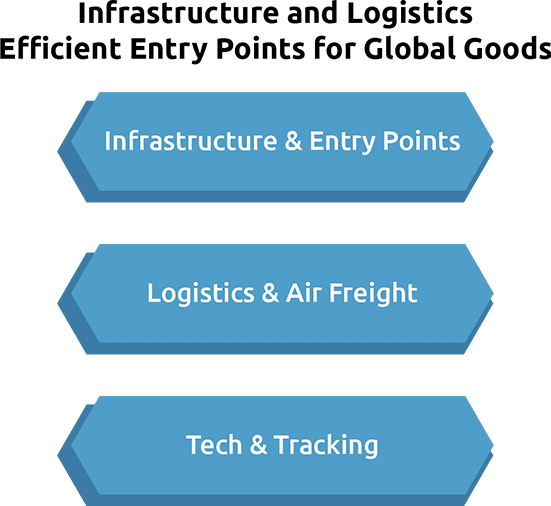
Infrastructure and Logistics: Efficient Entry Points for Global Goods
U.S. ports, airports, and transportation systems are among the most effective in the world for transporting sensitive equipment under customs supervision. State-of-the-art freight forwarding logistics solutions ensure seamless port-to-port activities, with automated clearance and real-time shipment tracking solutions.
The customs clearance process facilitates the process to ease the hassle-free importation logistics and minimize waiting time. Air freight shipping remains a relevant trend in ensuring timely equipment delivery, using extensive airport infrastructure and digital management systems to ensure every delivery is safe and secure.
Diverse and Predictable Regulatory Environment
The U.S. offers transparent, diverse, and predictable regulations for import, benefiting companies that value compliance. Strict import regulations and customs clearance standards create a reliable framework for moving sophisticated systems. Documentation for equipment, as managed by the importer of record and exporter of record, assures legal certainty and rapid inspection. Import export documentation and standard trade policies help maintain confidence and continuity for long-term market participants.
The Role of Trade Agreements and Diplomatic Stability
The presence of stable diplomatic relations and trade agreements enhances the possibilities of import, which guarantees a steady supply of the necessary equipment. Positive deals and international relations facilitate the transportation of goods under clear and transparent international shipping conditions. These policies contribute to secure supply chain optimization, as well as investment in the key areas. As diplomatic relations are based on stable trade, market businesses can focus on refining processes without any unpleasant surprises.
The U.S. Maintains Its Position Amid Global Uncertainty
The U.S. market adjusts fast to ensure equipment imports are resilient to geopolitical tensions & the changing global risks. Supply chain management warehousing integrates climate controls and digital monitoring tools that limit delays and protect shipments. Freight forwarding solutions across major airports and logistics centers continually upgrade processes to reduce disruption, especially in uncertain periods. American market adaptability proved essential during recent crises, keeping air freight shipping and port operations stable and reliable.
The Future Outlook
Global import trends show that organizations planning growth in 2025 trust the U.S. for scalable, secure, and innovative supply chain solutions. Logistics management software and transportation management systems simplify every stage, from cargo handling to inventory management.
Expanding exports to America remains a priority due to the country’s ongoing regulatory updates and commitment to trade efficiency. Future outlooks suggest that technology adoption will further enhance reliability, cementing the U.S. position as the preferred hub for critical equipment import.
Conclusion
By prioritizing advanced logistics, compliance, and innovative management, companies pursuing growth rely on U.S. import systems for secure and scalable deliveries. At One Union Solutions, we remain committed to ensuring that every equipment shipment moves seamlessly from port to port—empowering clients with stability, insight, and the industry’s most reliable market foundation.
Did You Know,
The US trade deficit narrowed to $55.9 billion in April 2026 from a revised $56.6 billion in March, beating market expectations of $56.1 billion.
FAQ’s
Why is the U.S. regarded as the most predictable import market?
The U.S. has excellent infrastructure, stability, and compliance with to import of equipment.
What customs processes contribute to efficient imports?
Combining customs clearance options and digital solutions contributes to the fast and safe transportation of goods.
What effect do trade agreements have on imports?
Trade agreements are beneficial in terms of smooth international shipping and opening routes to essential equipment.
Does climate resilience matter to the import of equipment in the U.S.?
Current supply chains also use climate controls in order to deliver delicate equipment safely.
Why will the U.S. still be the favorite import destination for businesses in 2025?
There is constant innovation in logistics and regulatory transparency that leads to constant trust and reliability.