Introduction
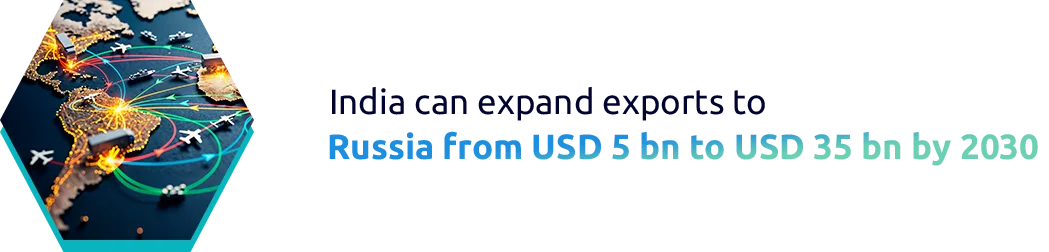
India & Russia have been long-term trade partners, yet the full capacity of joint trade, especially exports, remains largely not fully utilized. Recently, changes in global shipping routes, updates in Generalized System of Preferences (GSP) frameworks, & improvements in logistics & Incoterms have created new opportunities for India to enhance its presence in the Russian market. Although challenges such as varying tariffs & complexities in global freight persist, trade relations between the two countries continue to grow gradually. With both nations seeking stable & mixed supply chains, India is well-positioned to increase exports to Russia from USD 5 billion to USD 35 billion by 2030 through targeted reforms, sector-focused strategies, and improved trade documentation processes.
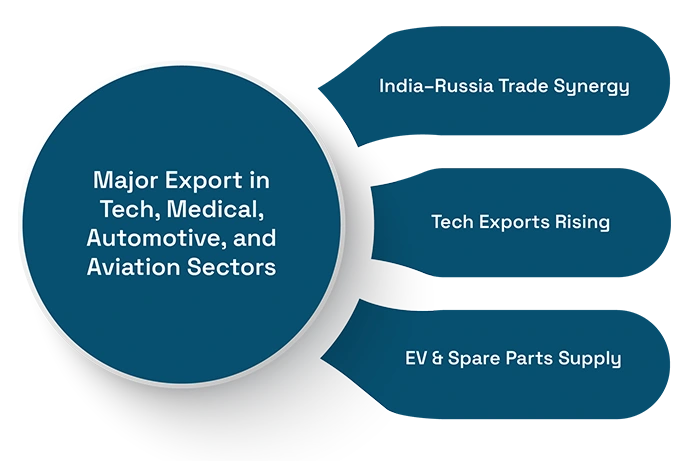
Major Export in Tech, Medical, Automotive, and Aviation Sectors
Russia’s growing demand across technology, medical equipmen, automotive, and aviation sectors works well with India’s expanding manufacturing capabilities. In technology, India can grow hardware part shipments, software services, and telecom equipment, supported by clearer Delivered Duty Paid service guidelines and smoother last-mile delivery services. In medical exports, Russia continues to look for dependable suppliers for medical devices and diagnostic equipment. Also, India’s strength in approval, real-time shipment tracking, and clarity around Importer of Record responsibilities can hugely increase trust and long-term trade.
The automotive sector presents additional growth as Russia increasingly varies its sourcing of spare parts, electric vehicle components, and vehicle kits. When Indian exporters work their shipments with the correct HS codes and HTS harmonized tariff schedule categories, clearance becomes faster and more predictable. In the aviation industry, India’s specialization in maintenance, repair, overhaul materials, and specialized machinery can further contribute to a more varied export basket.
Necessary Reforms Between India and Russia
To unlock the full export potential, both nations must implement reforms that simplify the trade process and increase the supply chain. India can benefit from faster approvals for Russia shipments, dedicated cargo corridors, and clearer harmonization of HS code categorization to reduce customs disputes. Russia, in turn, can support Indian exporters by streamlining IOR services, reducing documentary duplication, and strengthening trade-related issues. These reforms, combined with better logistics connectivity and improved import-export documentation workflows, will help businesses change from collapse to long-term supply chains.
Growth of Localized Manufacturing & Joint Supply Networks
A major growing trend in India–Russia trade is the shift toward localized production support & shared supply networks. Instead of relying only on direct exports, companies are increasingly analyzing regional production partnerships & component-level sourcing to reduce dependency on long supply routes. This method helps improve delivery efficiency, reduce lead time, & increase flexibility to changing market demands. As both countries look to strengthen industrial cooperation, localized production strategies are becoming an important driver of future trade expansion.
How One Union Solutions Helps You Export to Russia
One Union Solutions supports Indian exporters in guiding Russia’s developing trade environment through end-to-end support that includes accurate categorizations under the HS code schedule, smooth IOR services, and expert handling of Importer of Record responsibilities. The company’s capabilities in international freight services, Delivered Duty Paid service execution, and real-time shipment tracking confirm that good reach Russian destinations without delays. If managing DAP shipments, preparing complete import-export documentation, or confirming regulatory agreement, the company works as a trusted partner for long-term expansion in Russia.
Conclusion
India’s ambition to increase exports to Russia by 2030 is built on a strong market and expanding industrial capabilities. Through precise improvements, sector-related plans, and dependable partners such as One Union Solutions, simplifying logistics, documentation, and regulatory issues, Indian exporters can confidently scale their presence in the Russian market. The next decade provides a changing opportunity, one that can redefine India-Russia trade and set the base for sustained growth across multiple industries.
DID YOU KNOW?
According to Russia’s latest export data, the total value of India’s imports from Russia in 2024 reached $64.23 billion, up 5% from the previous year.
FAQs:
- Why is Russia a major opportunity for Indian exporters?
Russia is increasing its import diversification and is seeking reliable partners in Asia. India’s manufacturing growth, cost-effective production, and strong tech/medical sectors make it a suitable long-term supplier.
- Which sectors offer the highest export potential to Russia by 2030?
Technology hardware, medical devices, automotive components, electric vehicle parts, and aviation MRO supplies are among the fastest-growing opportunities.
- What reforms are needed to boost India’s exports to Russia?
Key reforms include streamlined HS code classification, improved customs documentation, faster shipment approvals, and enhanced logistics corridors between both countries.
- What challenges do Indian exporters face when trading with Russia?
Major challenges include customs delays, changing tariffs, limited cargo routes, and complex Importer of Record (IOR) requirements. These can be managed with the right trade support partner.
- How does One Union Solutions help exporters shipping to Russia?
One Union Solutions provides IOR/EOR services, accurate HS code classification, DDP/DAP documentation, real-time tracking, and full compliance handling, ensuring smooth and timely delivery to Russia.