Introduction
Vietnam has quickly changed into one of Asia’s most dependable trade hubs, attracting global manufacturers and retailers who want competitive production costs, effective logistics, and smoother market entry pathways. As businesses expand into this varied region, understanding the country’s policy changes becomes necessary, mainly when these changes directly improve import duties and tariffs, supply chain optimization efforts, and the overall working of international freight services. In 2025, Vietnam introduced a huge 9.3% jump in its trade-related budget, signaling deeper ambitions to upgrade infrastructure, strengthen trade facilitation systems, and refine systems such as Incoterms-based operations, real-time shipment tracking capabilities, and last-mile delivery services.
Vietnam’s Trade Secret: How a 9.3% Budget Jump Affects Your Supply Chain
Vietnam’s 9.3% budget increase is more than a routine economic adjustment; it is a strategic move to secure trade competitiveness, modernize customs processes, and simplify import–export documentation methods. For businesses depending on Delivered Duty Paid service or Delivered at Place (DAP) delivery arrangements, this increase means faster clearance, improved transparency, and reduced internal friction in cross-border activities. The government’s focus on increasing logistics stations, upgrading ports, and working with harmonized tariff frameworks such as the HS code and HTS harmonized tariff schedule helps bring greater predictability to shipments moving through Vietnam.
Organizations dependent on IOR services or the Exporter of Record definition in global movement structures will benefit from improved regulatory clarity. Vietnam’s updated policies are changing a trade environment where foreign businesses can work with fewer issues, better supply chain optimization methods, and higher confidence in the country’s developing agreement systems.

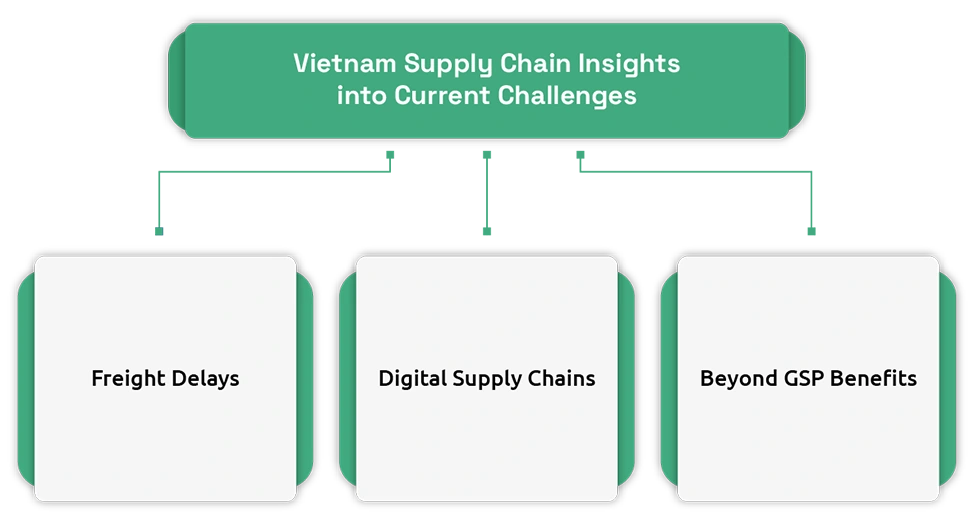
Vietnam Supply Chain: Insights into Current Challenges
Despite great improvements, Vietnam’s supply chain still faces continuous challenges that businesses must account for when trading. Congestion at major ports, changing import duties and tariffs, and regular delays in international freight services continue to test working efficiency. While the government has already started transforming these processes, issues such as incomplete last-mile delivery services infrastructure or inconsistent shipment tracking are still seen in some regions.
Also, the country is actively increasing without depending completely on traditional generalized system of preferences benefits, as it has changed toward a more digitally integrated supply chain network. As companies work through import–export documentation, HS code classification, and Incoterms agreement, Vietnam’s upgraded systems are gradually reducing administrative burdens.
Vietnam Trade Deal Changes Global Supply Chain Strategy for suppliers.
Vietnam’s new trade agreements and its budget boost are improving global supply chain strategy, mainly for retailers changing operations out of China. These agreements increase varied sourcing methods and strengthen Vietnam’s role as a major production base for aviation, electronics, and automotive goods. With improved customs automation and optimized freight movement, retailers can achieve smoother change across stages such as international freight services, real-time shipment tracking, and delivery under DAP or Delivered Duty Paid service terms. Also, new trade work is reducing resistance for companies depending on Importer of Record and Exporter of Record services when entering the Vietnamese market, further reinforcing Vietnam’s appeal as a global supply chain hub.
Key Economic Zones in Vietnam
Vietnam’s economic zones, such as Ho Chi Minh City’s High-Tech Park, the Hai Phong Economic Zone, and Da Nang’s logistics corridor, are necessary to its trade strategy. These zones integrate manufacturing groups, bonded warehouses, and import–export documentation centers to support end-to-end supply chain optimization. Many international organizations choose these zones to take advantage of effective logistics networks, harmonized tariff procedures, and quicker customs turnaround.
The presence of logistics hubs allows companies to manage international freight services more effectively, simplify DAP or Delivered Duty Paid service deliveries, and confirm faster last-mile distribution to local and regional markets. These economic zones are also becoming testing grounds for digital platforms that support real-time shipment tracking and automated tariff calculations.
Conclusion
Vietnam’s 9.3% budget increase marks an important moment for the nation’s supply chain evolution. With stronger logistics infrastructure, modernized customs processes, and improved tariff management, combined with systems such as HS code and HTS harmonized tariff schedule, Vietnam is positioning itself as a top-tier trade destination. Businesses using DAP, customs-managed Importer of Record services, international freight services, and supply chain optimization plans will find more stability and efficiency as Vietnam continues its trade transformation journey.
DID YOU KNOW?
According to the General Statistics Office, Vietnam’s export turnover increased by 14.3% year-on-year to US$405.5 billion in 2024, driven by growth in key export markets. Manufacturing remained the primary pillar, contributing nearly 85% of total export value.
FAQs:
- How does Vietnam’s 9.3% trade budget increase impact global supply chains?
The budget increase speeds up customs clearance, modernizes logistics infrastructure, and improves tariff management systems, making shipments more predictable and cost-efficient for global companies.
- What improvements can importers expect in Vietnam’s customs processes?
Importers will benefit from automated documentation, faster clearance times, enhanced HS code classification accuracy, and reduced delays in IOR/EOR operations.
- How does the budget boost affect DAP and Delivered Duty Paid (DDP) services?
The upgrades support quicker handling at ports, improved last-mile delivery systems, and smoother tariff calculation, making DAP and DDP shipments more reliable.
- What challenges still exist in Vietnam’s supply chain?
Port congestion, last-mile delivery gaps, and inconsistent regional tracking systems remain key issues, though the government is actively improving these areas.
- Why are Vietnam’s economic zones important for supply chain optimization?
Zones like HCMC High-Tech Park and Hai Phong integrate manufacturing, logistics, and customs centers, helping companies accelerate freight movement and reduce operational friction.