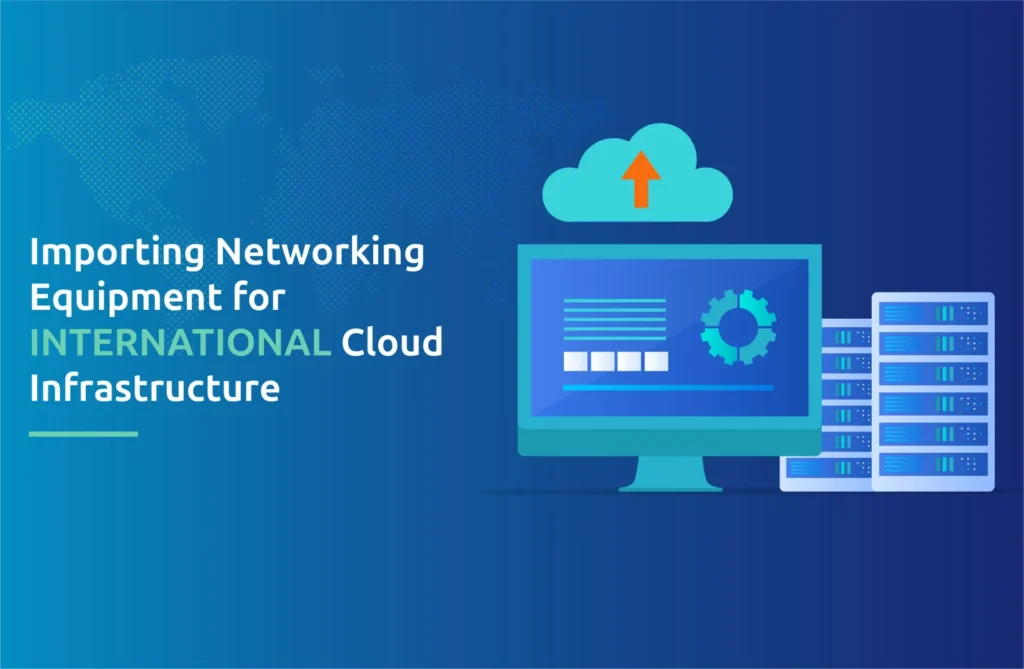
As cloud services continuously growing in the whole world, businesses are building new data centers & developing their IT infrastructure across many countries. To keep these systems connected, they mainly depend on networking equipment such as routers, switches, firewalls, & cables. Importing this equipment is not always easy. Every country has different customs laws & regulations, documentation requirements, & import procedures. Without proper planning, shipments can face delays & compliance issues. By using usable logistics & Importer of Record services, businesses can import networking equipment easily & ensure their cloud infrastructure projects stay updated.
Why Networking Equipment Is Important for Cloud Infrastructure
Networking equipment is used as the backbone of cloud infrastructure by enabling the communication, data routing, & security required to access remote services. It bridges the gap between end users & data centers, ensuring fast data transfer, high availability, & secure access to cloud-based tools.
Here is why physical & virtual networking equipment is very important for updated cloud infrastructure:
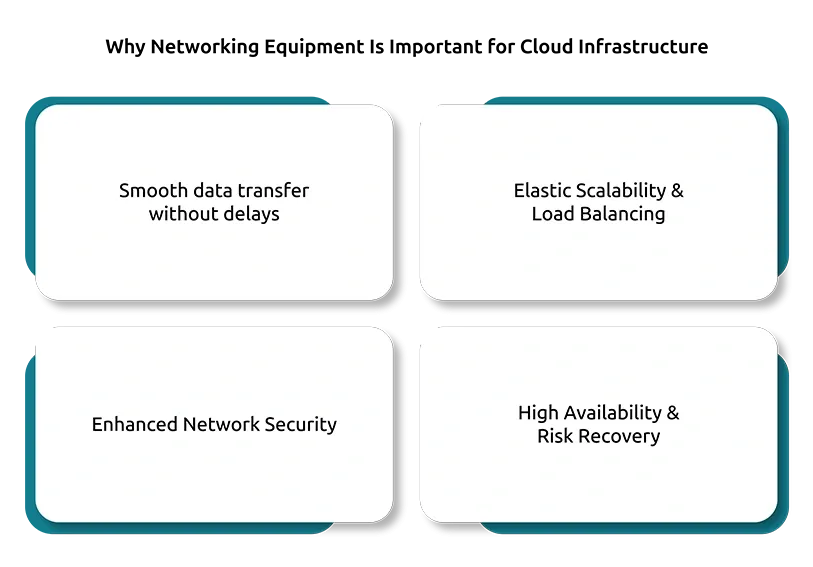
Smooth data transfer without delays: Equipment like physical & virtual routers determines the most usable paths for data packets. This reduces delays in data flows& minimizes delays, which is important for real-time connections with tools & high-volume data transfers.
Elastic Scalability & Load Balancing: Updated cloud networking uses equipment like load balancers & software-defined networking to distribute workloads evenly across servers. This allows businesses to scale resources on-demand without purchasing new physical hardware.
Enhanced Network Security: Robust cloud networking features include integrated hardware & virtualized firewalls, VPN support, & encryption. These control network traffic & secure sensitive data from cyber frouds & unauthorized access.
High Availability & Risk Recovery: Network equipment ensures business mainly through built-in redundancy. If a server or physical connection fails, traffic can be change rerouted to similar paths to minimize break in service.
Hybrid & Multi-Cloud Integration: Networking equipment seamlessly connects private, public, and hybrid cloud environments like AWS, Azure, or Google Cloud, preventing vendor lock-in and allowing flexible workload distribution.
Cloud Computing Revolution in the IT & Telecom Industry
The market is growing into healthcare, IT & telecom, & others. The IT & telecom segment dominated the market. The telecom industry has undergone a significant transformation due to the adoption of cloud computing. Telecommunication companies are increasingly turning toward cloud computing as an alternative to traditional network architectures for improving agility & reducing operational costs. In the telecom sector, cloud computing provides a software-defined infrastructure that enables telcos to store and process data in remote data centers, rapidly expand their services, & respond quickly to changing demand. According to telecom statistics, nearly 35% to 50% of telecom companies use the cloud for deeper collaboration across digital ecosystems.

Essential Documentation for International Imports
Customs Packing List
A Customs Packing List shows what’s in a shipment. It helps everyone involved in the deal compare it to the Pro Forma Invoice. This list goes along with the international shipment and helps transportation companies understand what’s in each container. They added with a packing list to each container to make sure they’re sending the correct products globally.
Matching the packing list to the Pro Forma Invoice helps make sure everything is manages & tracked correctly. This way, mistakes are less likely, & the customs process is easier for everyone added in the trade.
Country of Origin Certificate
A Country of Origin Certificate, issued by the exporter, confirms that the goods in the shipment originate from a specific country, affirming their complete acquisition, production, or processing there.
Bill of Lading
The Bill of Lading is an important legal document given by the carrier to the shipper. It proves there’s a deal to transport goods, with details about what’s being shipped, like type & quantity. This paper serves as a receipt when the goods arrive at the final destination port. It’s huge for customs clearance, so the exporter needs to show it to the customs official.
Whether goods are shipped by sea, air, or land, this document is a must. It needs signatures from the carrier, shipper, & receiver to be valid. The Bill of Lading is mainly helpful if anything goes missing or gets missing during transit, as it helps track the shipment & protects everyone involved in the transportation process.
Letter of Credit
A Letter of Credit is a document from the importer’s bank, assuring the exporter that the importer will pay the specified amount for the transaction. The exporter mainly receives this letter before sending out the goods, as it guarantees payment. Depending mainly on the agreement between the exporter & importer. This letter acts as a security for both parties, ensuring that the payment will be made as agreed upon in the transaction.
Bill of Exchange
A Bill of Exchange gives another way for importers to pay exporters for received goods, either immediately or at a later specified date. It works like a promissory note, which can be issued by banks or individuals. This document allows for flexibility in payment timing, as importers can choose to settle the amount due when it’s convenient for them.
Similar to checks, Bills of Exchange can also be transferred to others through verification. Overall, it provides a convenient & secure method for completing transactions between exporters & importers, offering flexibility in payment terms & facilitating easier trade operations.
Conclusion
Importing networking equipment for global cloud infrastructure needs more than simply changing hardware across many countries. Businesses must handle customs law & regulations, prepare accurate documentation, deal with country-specific import requirements, & coordinate secure logistics to avoid costly delays. As cloud computing continues to expand globally, efficient import processes become useful for keeping data center projects on schedule & ensuring smooth network connectivity.
Did You Know?
Data center and cloud infrastructure applications currently account for an estimated 40–50% of global market value, while industrial automation and automotive segments together contribute another 30–35%.
FAQ
What is networking equipment in cloud infrastructure?
Networking equipment includes routers, switches, firewalls, and cables that enable communication between cloud systems and data centers.
Do I need an Importer of Record (IOR) to import networking equipment?
An IOR is often required when importing equipment into a country where the buyer does not have a local legal entity.
What documents are needed to import networking equipment?
Common documents include a commercial invoice, packing list, bill of lading, certificate of origin, and import permits (if required).
How long does customs clearance take for networking equipment?
Clearance times vary by country, but accurate documentation and compliance can significantly reduce delays.
Are there import restrictions on networking hardware?
Some countries require telecommunications approvals, safety certifications, or specific import licenses for networking devices.