
Overview
Sea freight remains the backbone of global trade, but delays at sea or in ports can have more than just late deliveries; they can also directly affect the applicable duty rate on your shipment. Changes in tariff schedules, seasonal duties, trade solutions, or the expiration of deduct schemes such as the generalized system of preferences (GSP) may occur while cargo is in logistics. When this happens, importers may see unwanted cost increases during customs clearance, even if the goods were shipped on time. Understanding how sea freight delays interact with duty systems, HS code categorization, and the HTS Harmonized Tariff Schedule is necessary for protecting the border and having predictable global trade.
Why Is Shipment Arrival Timing Becoming a Key Factor in Import Costs?
Shipment arrival timing has become a major factor in global trade as tariff rates, duty rules, & trade benefits can change while goods are in transit. A delayed shipment may face higher import costs if new regulations apply before customs entry. Businesses are improving tracking, customs planning, & documentation accuracy to manage these risks and maintain predictable landed costs.
How to Manage and Stop Sea Freight Shipment Delays
Proactive Planning in International Freight Services
Delays frequently start from port congestion, ship rollovers, weather disruptions, or documentation gaps. Working with dependable international freight services providers and expert freight forwarding companies near me allows businesses to reduce risks, secure ship storage, and select routes. Exact planning around Incoterms and other international shipping terms also confirms that responsibilities for risk, cost, and schedules are clearly shown between buyers and sellers.
Documentation, Inventory, and Order Control
Accurate paperwork is just as important as ship scheduling. Issues in invoices, packing lists, or HS code declarations can hold shipments at ports and extend shipment time. Combining inventory and order management systems with freight work improves projections, reduces demurrage risk, and supports supply chain optimization.
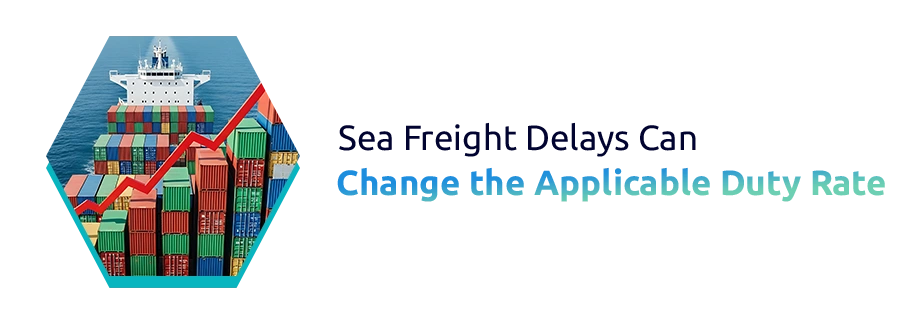
How Sea Freight Delays Impact Duty Rates
Time-Sensitive Tariffs and Trade Measures
Duty rates are not constant. Governments regularly update tariffs, safeguards, and preferential programs. If a shipment arrives after a regulatory change, the duty is based on the rate in force on the date of import, not the date of departure. This means a delayed container may fall under a new tariff bar in the HTS Harmonized Tariff Schedule, increasing landed costs.
Classification and Valuation Risks
Extended transit times also increase the eventuality of re-verification by customs authorities. Any inconsistency in HS code usage, valuation, or origin documentation may quick reevaluation, audits, or even penalties. Sea freight delays, therefore, magnify not only time risk, but also financial and approval exposure.
How Delays Can Change the Applicable Duty Rate on Sea Freight
The Role of Import Timing
Customs duty is calculated at the moment goods are entered for usage. If your cargo arrives after a new tariff order, countervailing duty, or quota takes effect, the updated rate applies even if the goods were sold months earlier under an older expectation. This is specifically relevant for long-haul sea routes where even a short delay can push arrival past a regulatory stop.
Incoterms and Duty Responsibility
Under different Incoterms, such as DAP, the point at which risk transfers may differ, but the importer remains responsible for duties. Confusion around DAPs or misaligned contracts can lead to disputes over who takes the extra cost when duty rates rise due to shipping delays.
How One Union Solutions Helps You to Avoid Sea Freight Delays
End-to-End Compliance and Coordination
One Union Solutions supports global traders through integrated exporter of record services and Importer of record services, confirming shipments remain complete from origin to destination. Controlling documentation accuracy, product classification, and regulatory filings, they reduce the risk of port holds and post-arrival corrections that often extend transit time.
Smart Logistics and Premium Support
Through advanced logistics coordination, vetted carrier networks, and optional premium delivery service, we help businesses secure faster shipping and alternative routings when issues occur. Their proactive tracking allows early intervention before minor disruptions become costly delays.
Conclusion
Sea freight delays are no longer just a scheduling problem; they are a financial and approval risk that can change the very duty rate applied to your goods. With changing tariffs, developing trade agreements, and strict customs execution, even small disruptions can result in major cost issues. Providers like One Union Solutions add further protection through coordinated customs support, Importer and Exporter of record services, and flexible shipping strategies, confirming that sea freight delays do not rewrite your duty issues.
DID YOU KNOW?
In 2025, around 80% of global goods trade by volume moved through sea transport. UNCTAD reported that longer routes, port disruptions, and rising freight costs increased supply chain pressure, making shipment timing critical for import costs and duty planning.
FAQs:
1. Can sea freight delays really change the duty rate on my shipment?
Yes. Customs duty is applied based on the rate in force on the date of import, not the shipping date. If your cargo arrives after a tariff update, safeguard duty, or trade policy change, the new rate applies even if the goods were sold earlier.
2. Why does import timing matter so much for customs duties?
Because customs authorities assess duty at the time goods are entered for consumption. Any regulatory change that occurs while your cargo is in transit can directly affect the applicable duty rate.
3. Do HS codes play a role when shipments are delayed?
Absolutely. Delays increase the likelihood of customs review. Any error or inconsistency in HS code classification, valuation, or origin documentation can trigger reassessment, penalties, or extended clearance times.
4. Which common sea freight issues lead to higher duty risks?
Port congestion, vessel rollovers, poor documentation, and customs holds are major causes. These delays can push shipments past tariff deadlines or preference program expirations, increasing payable duties.
5. How can companies reduce the risk of duty changes due to delays?
By working with reliable international freight services, ensuring accurate documentation, planning routes carefully, and using professional importer of record and exporter of record services to maintain compliance and minimize transit disruptions.